How to Grow Isatis Root for High Yield? Master These Planting Techniques
How can Isatis root be planted for high yield? Please provide detailed guidance methods. To achieve high yield when planting Isatis root, you can refer to the following methods: 1. Land preparation and fertilization for Isatis root planting. Because Isatis root is a deep-rooted plant, it is advisable to choose flat terrain, well-drained, fertile and loose sandy loam. Combined with land preparation, per mu...
 How can Isatis root be planted for high yield? Please provide detailed guidance methods
To achieve high yield when planting Isatis root, you can refer to the following methods:
1. Land preparation and fertilization for Isatis root planting
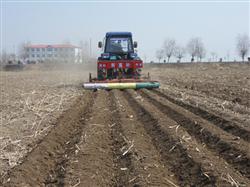
Because Isatis root is a deep-rooted plant, it is advisable to choose flat terrain, well-drained, fertile and loose sandy loam. Combined with land preparation, apply 2000-3000 kg of decomposed compost or barnyard manure, 100 kg of plant ash, and 20-30 kg of superphosphate per mu, deep plow more than 40 cm, then shallow plow once, rake fine and level, make flat beds 1-1.5 m wide, and water before sowing to build soil moisture.
2. Sowing for Isatis root planting
It is divided into spring sowing and summer sowing. Spring sowing is in early to mid-April, and summer sowing is in late May. Spring sowing should not be too early, because after the seeds emerge, affected by early spring cold, they will go through the vernalization stage, bolt and flower early, complete the growth period in the same year and become ineffective. Before sowing, soak the seeds in warm water at 30°C-40°C for 4 hours.
Remove and dry. Both drilling and hole sowing can be used, but drilling is mostly adopted. Open furrows in the bed at a row spacing of 20-30 cm, with a furrow depth of 1.5-2 cm. Mix the seeds with fine sandy soil and evenly scatter them into the furrows, cover with 0.5-1 cm of soil and then press, keep the bed soil moist. When the temperature is 18°C-20°C, seedlings can emerge in 7-10 days; for hole sowing, the hole, row, and plant spacing can all be 25 cm; the germination rate of Isatis root seeds is 70%, and 1.5-2 kg of seeds are used per mu.
3. Daily management of Isatis root
1. Thinning. Thin when the seedlings are 5-7 cm high, and final thinning when the seedlings are 10-15 cm high. When thinning and final thinning, remove the weak and keep the strong, and replant missing seedlings in time. At this stage, keep the soil moist.
2. Cultivation and weeding. After the seedlings are fully established, cultivate and weed once in time, then about once every half a month. After the plants close the rows, no more cultivation and weeding are carried out.
3. Topdressing. Carry out from May to July, apply 500-1000 kg of human feces and urine in furrows per mu, or 10 kg of urea, and add 10 kg of superphosphate, then water after application. After each leaf harvest, apply 5-7 kg of ammonium sulfate per mu (never use ammonium bicarbonate).
4. Watering and drainage. In summer when the weather is dry, water in time. In the rainy season, pay attention to dredging ditches and draining water to prevent root rot.
5. Propagation method. Propagate by seeds. Isatis root harvested in the same year does not produce seeds. In late October when digging and harvesting Isatis root, select root strips that are free of pests and diseases, with thick, robust main roots and no branching, and transplant them to fertile seed-production fields at a row spacing of 50 cm × 30 cm. Water in time after planting and strengthen field management; in May-June of the second year when the seeds mature, harvest in stages, sun-dry, thresh, and store in a ventilated and dry place for later use. The roots of Isatis root that have produced seeds become lignified and can no longer be used as medicinal material.
4. Pest and disease control methods for Isatis root
1. Diseases. Mainly downy mildew and root rot. Downy mildew shows light green lesions on the leaves. When it occurs, white or grayish-white mold appears on the back of the leaves, and in severe cases the leaves wither and die; root rot mostly occurs in the rainy season, causing the roots to rot and leading to the death of the whole plant. Control methods: give priority to agricultural control, carry out reasonable crop rotation with grasses and legumes, plant at a reasonable density, improve ventilation and light conditions, promptly remove diseased leaves and diseased plants and take them out of the field, and bury them deeply in a centralized manner; 65% zineb or 77% copper hydroxide wettable powder can also be used for spraying or root drenching.
2. Insect pests. Mainly cabbage caterpillars and diamondback moths. Cabbage caterpillars bite and eat leaves, causing holes and notches in the leaves, and in severe cases only the leaf veins remain; diamondback moths bite and eat leaves, causing "windows" in the early stage, and notches and holes in the later stage, leaving only net-like leaf veins. Use diflubenzuron No. 3, BT emulsion, and 90% trichlorfon at 1000 times dilution for spray control.
5. Harvesting and processing of Isatis root
1. Daqingye. Spring-sown crops are harvested 2-3 times each year. The first time is in early June; the second time is in early August, but harvesting is not suitable during the hot dog days of summer, so as to avoid causing large-scale death of plants; the third time is from mid-October to before root digging. Harvest on a sunny day, with the cut 1-2 cm above the ground. After cutting, remove withered and yellow leaves and impurities, and sun-dry immediately. During drying, never pile them up, so as to prevent the leaves from heating, turning black, and deteriorating. The yield is about 200 kg of dried leaves per mu. After sun-drying, place in a ventilated and dry place to prevent mildew.
2. Isatis root. Dig the roots in late October. Because the roots go deep into the soil, when harvesting, first dig a deep furrow at one end of the bed and dig along the furrow to avoid breaking the roots. Remove the aboveground stems and leaves and soil, sun-dry until 70-80% dry, tie into small bundles, then sun-dry until completely dry, and place in a dry place to prevent mildew. The yield is 200-250 kg of finished Isatis root per mu.
Click to get more Isatis root planting techniques
Click to get more medicinal herb planting techniques