Characteristics and Artificial Cultivation Techniques of Wild Kudzu Root Explained
I. Characteristics. Kudzu root has strong adaptability, does not demand strict climate or geographical conditions, and is easy to cultivate. It is suited to a warm and humid growing environment. Kudzu root likes warmth and tolerates heat; when the average daily temperature reaches about 12°C, it begins to sprout; the suitable average daily temperature for growth is 20-33°C; 25-30°C is suitable for tuberous root formation, and 15-20°C is suitable for tuberous root...
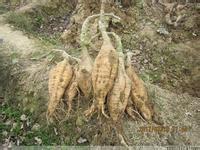
I. Characteristics. Kudzu root has strong adaptability, does not demand strict climate or geographical conditions, and is easy to cultivate. It is suited to a warm and humid growing environment. Kudzu root likes warmth and tolerates heat; when the average daily temperature reaches about 12°C, it begins to sprout; the suitable average daily temperature for growth is 20-33°C; 25-30°C is suitable for tuberous root formation, and 15-20°C is suitable for starch accumulation in the tuberous roots. Under the climatic conditions of our province, it begins to grow at the end of March and the beginning of April, with May to September being the peak growing season; growth stops in mid-November, and it withers after frost, and can safely overwinter in the open field. Kudzu root likes light and is also fairly shade-tolerant; under sufficient sunlight it grows very vigorously, with thick stems and more branches; when light is insufficient, branching decreases and the leaves are small and sparse. It grows well under tree shade and has strong resistance to high temperature, drought, diseases and insect pests. It tolerates low temperatures and severe cold, but not waterlogging. The growing period is 210-240 days.
II. Cultivation Techniques
1. Land selection. It is best to choose sandy loam with deep soil, loose texture and rich organic matter for cultivation, but it can also grow on acidic, barren red soil; it can be planted on various types of idle dry land such as hillsides, forest clearings, riverbanks, field edges and corners, and around houses, and can also be intercropped with widely spaced economic forests. Low-lying, water-accumulating fields should not be chosen for planting.
2. Transplanting. Kudzu root has diverse propagation methods; it can be propagated sexually by seed, or asexually by stem cuttings and layering. The seedling-raising period is from December of the previous year to January of the current year, and the planting period is February to April. Plant 650-750 plants per mu. Rooted seedlings can be used for planting, or 16-20 cm cuttings containing 2 stem nodes can be used for cutting. When planting, set the seedling at a 30-degree angle into the soil, but one stem node must remain above the soil. After planting, water to settle the roots. It is best to choose cloudy and rainy days for planting.
3. Field management. After the kudzu seedlings are planted, the soil around the roots should be kept moist. Five to six days after planting, apply 1 application of diluted human manure and urine slightly away from the base of the kudzu seedlings. After sprouting, protect the seedlings and fertilize (diluted human manure and urine), preferably in small amounts applied frequently. When the kudzu vines grow to 1-1.5 m, apply 1 application of decomposed pig manure or cow manure, 2-3 kg per plant; before or after fertilizing, loosen the soil and weed once, then weed regularly thereafter, and in July-August apply topdressing once more. Keep the soil moist throughout the growing period, and drain promptly in the rainy season to prevent waterlogging and water accumulation.
4. Disease and pest control. Kudzu root has relatively few diseases and pests. The main issue is that kudzu fields continuously planted for more than 2 years are prone to kudzu rust; in severe cases, spraying thiophanate-methyl fungicide can control it. The main pest is crickets, and 150 g of dichlorvos or dimethoate per mu mixed with 75 kg of water can be sprayed.
5. Timely harvest. Harvesting can be done from August to March of the following year; in mid-to-late August, harvest the overly dense underground tuberous roots. The main harvest period is winter, when nutrients are concentrated in the root tubers and the root tubers expand; therefore, the soil at the base of the plant can be dug open directly from cracks in the ground to expose the head of the tuberous root, harvesting the large ones and leaving the small ones. After harvesting, cover the soil back level and let the smaller ones remain in the ground to continue growing the following year.