Detailed Explanation of Isatis Root Planting Management Methods and Technical Points
How to manage Isatis root planting? Please introduce the daily management methods. The daily management of Isatis root mainly includes field management and pest and disease control. For detailed methods, please refer to the following: Isatis root field management methods: When the seedlings are 7-10 cm tall, thin them out; when the seedlings are 12 cm tall, set the spacing, with a plant spacing of 7-10...
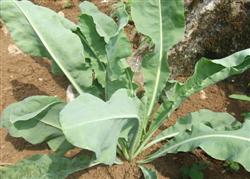 How to manage Isatis root planting? Please introduce the daily management methods
The daily management of Isatis root mainly includes field management and pest and disease control. For detailed methods, please refer to the following:
Isatis root field management methods:
When the seedlings are 7-10 cm tall, thin them out; when the seedlings are 12 cm tall, set the spacing, with a plant spacing of 7-10 cm. During thinning, carry out the first hoeing and weeding; afterward, weed once every half a month to one month. Keeping the field free of weeds is beneficial to leaf growth. After the leaves grow large enough to close the rows, only pull out large weeds. After thinning, in combination with hoeing and weeding, apply one topdressing of human manure and urine, with an application rate of 1500-2000 kg per mu. After each leaf harvest, topdress, applying 2000 kg of human manure and urine per mu, or 5-7 kg of ammonium sulfate, to promote the growth of new leaves. If the weather is dry after summer sowing, irrigate; during the rainy season, clean ditches and drain water in a timely manner to prevent waterlogging.
Isatis root pest and disease control methods:
The main diseases include root rot, downy mildew, sclerotinia rot, and white rust.
Root rot mostly occurs in the rainy season. In the early stage of the disease, drench the planting holes with a 1000-fold dilution of 50% carbendazim or a 1000-fold dilution of 70% thiophanate-methyl, and pull out diseased plants and burn them.
The control methods for downy mildew are: first, clean the field promptly after harvest and burn diseased plants in a centralized manner; second, carry out crop rotation; third, reduce field humidity and drain accumulated water in a timely manner; fourth, in the early stage of the disease, spray a 1:1:1100 Bordeaux mixture or a 500-fold dilution of 65% zineb, once every 7-10 days, for 2-3 consecutive sprays. A 200-300-fold dilution of 40% phosethyl-Al may also be used for spraying, once every 7 days, for 2-3 consecutive sprays.
The main control method for sclerotinia rot is crop rotation. Applying more phosphorus and potassium fertilizer in the early stage can improve disease resistance; reduce humidity, drain water to prevent waterlogging, and apply lime-sulfur mixture at the plant roots.
The control method for white rust is to spray a 1:1:120 Bordeaux mixture at the appropriate time in the early stage of the disease. The previous crop must avoid cruciferous crops, such as Chinese cabbage, rapeseed, radish, etc.
The main insect pests include cabbage white butterfly and green peach aphid. The cabbage white butterfly causes the most serious damage from June to July. Per mu, spray 100-150 grams of the biological pesticide BT emulsion or an 800-fold dilution of 90% trichlorfon to kill them. For green peach aphid, spray a 1000-fold dilution of 50% menazon emulsifiable concentrate or a 1000-fold dilution of 40% dimethoate emulsifiable concentrate.
Click to get more Isatis root planting techniques
Click to get more medicinal herb planting techniques