-
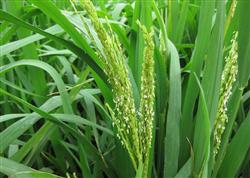
What to Do When Rice Has Difficulty Heading? Causes and Solutions
What to Do When Rice Has Difficulty Heading? What Medicine Can Solve It? When rice has difficulty heading, or shows the phenomenon of neck enclosure, the rice grains wrapped inside the leaf sheath cannot emerge in time for pollination and fertilization, and generally become empty and blighted grains, greatly affecting yield. There are many reasons for this phenomenon; in some cases the variety itself has a relatively severe tendency toward neck enclosure...
-
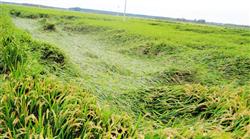
Detailed Explanation of the Causes of Rice Lodging and Control Methods
Why does rice lodge? How should it be prevented and controlled? Please give an introduction. The earlier rice lodging occurs, the greater the impact on yield; in severe plots, yield can be reduced by more than 50%, or even cause total crop failure. Lodging also has a great impact on rice quality, and at the same time increases harvest difficulty. Although rice lodging is related to windy and rainy weather, the main...
-
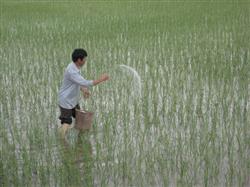
What are the precautions for fertilizing rice?
What should be noted when fertilizing rice? Please give an introduction. The principle of rice fertilization should be to use organic fertilizer and phosphate fertilizer as base fertilizer, potassium fertilizer mainly as tillering fertilizer, and nitrogen fertilizer applied evenly in multiple applications, with special attention to fertilizer for plump panicles and plump grains, so as to achieve large panicles and large grains while ensuring sufficient panicles. (1) Base fertilizer should be mainly organic fertilizer...
-
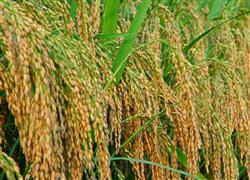
What are some practical methods to increase rice yield?
What methods can increase rice yield? Is there any effective method? To increase rice yield, you can refer to the following methods for management: 1. Increase the number of panicles. ① Cultivate strong seedlings. This provides a good foundation for early greening and early tillering after transplanting. ② Reasonable close planting. According to the planned number of panicles to be harvested and an estimate of the tillering situation of the seedlings after transplanting...
-
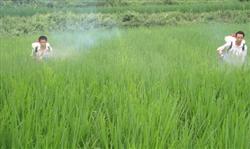
When is the best time to spray foliar fertilizer on rice?
When is the best time to apply foliar fertilizer to rice? Here is a detailed introduction: Applying foliar fertilizer during the middle and late stages of rice growth can increase grain number and grain weight, generally increasing yield by 5%-10%, and improve quality. Therefore, the following foliar fertilizers can be selected according to conditions. For Guli Bao (Grain-Filling Fertilizer), during the heading stage and milk-ripening stage of rice, use 1 packet (50 grams) per mu dissolved in 50...
-
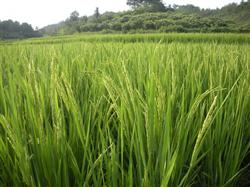
What are the key management techniques for rice during the heading and grain-filling stage?
How to manage rice well during the heading and grain-filling stage? Please provide an introduction to the management methods. The heading and grain-filling stage of rice refers to the period from heading to yellow ripeness. This period is critical for determining grain number and grain weight. The goals of field management are: maintaining roots, protecting leaves, and improving the seed-setting rate and 1000-grain weight. The main field management measures...
-
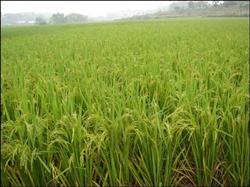
How should pests and diseases be controlled in the late growth stage of rice?
How should pests and diseases in the late stage of rice be controlled? Please provide guidance methods. Pests and diseases cause serious damage in the late stage of rice. The control methods can refer to the following: 1. Sheath blight: The disease has recently been rising faster. In a general survey of each town on September 10, the average rate of diseased hills was 13.7%, and the rate of diseased plants was 3.3%. The disease situation has clearly accelerated compared with the previous period...
-
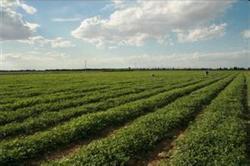
Detailed Explanation of Field Management Techniques for Licorice
Licorice is a plant in the Fabaceae family. The main types include Glycyrrhiza aspera, Glycyrrhiza glabra, and Glycyrrhiza inflata. Its dried roots and rhizomes are used as medicine, and the crude drug is called licorice. It has the effects of tonifying the spleen and boosting qi, relieving cough and reducing phlegm, clearing heat and detoxifying, easing tension and relieving pain, and harmonizing the properties of medicines. The cultivation techniques for licorice are introduced as follows. 1. Soil selection. Licorice...
-
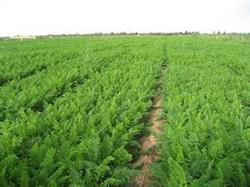
Detailed Explanation of Licorice Seedling Raising and Transplanting Methods and Technical Key Points
The glycyrrhizic acid contained in licorice is 200 to 300 times sweeter than sucrose, making it the best natural sweetener discovered to date. China exports large quantities of licorice and its extracts to European, American and Southeast Asian countries, and it has become a major foreign-exchange-earning medicinal herb. Due to increasing demand at home and abroad, wild licorice resources are becoming increasingly depleted. Therefore, it is necessary to...
-
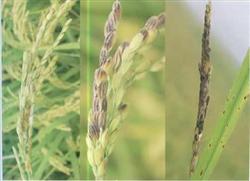
Why does rice produce empty and blighted grains, and how should it be prevented and controlled?
Why does rice produce empty and blighted grains, and how should it be prevented and controlled? Please give a detailed introduction. Under normal conditions, the rate of empty and blighted rice grains is generally 10%-20%, and in severe cases can reach 40%, which greatly affects rice yield. 1. Causes of formation. The rate of empty and blighted rice grains is mainly affected by 3 factors. 1. Climatic...
条件筛选