-
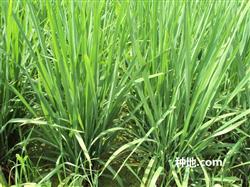
When is the most critical time for rice pest and disease control?
When should you pay attention to rice pest and disease control? How to achieve good control results? From sowing to the seedling stage, farmers should focus on controlling seed-borne diseases (bakanae disease, rice blast at the seedling stage, white-tip nematode disease, etc.), the small brown planthopper, and the first generation of stem borers. At the rice booting stage, farmers should focus on controlling the brown planthopper, rice leaf roller, stem borers, ear blast,...
-
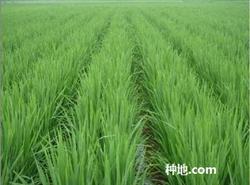
Rice Pest and Disease Control Methods and Key Technical Points
How to control rice pests and diseases? What techniques can be borrowed for rice pest and disease control methods: 1. Rice black sclerotial stem rot. A fungal disease of the stem base of rice at the adult plant stage, also called rice stem rot or small sclerotial disease. The pathogens are Sclerotium hydrophilum and Sclerotium oryzae of the Deuteromycotina. Sexual state...
-
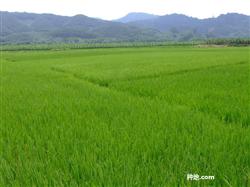
What are the methods for controlling rice pests and diseases in summer?
How to control pests and diseases in rice in summer? Need guidance. According to trend analysis, in summer and autumn, rice pests and diseases focus on the "three insects and three diseases" (namely rice leaf roller, rice planthopper, striped stem borer, rice blast, rice false smut, and sheath blight). In early September, the sixth (4th) generation rice planthopper, the sixth (4th) generation rice leaf roller, the third generation...
-
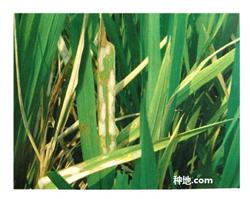
How can chemical control of rice pests and diseases reduce pesticide damage?
How to treat rice sheath blight? What methods can be used to prevent and control rice sheath blight? The following measures are mainly taken: 1. Select disease-resistant varieties. 2. Salvage sclerotia to reduce the source of inoculum. 3. Strengthen cultivation management, apply sufficient base fertilizer, apply topdressing early, do not apply nitrogen fertilizer alone, increase phosphorus and potassium fertilizer, adopt formula fertilization technology, so that...
-
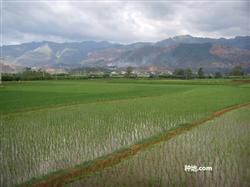
What are the precautions for rice pest and disease control?
What should be noted when controlling rice pests and diseases? Advice needed. The control target must be clear: take corresponding pesticide control measures according to the different types of pests and diseases in the field. When mixing pesticides, their content must be clearly understood, especially for the control of neck blast; tricyclazole has 2 formulations, and they must not be confused. Do not arbitrarily increase...
-
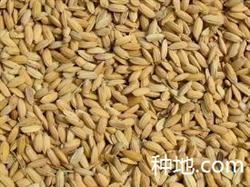
A Detailed Guide to Seed Soaking and Germination Promotion Methods for Hybrid Rice
A netizen from Guangxi left a message saying: We are about to raise rice seedlings, so how should we soak the seeds and promote germination? It is now the main spring production season, and a small number of farmers, due to improper operation during the seed soaking and germination process, have encountered problems such as seeds turning sour and smelly and poor sprouting. Therefore, when soaking seeds and promoting germination, attention should be paid to: 1. Sun-drying the seeds: ...
-
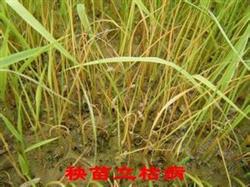
How to prevent and control bacterial wilt and damping-off in rice seedlings at 10 days of raising seedlings?
For bacterial wilt and damping-off, prevention is more important than cure. Only when the rice seedlings are robust are they less likely to become infected, so field management should be strengthened. Pay attention to controlling the seedbed temperature; it should not be too high or too low. In particular, pay attention to the effect of the low temperatures of a late spring cold snap on the rice seedlings, and harden and root-restrict the seedlings at the appropriate time; the humidity during seedling raising should not be too high, as high humidity easily causes various diseases and...
-
Detailed Explanation of Key Technical Points for Seedling Cultivation in High-Quality Rice Production
During the seedling cultivation period, in response to low-temperature cold wave weather, the Provincial Agricultural Technology General Station recommends the following measures: First, seize the time to sow and reseed. In areas where large-scale sowing has not yet been carried out, it is essential to seize the current favorable opportunity of rising temperatures and sow promptly; where seed rot, seedling rot, or seedling death has occurred, reseeding should be done promptly according to the degree of damage. Especially for machine transplanting...
-
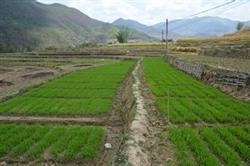
Rice seedling raising methods and key technical points for seedling-stage management
Seed treatment To improve the germination rate of rice, the seeds should be sun-dried before sowing, then 2 ml of Baike (25% prochloraz) or 15 g of Exianqing (16% prochloraz·cartap) is added to 5-6 kg of water to soak 5-6 kg of rice seed, and for every 5-6 kg of water, 10 g of 10% imidacloprid wettable powder is also added, soaking for 72 hours, soaking by day and airing by night, then accelerating...
-
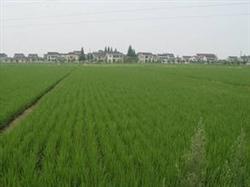
Detailed Explanation of the New Technique of Rice Seedling Cultivation with Perforated Film
How to control field seedling-stage pests, root rot, and rice seedbed diseases in spring? On March 25, the Municipal Agricultural Technology Extension Station answered common questions for farmers during spring plowing, advising prevention of disasters through measures such as proper chemical treatment of seeds, controlling seedling-stage pests and diseases, and vigorously promoting seedling cultivation in medium and large sheds. It is understood that in 2009, our...
条件筛选