When is the most critical time for rice pest and disease control?
When should you pay attention to rice pest and disease control? How to achieve good control results? From sowing to the seedling stage, farmers should focus on controlling seed-borne diseases (bakanae disease, rice blast at the seedling stage, white-tip nematode disease, etc.), the small brown planthopper, and the first generation of stem borers. At the rice booting stage, farmers should focus on controlling the brown planthopper, rice leaf roller, stem borers, ear blast,...
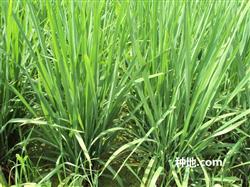
When should you pay attention to rice pest and disease control? How to achieve good control results?
From sowing to the seedling stage, farmers should focus on controlling seed-borne diseases (bakanae disease, rice blast at the seedling stage, white-tip nematode disease, etc.), the small brown planthopper, and the first generation of stem borers. At the rice booting stage, farmers should focus on controlling the brown planthopper, rice leaf roller, stem borers, ear blast, rice false smut and other pests and diseases. At the rice ear stage, the brown planthopper should be the main target, with simultaneous control of other pests and diseases.
I. Brown planthopper control. Farmers should increase the application of organic fertilizer, implement soil-testing formula fertilization, practice shallow-water frequent irrigation, and drain the field at the right time and to an appropriate degree. For single-season rice, do not use or use only a small amount of chemical pesticides before early July, so as to create favorable conditions for the reproduction of natural enemies in the paddy field.
When, at the tillering stage, there are 1000 (brown planthopper accounting for more than 60%) to 1500 (white-backed planthopper accounting for more than 60%) young nymphs per 100 hills, at the booting stage (booting-swelling stage) to the full-heading stage there are 1500 (brown planthopper accounting for more than 60%) to 2000 (white-backed planthopper accounting for more than 60%) young nymphs per 100 hills, and after the full-heading stage there are 2000 young nymphs per 100 hills, farmers can choose pymetrozine, buprofezin, ethiprole, chlorpyrifos, dichlorvos, etc. for control. For fields with complex insect stages, it is advisable to choose two suitable pesticides for mixed use. When applying, use sufficient dosage, mix with sufficient water (60 kg per mu), spray the correct parts (the middle and lower parts of the rice plants), and maintain a water layer (about a 3 cm water layer for 5 days); for fields without water, increase the amount of water used or use dichlorvos for fumigation.
II. Rice leaf roller control. Farmers should promote early growth in the early stage of rice growth, drain the field at the right time and to an appropriate degree in the middle stage, and control nitrogen fertilizer use in the later stage.
In years of major outbreak, the appropriate control period is the peak of egg hatching, with another supplementary treatment 7 days later; in years of moderate outbreak, the appropriate control period is the peak of young larvae. For the control of the fourth (2nd) generation rice leaf roller, pesticides such as Bt and abamectin can be selected (when selecting the biological pesticide Bt, the appropriate control period should be at the peak of egg hatching); for the control of the fifth (3rd) and sixth (4th) generations, abamectin, profenofos, chlorantraniliprole, emamectin benzoate and chlorpyrifos, etc. can be selected.
III. Rice stem borer control. For winter fallow fields, plow in time, irrigate with deep water and maintain it for more than one week, and appropriately delay the rice sowing period to avoid and reduce damage by the main damaging generation. Use pesticides rationally, and carry out demonstration applications of sex pheromones and insect-killing lamps to reduce the amount of chemical pesticides used.
For the first generation of the yellow stem borer, early rice fields and single-season rice seedling fields should be the key protection targets; at the peak of egg hatching, choose Bt and its compound preparations, or at the peak of the 1st and 2nd instar larvae choose monosultap for control. For the second generation, focus on controlling single-season rice fields, with the appropriate control period at the peak of egg hatching; in severely affected areas, carry out another supplementary treatment 7 to 10 days later, using emamectin benzoate, chlorpyrifos, fipronil, and abamectin compound preparations. For the first generation of the white stem borer, control it together with the yellow stem borer; for the second generation, treat dead hearts selectively. When the density of egg masses per mu reaches more than 120 in a field, apply pesticides at the peak of egg hatching, using abamectin compound preparations, monosultap, etc. For the third generation, focus on controlling white ears, and apply pesticides at the booting stage of single-season rice (when 5-10% of the rice has booted and exposed ears), using triazophos with monosultap or abamectin compound preparations. Farmers should pay special attention that during the control process, different types of pesticides should be used alternately and in rotation to delay the development of pesticide resistance. When applying pesticides, the field should maintain a shallow water layer as much as possible.
IV. Rice blast control. Rice varieties should be replaced in time after being planted for 4-5 consecutive years. Before sowing rice, farmers can soak the seeds in a 2500-3000 times dilution of 25% prochloraz or 5.5% dithiocyano-methane. Farmers should pay attention to the rational combined application of nitrogen, phosphorus and potassium, and advocate spraying foliar fertilizer. Irrigate frequently with shallow water, and drain the field at the right time and to an appropriate degree.
When controlling seedling blast and leaf blast, once central diseased plants are found, treat them selectively, or when the diseased leaf rate reaches 3-5%, apply pesticides 1-2 times for control. To control ear blast, for susceptible varieties in old disease areas, strictly spray pesticides for prevention 3-5 days before booting, and carry out another supplementary treatment one week later; pesticides such as 40% isoprothiolane, 75% tricyclazole, Bacillus subtilis, and kasugamycin can be selected.
V. Rice stripe virus disease control. Based on the performance characteristics that japonica and glutinous rice are more severely affected than indica rice, the Provincial Plant Protection Station recommends that rice areas with relatively severe disease occurrence reduce japonica and glutinous rice, expand the planting of indica rice, or promote the planting of rice varieties with relatively good disease resistance such as Yandao No. 8, Xudao No. 3, Yanjing No. 9, Wandao 119, Fengliangyou No. 1, and Fengliangyou No. 4. In severely affected areas, it is advocated to use insect-proof nets or non-woven fabric for seedling raising, appropriately delay the sowing period of single-season rice, and advocate direct seeding, so as to avoid the peak of virus transmission by adult small brown planthoppers migrating from the first generation. In severely affected areas, during the wheat maturity and harvest period, universally control the small brown planthopper in seedling fields, using pymetrozine or chlorpyrifos, fenobucarb, etc., and carry out timely supplementary treatment according to insect conditions. In areas where the disease occurs frequently, control should be carried out respectively from the egg hatching to the peak of young nymphs of the second and third generations of the small brown planthopper, using pymetrozine or chlorpyrifos, fenobucarb, etc.
VI. Rice false smut control. Farmers can choose disease-resistant varieties such as the Xieyou series, D You 527, and Xiushui 664. Apply pesticides for the first time 10 days before rice booting, and carry out another supplementary treatment at the booting stage; pesticides such as tebuconazole, Jing? Lawya, and Jing? Xinzuo can be selected.
VII. Rice sheath blight control. When irrigating and harrowing the field, farmers should salvage the "wave debris" blown to the field edges, take it out of the field and treat it centrally, so as to reduce the initial inoculum source of rice sheath blight. Implement rational combined application of nitrogen, phosphorus and potassium, and drain the field at the right time and to an appropriate degree.
In fields where the disease-hill rate reaches 20% at the booting stage of early rice and 40% at the heading stage, and in fields where the disease-hill rate reaches 20% from the tillering to jointing stage of middle and late rice, spray pesticides in time for control. Pesticides such as 24% thifluzamide suspension concentrate (Mansui), 20% jinggangmycin wettable powder, 5% jinggangmycin aqueous solution, and 12.5% Jing? Lawya aqueous solution can be selected, and the pesticide solution should be evenly sprayed on the middle and lower parts of the rice plants. For severely affected fields, carry out another supplementary treatment 7-10 days after the first pesticide application.
Click to get a large amount of rice cultivation technology
Click to get a large amount of grain cultivation technology