-

What kind of fish is the American flagfish? Let's get to know this fish
The American flagfish, Jordanella floridae, is also known as the flagfish and the star-striped fish. Place of origin: Florida, USA. Appearance: the body grows up to 6 cm long, and its shape resembles a moonfish, but the back and belly are broad, and the caudal peduncle is also wide. The head and snout are bluntly rounded. The outer edge of the caudal fin is straight. The dorsal fin is larger than the anal fin, the dorsal and anal fin edges are curved, and the body color is variable, with red, pale yellow, blue, purplish red and other colors, some deep and some light, some leaning blue or leaning red, and the whole body has more than 10 longitudinal rows of star-spotted stripes, while the dorsal fin is covered with dark star spots; its star-spotted stripes closely resemble the stars-and-stripes pattern of the American flag, which is how it got its name. Habits
-
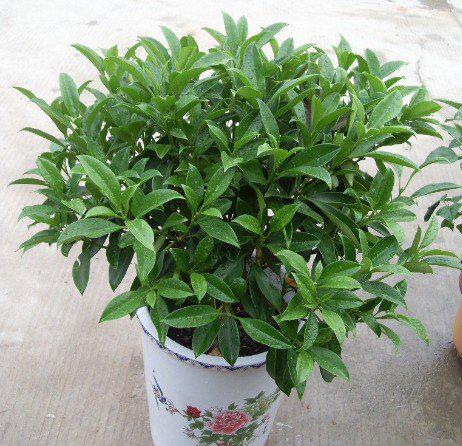
What causes yellowing leaves on the African jasmine?
African jasmine readily adapts to unfamiliar environments and can be grown in courtyards and on balconies. Its branches are the color of jade, its leaves are glossy and shining, and its flowers are slightly fragrant with an elegant shape, each with five petals, arranged in umbels clustered at the tips of the flowering branches. Its flowering period is very long, blooming in both winter and summer, with the most splendid blooms in spring and summer.
-

Detailed Explanation of Field Management Techniques for Angelica dahurica Cultivation
Key Field Management Points for Angelica dahurica
-
Detailed Introduction to New American Red-Fleshed Plumcot Varieties
Plumcot is an emerging fruit obtained through a complex hybridization process between apricot and plum. Its fruit is richly aromatic with excellent flavor, and it also has fine characteristics such as large fruit, early fruiting, high and stable yield, a long harvest period, good storage tolerance, strong adaptability and high economic value. Red-fleshed plumcots are extremely rare on the market and bring very high cultivation returns. Three new American red-fleshed plumcot varieties with different ripening periods are introduced here. 1. Flavor Rose. The earliest-ripening new American red-fleshed plumcot hybrid variety; its fruit is flat in shape, turns purple-black when ripe, with a smooth and glossy, very attractive skin
-
What variety is the American black sweet potato? An article to help you understand
The American black sweet potato is a new black-red sweet potato variety introduced from the United States. The leaves are heart-shaped, without notches, with short vines (70-100 cm long), many branches at the base, and the top three leaves are purple-red. Each plant produces 4-6 tubers, each weighing 100-500 grams, with a maximum of 1 kg. It produces many and uniform tubers. The general yield per mu is: spring sweet potatoes 4000-5000 kg, summer sweet potatoes around 3000 kg. The tubers are spindle-shaped, with purple-black skin like dragon shells, and purple-red flesh, beautiful and attractive. After cooking, they are entirely purple-black, sweet, fragrant, mealy, and sandy,
-
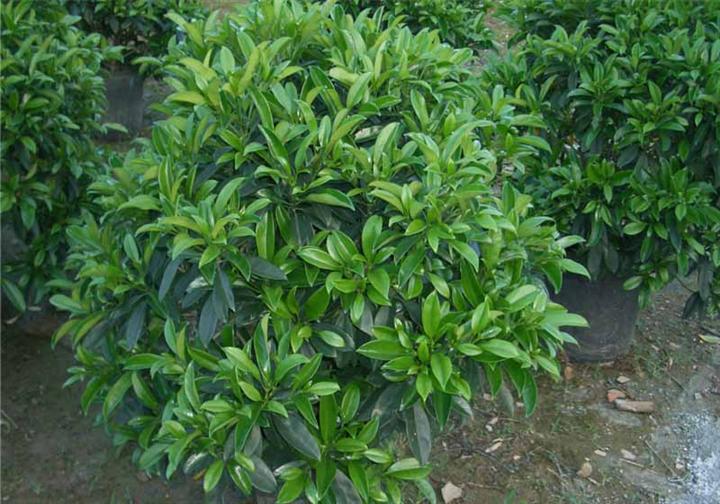
How to grow African jasmine? Detailed guide to cultivation methods and precautions
The branches of African jasmine are jade-green in color, and the leaves are glossy and shiny. The leaves are opposite, herbaceous and fleshy, oblong, elliptical to obovate, with acuminate tips; the upper surface is dark green, and the underside is yellow-green. At the base of the leaves, it secretes a kind of crystal-clear liquid with a faint fragrance, which is beneficial for sleep.
-
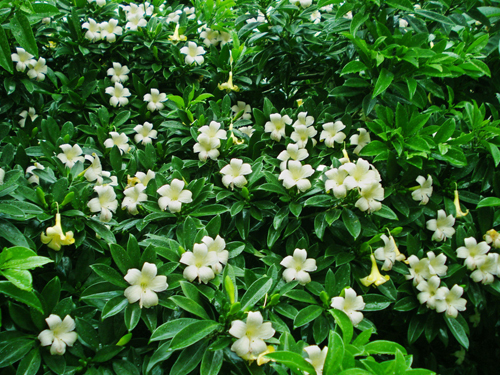
What are the cultivation methods for Fagraea ceilanica (African jasmine)?
Fagraea ceilanica (Fagraea, African jasmine) Scientific name: fagraeaceilanica Morphological features: Evergreen (climbing) shrub or small tree. Leaves opposite, elliptical, with a abruptly pointed tip. Entire margin, fleshy, dark green on the surface. Flowers solitary or in dichasial cymes, corolla funnel-shaped, 5-lobed, white
-
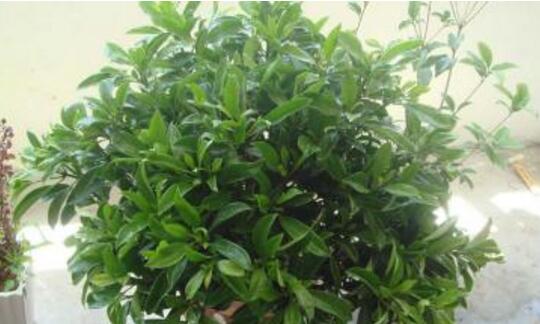
What to Do When African Jasmine Leaves Become Soft and Droopy? Root Damage Is the Main Cause, Four Solutions
Normally, the leaves of African jasmine should be firm and upright, but some flower lovers have found that their African jasmine leaves have become soft and droopy, which not only affects its appearance but also slows its growth. What causes this phenomenon, and what should we do about it? Let's take a look together.
-
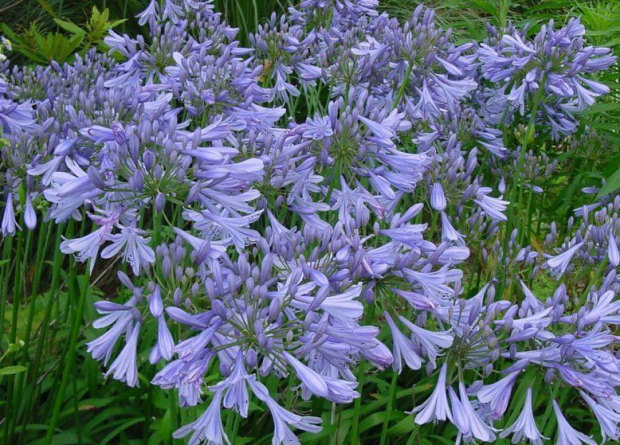
How to grow and cultivate Agapanthus (also known as African lily)
Agapanthus gets its name because it has many flowers and many seeds, and its leaves resemble those of an orchid; because its form is close to that of a clivia, but its flowers are purple-blue, it is also called purple clivia; in Jiangnan areas such as Shanghai and Hangzhou, it is also called baizilian. It is a perennial evergreen herb with rhizomes, with strap-shaped leaves about 80 cm long, basal, arranged in two rows
-
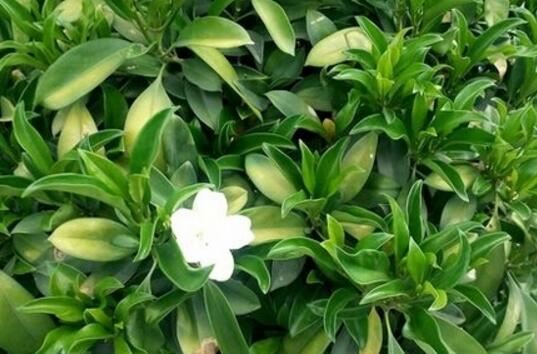
What to Do When African Jasmine Leaves Turn Yellow and the Plant Shrinks? Four Methods to Control Pests and Diseases
A plant's health is closely related to its environment and care methods, and African jasmine is certainly no exception. The soft, drooping leaves that some flower lovers encounter with African jasmine may be related to pests and diseases. What should be done when pests and diseases occur? Today we will explain the methods for controlling pests and diseases in African jasmine.
条件筛选