What to Do When African Jasmine Leaves Become Soft and Droopy? Root Damage Is the Main Cause, Four Solutions
Normally, the leaves of African jasmine should be firm and upright, but some flower lovers have found that their African jasmine leaves have become soft and droopy, which not only affects its appearance but also slows its growth. What causes this phenomenon, and what should we do about it? Let's take a look together.
What Causes African Jasmine Leaves to Become Soft and Droopy
1. Overwatering
We have emphasized many times that when growing African jasmine, you must not water it too much, and especially must not let water accumulate in the pot. Roots soaking in water are extremely prone to rot, and if the roots rot, it will cause problems with respiration and water absorption, so never water too much.
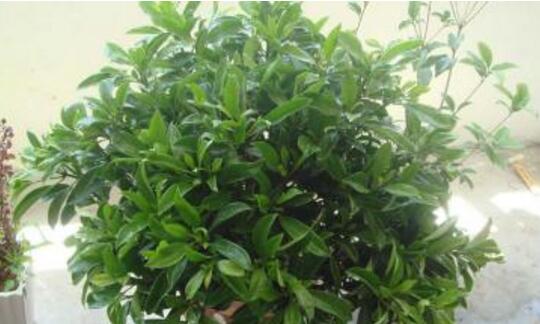
2. Root Damage
Loosening the soil, repotting, transplanting, propagating and so on can all come into contact with the roots of African jasmine. For example, division propagation involves cutting the plant apart at the roots. If the roots are accidentally damaged during these processes, the phenomenon of soft and droopy African jasmine leaves can also occur.
3. Excessive Humidity
Although African jasmine likes a high-humidity environment, the humidity should be kept between 60%-70%. If the humidity is too high, it will not only be unfavorable for the growth of African jasmine, but will instead hinder leaf growth due to the oxygen content being too low.
4. Long-Term Lack of Fertilizer
Applying too little fertilizer or not fertilizing for a long time will cause African jasmine to lack necessary elements such as nitrogen during growth, which will lead to thin, weak, and soft leaves, along with slow growth.
What to Do When African Jasmine Leaves Become Soft and Droopy
1. Stop Watering
If water accumulates due to watering too frequently or too much, you should immediately stop watering and place the African jasmine in a bright spot 1 m away from the windowsill for care. Do not let direct sunlight hit it, and afterward you can appropriately mist the leaf surface.
2. Be Careful When Dividing and Repotting
When dividing for propagation, repotting, or transplanting, be especially careful not to damage its roots.
3. Reduce Humidity
When the environmental humidity is too high, maintain good ventilation in the environment to avoid excessive humidity affecting the leaves' metabolism and photosynthesis.
4. Apply Fertilizer in Time
For leaves that have become soft due to long-term lack of fertilizer, fertilizer should be applied in time, mainly nitrogen fertilizer, while also paying attention to supplementing phosphorus and potassium fertilizer. You can first apply diluted decomposed cake fertilizer water, and afterward apply organic fertilizer once every 15 days or so.
What to Do When African Jasmine Leaves Become Soft and Droopy
1. Overwatering
Cause: When growing African jasmine, you must not water too much, and even more so must not let water remain in the pot, otherwise the roots are extremely prone to rot. If the roots rot, it will cause problems with respiration and water absorption.
Solution: At this time, you should immediately stop watering and place the African jasmine in a bright place farther from the windowsill for care. Do not let direct sunlight hit it, and afterward you can appropriately sprinkle water on the leaf surface.
2. Root Damage
Cause: During repotting, changing pots, potting, transplanting, and transportation, handle it gently and do not bruise the roots or branches. Once the roots rot, the growth of the aboveground part will be affected.
Solution: When dividing for propagation, repotting, or transplanting, be especially careful not to damage its roots, and keep the root soil ball intact.
3. Excessive Humidity
Cause: Although African jasmine likes a moist environment, the humidity should be kept between 60%-70%. If the humidity is too high, it will not only be unfavorable for the growth of African jasmine, but will instead hinder leaf growth due to the oxygen content being too low.
Solution: When the environmental humidity is too high, it can be moved to a well-ventilated place to avoid excessive humidity affecting the leaves' metabolism and photosynthesis.
4. Lack of Fertilizer
Cause: Applying too little fertilizer or not fertilizing for a long time will cause African jasmine to lack necessary elements such as nitrogen, which will make the leaves small, thin, and soft, and cause slow growth.
Solution: Apply fertilizer in time, mainly nitrogen fertilizer, while also paying attention to supplementing phosphorus and potassium fertilizer. You can first apply diluted decomposed cake fertilizer water, and afterward apply organic fertilizer once every half month.
Can African Jasmine Be Grown Hydroponically? African Jasmine Hydroponic Method / Hydroponics When Rooting Cuttings
Many plants can be grown and cared for hydroponically, but for the relatively sturdy African jasmine, is hydroponics suitable? This is a question many flower lovers are pondering. So can African jasmine be grown hydroponically? Today we will take a detailed look at this question.
Can African Jasmine Be Grown Hydroponically?
1. Hydroponic Cultivation / No
We know that plants such as ivy and spider plant can be grown in soil or hydroponically. Hydroponic cultivation refers to placing the plant's roots in water for growing. The advantages of this method are that it is easy to care for and highly ornamental, but African jasmine has a special plant form, so under normal circumstances it is not grown hydroponically.
2. Hydroponic Rooting of Cuttings / Yes
Among the propagation methods of African jasmine, cutting is one of the main methods. So when taking cuttings, can African jasmine be grown hydroponically? The answer is yes. During propagation, hydroponics can be used to promote rooting of the cuttings. Below, let's look at the hydroponic method for African jasmine.
African Jasmine Hydroponic Method
1. Make a Hydroponic Container
A beverage bottle can be used as the hydroponic container. To ensure the branch can be smoothly inserted into the container, part of the leaves at the base can be trimmed off.
2. Put the Branch into the Container
Put the cutting into the container. The container should be kept transparent so that the development of the cutting inside can be observed in real time, and it is also convenient for the cutting to receive sufficient light.
3. Add Water
Add water to the container. When adding water, the water level does not need to be too high. The general principle is that part of the cutting is submerged in water; the cutting must not be completely covered by water, otherwise it is unfavorable for rooting.
Precautions
1. It is best to use water rich in minerals, such as mineral water, well water, river water, and so on. Do not use tap water, cooled boiled water, and the like, otherwise it is easy for moss to grow during hydroponics.
2. Control the temperature well. For hydroponic cuttings, be sure to pay attention to temperature, as it determines how quickly roots form. In summer, it should be placed in a cool indoor area to avoid excessively high temperatures affecting rooting.
3. Light should be appropriate. Do not place the African jasmine after hydroponics under the sun for care. Instead, place it in a semi-shaded environment. If the light is too weak, scattered light can be used for supplemental lighting.