What to Do When African Jasmine Leaves Turn Yellow and the Plant Shrinks? Four Methods to Control Pests and Diseases
A plant's health is closely related to its environment and care methods, and African jasmine is certainly no exception. The soft, drooping leaves that some flower lovers encounter with African jasmine may be related to pests and diseases. What should be done when pests and diseases occur? Today we will explain the methods for controlling pests and diseases in African jasmine.
Pest and Disease Control for African Jasmine
I. What to Do When African Jasmine Has Insect Pests
1. Atractomorpha sinensis (short-horned grasshopper)
Its peak damage period is in autumn. The adult body length is 21-25 mm, and the body color is green or brown. It feeds on the leaves of African jasmine. It is one of the most damaging pests in the pest and disease control of African jasmine, causing holes and notches in the leaves, which greatly affects their appearance.
Control methods: (1) In autumn and winter, promptly remove dead leaves and weeds; (2) Spray a 800-times solution of 90% trichlorfon crystal to promptly kill the short-horned grasshopper; (3) Strengthen care in the later period.
2. Slug
Silvery-white streaks appear on the leaves of African jasmine, and in summer white eggs also appear at the base. Slugs usually come out at night to suck the tender leaves, and the source of the pests hides in the soil or at the base.
Control methods: (1) Disinfect the potting soil before potting, and it can be placed in the sun to bake; (2) Move the African jasmine into the sunlight; direct sunlight for more than 3 hours can kill the slugs.
II. Common Diseases
1. Anthracnose
Characteristics: Irregular lesions first appear on the leaves of African jasmine, located at the leaf edges, usually about 10 mm in size. The color of the lesions is generally grayish-white, but will turn dark brown, and black spots will also appear in the center of the lesions.
Control methods: (1) Pay attention to maintaining a ventilated environment and control the temperature below 32°C; (2) In the early stage of the disease, spray a 800-times solution of 50% carbendazim wettable powder, or a 500-times solution of 25% tanteiling wettable powder, changing once every 10 days, which can improve the effectiveness of the medicine.
2. Leaf Spot Disease
Characteristics: Dark brown round spots appear on the upper surface of African jasmine leaves. The lesions will continue to spread and take on irregular shapes. Multiple black dots appear on both the front and back of the leaves. The leaves turn yellowish and fall early, and the plant grows slowly.
Control methods: (1) Stop spraying water on the leaves of the plant and remove the diseased leaves; (2) Use 50% thiophanate 1000-times, 70% mancozeb 500-times, or 80% mancozeb zinc 400-600-times, all of which can be used alternately to avoid developing resistance.
Methods for Controlling Pests and Diseases of African Jasmine
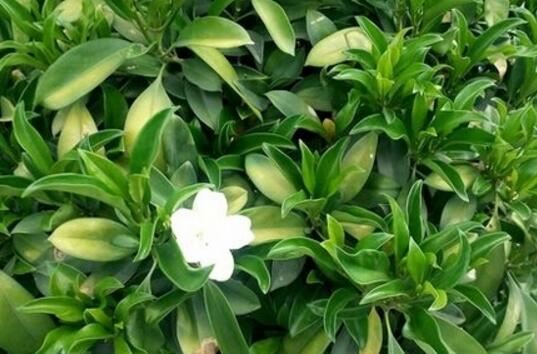
African jasmine is an evergreen climbing vine, with stems that can reach 4 m in length. African jasmine easily adapts to unfamiliar environments and can be planted in courtyards and on balconies. Its branches are jade-green in color, its leaves are glossy and shiny, and its flowers are slightly fragrant with an elegant shape. Each flower has five petals, is umbrella-shaped, and clusters at the tips of the flowering branches. African jasmine generally does not often suffer from pests and diseases, but they do occasionally occur. So, what are the common pests and diseases of African jasmine? What are the methods for controlling pests and diseases of African jasmine?
Methods for Controlling Pests and Diseases of African Jasmine
I. Methods for Controlling Diseases of African Jasmine
1. Anthracnose: It mostly occurs on tender branches and leaves, with nearly round to irregular sunken spots, brown edges, and grayish-white to grayish-brown centers, on which sparse small black granules grow, which are its acervuli. Control methods: In the early stage of the disease, spray a 800-times solution of 50% carbendazim wettable powder plus a 800-times solution of 25% chlorothalonil wettable powder, or a 500-times solution of 25% tanteiling wettable powder, spraying alternately once every 10 days, for 3 to 4 consecutive times.
2. Sunscald: In the intense heat of midsummer, when shade is not provided properly, the tender shoots and young leaves of potted African jasmine are prone to sunscald, shown as many grayish-white or light white scorch spots on the leaves. Control methods: Use a shade net for shading and adjust the position appropriately; in hot and dry seasons, appropriately increase the frequency and amount of watering, and if necessary pour water on the leaf surface; for plants that have already suffered scorch damage, promptly move them under a shaded shed, cut off the scorched tender shoots and young leaves, and strengthen water and fertilizer management so the plant can recover its health as soon as possible.
II. Methods for Controlling Insect Pests of African Jasmine
African jasmine occasionally also suffers from leaf-eating pests, such as Atractomorpha sinensis, causing more holes or notches on the plant's leaves. A 800-times solution of 90% trichlorfon crystal should be sprayed promptly to kill them.
The above is the article on methods for controlling pests and diseases of African jasmine. African jasmine likes warmth and sunlight, but requires avoiding direct strong summer sunlight; it likes environments with high air humidity and good ventilation. The pests and diseases of African jasmine are generally relatively easy to control, so there is no need to worry too much. As long as African jasmine is cultivated according to scientific methods, it can grow healthily.
Pest and Disease Control for African Jasmine
African jasmine, original name: Fagraea ceilanica, also known as: carp gall, gray thorn wood, qing yellow fruit, small yellow fruit, Latin name: Fagraea ceilanica. Native to southern China and Southeast Asian countries, it is an evergreen (climbing) shrub or small tree of the genus Fagraea in the family Loganiaceae, originally named Fagraea ceilanica (see "Illustrated Flora of Higher Plants of China", "Flora Yunnanica" and other books). Its similarities to jasmine of the family Oleaceae are only that the leaves are opposite and the flowers are fragrant. Because the homophone of Fagraea ceilanica is similar to jasmine, and also to make the name sound nicer and easier to sell, flower vendors gave it a new name "African jasmine". It is distributed in southern China and Southeast Asian countries. African jasmine easily adapts to unfamiliar environments and can be planted in courtyards and on balconies.African jasmine has branches jade-green in color, glossy and shiny leaves, and flowers with a slight fragrance. The flower shape is elegant, each flower has five petals, is umbrella-shaped, and clusters at the tips of the flowering branches. The flowering period is very long, blooming in both winter and summer, and blooming most brilliantly in spring and summer. At dawn or dusk, if there seems to be a faint, delicate fragrance, it refreshes the heart and mind.
Pest and Disease Control
1. Diseases
① Anthracnose mostly occurs on tender branches and leaves, with nearly round to irregular sunken spots, brown edges, and grayish-white to grayish-brown centers, on which sparse small black granules grow, which are its acervuli. Control methods: In the early stage of the disease, spray a 800-times solution of 50% carbendazim wettable powder plus a 800-times solution of 25% chlorothalonil wettable powder, or a 500-times solution of 25% tanteiling wettable powder, spraying alternately once every 10 days, for 3 to 4 consecutive times.
② Sunscald: In the intense heat of midsummer, when shade is not provided properly, the tender shoots and young leaves of potted African jasmine are prone to sunscald, shown as many grayish-white or light white scorch spots on the leaves. Control methods: Use a shade net for shading and adjust the position appropriately; in hot and dry seasons, appropriately increase the frequency and amount of watering, and if necessary pour water on the leaf surface; for plants that have already suffered scorch damage, promptly move them under a shaded shed, cut off the scorched tender shoots and young leaves, and strengthen water and fertilizer management so the plant can recover its health as soon as possible.
2. Insect Pests
African jasmine occasionally also suffers from leaf-eating pests, such as Atractomorpha sinensis, causing more holes or notches on the plant's leaves. A 800-times solution of 90% trichlorfon crystal should be sprayed promptly to kill them.