What are the cultivation methods for Fagraea ceilanica (African jasmine)?
Fagraea ceilanica (Fagraea, African jasmine)
Scientific name: fagraea ceilanica
Morphological features: Evergreen (climbing) shrub or small tree. Leaves opposite, elliptical, with an abruptly pointed tip. Entire margin, fleshy, dark green on the surface. Flowers solitary or in dichasial cymes, corolla funnel-shaped, 5-lobed, white, fragrant.
Ecological habits: Likes light but avoids strong light, not cold-tolerant, likes environments with high air humidity and good ventilation. Tolerates pruning. In the South Asian subtropical region it stays green and lush all year round and grows well. It is not demanding about soil and has strong adaptability, growing easily and being easy to cultivate.
Flowering period: May to October.
Landscape uses: Medium to large potted plants, courtyard ornamentals in South China, indoor potted plants in Central China and East China, for decorating entrance halls.
Species identification: An easily confused species with the same name --- jasmine Jasminum sambac, Oleaceae. Both have opposite leaves and white, fragrant flowers. Because the homophone of Fagraea is similar to jasmine, and for ease of sales, merchants gave it the commercial name “African jasmine.”
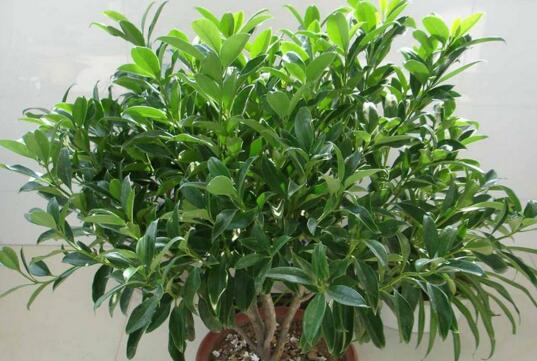
African jasmine likes a warm and humid environment and likes sunlight; it has relatively high requirements for air humidity; its cold tolerance is average; it is suitable for fertile, loose, acidic soil; its sprouting ability is strong, so it tolerates pruning; it likes fertilizer but fears waterlogging. Therefore, when studying how to grow African jasmine, reasonable measures need to be taken according to its suitable growing environment.
How to grow African jasmine
1. Create an environment conducive to growth
1. What soil does African jasmine like?
African jasmine likes fertile, loose, well-drained acidic soil, so in the cultivation methods and precautions for African jasmine, the soil should mainly be sandy soil. It can be prepared with 7 parts leaf mold, 1 part river sand, 1 part composted organic fertilizer, and 1 part fermented sawdust.
Precautions: If grown in pots, the soil needs to be changed once every 1-2 years, and the soil should be disinfected when changing it; if grown in open ground, the soil needs to be turned once a year, which can ensure good drainage and increase its air permeability.
2. Suitable temperature for African jasmine
The suitable temperature for African jasmine is 18-32°C, so it is a relatively heat-tolerant plant, but when the temperature is higher than 38°C, its growth will be inhibited, and when the temperature is lower than 3°C, the leaves and tender shoots may be damaged by cold, so the temperature in winter should be kept above 3°C.
Precautions: When grown in open ground, keep it warm in winter. A double layer of plastic film can be wrapped around the outside of the plant for warmth. Never leave African jasmine in an environment below 0°C for a long time.
3. Light conditions
The native environment of African jasmine is mainly semi-shade, so when discussing how to grow African jasmine, light must not be neglected, and it should be placed in a semi-shaded and well-ventilated place for care. In spring and autumn, when the sunlight is not strong, it can be placed in full light, while in summer it should be shaded.
Precautions: Although African jasmine likes sunlight, it should avoid direct strong summer sunlight. In winter, because the temperature is too low, it is usually moved indoors, but do not place it in a dark corner, as lack of light will cause the leaves to turn yellow and withered.
4. Humidity requirements
African jasmine likes a relatively humid environment, so in summer, while watering, water should also be sprayed on the leaf surface, and at the same time pay attention to good ventilation of the environment to avoid the air being too dry, which would affect its growth.
Precautions: In the cultivation methods and precautions for African jasmine, humidity is often an easily overlooked part, but if humidity is well controlled, it is beneficial to the growth of African jasmine. However, in winter, spraying should be stopped to avoid the leaf surface temperature being too low.
2. Cultivation methods for African jasmine
1. Fertilize well
During the growing season, apply a thin cake fertilizer water once a month. Before flowering, apply an additional phosphorus and potassium fertilizer; in autumn, apply additional fertilizer 1-2 times, mainly organic fertilizer. When repotting and planting, apply base fertilizer at the bottom of the pot, and stop fertilizing in winter.
Precautions: Although phosphorus and potassium fertilizer can promote flowering in African jasmine, it should not be applied in excess. Once or twice a month is enough. Too much fertilizer will cause the leaves to become thick and fleshy and delay the flowering period, so this should be avoided as much as possible.
2. Watering strategy
The growth of African jasmine requires sufficient water, especially during the growing season, when watering is indispensable. When watering, the soil should just be kept moist, and waterlogging must not appear around the plant.
Precautions: In winter, watering does not need to be too frequent. The soil can be kept slightly dry, but do not let the soil become completely compacted. A wooden stick can be used to check the soil moisture; if it is too dry, water should be added.
3. Regular pruning
African jasmine should be pruned every year in spring. Cut off old branches, diseased and dead branches, and overly dense, thin, and weak branches, which can promote the sprouting of new buds and flower buds.
Cultivation methods for African jasmine African jasmine picture appreciation
African jasmine is native to southern China and Southeast Asian countries, and its original name is Huahuili wood. Its fragrance is fresh and elegant, and it has a good effect on improving the home environment. For friends who love this flower, the cultivation methods for African jasmine are a major issue. The following content will explain it in detail for everyone! The leaves of African jasmine are thick and emerald green, and can give people a pleasant feeling.
Cultivation methods for African jasmine
Chinese name: African jasmine
Scientific name: Fagraea ceilanica
Alias: Huahuili wood
Cultivation methods for African jasmine
Family: Loganiaceae
Genus: Fagraea
Origin: southern China and Southeast Asian countries
Morphological features: Evergreen twining liana, leaves 15 cm long, broadly ovate, oblong, dark green on the surface. African jasmine flowers are elegant in shape, each with five petals, and the entire corolla is shaped like a small trumpet. Ivory white, waxy, clustered at the top of flowering branches, strongly fragrant. The flowering period is very long, blooming in both winter and summer, with the most splendid bloom in spring and summer. The top of the seed has white silky seed hairs.
Cultivation methods for African jasmine
Cultivation methods for African jasmine:
African jasmine likes warmth and sunlight, but requires avoiding direct strong summer sunlight; it likes environments with high air humidity and good ventilation, and is not tolerant of cold, dry freezing, or sharp drops in temperature; it grows best on loose, fertile, well-drained loam; its sprouting and tillering ability is strong, and it is especially tolerant of repeated pruning. Flowering period is May, fruiting period is October to December.
Temperature: African jasmine grows well under warm climate conditions. The suitable growth temperature is 18-32°C. When the summer temperature is above 38°C, plant growth will be inhibited; in some areas of South China, ground planting can overwinter outdoors, while potted plants north of the Yangtze River require the winter greenhouse temperature to be no lower than 3-5°C.
Light: In South China, it is best to choose a site with side shade; for potted plants north of the Yangtze River, full light can be accepted in spring and autumn, while in summer direct sunlight around noon should be avoided; pay special attention to clear days after long rain from June to July, when the light is very strong, and shading must be done well to prevent tender leaves from being scorched. Potted plants require relatively sufficient scattered light and should not be kept too dark, otherwise the leaves will lose green and turn yellow or fall off.
Water: Whether grown in the ground or in pots, sufficient water is required, but the roots must not be waterlogged, otherwise root rot is likely. In spring and autumn, watering should keep the potting soil moist; during the plum rain season, be careful to prevent waterlogging; in the scorching summer, spray water once in the morning and once in the afternoon to increase humidity and lower temperature; in winter, for indoor potted plants, keep the potting soil slightly moist, and around noon when the temperature is relatively higher, spray an appropriate amount of water on the leaf surface.
Soil: For planting in southern regions, the planting site should be loose, fertile, well-drained sandy loam. For potted plants in the north, it can be prepared with 7 parts leaf mold, 1 part river sand, 1 part composted organic fertilizer, and 1 part fermented sawdust. During the growing season, loosen the soil of potted plants once a month to always keep the roots in a well-aerated state. In addition, for potted plants, the soil can be changed once every 1 to 2 years.
Fertilizer: During the growing season, apply a thin decomposed cake fertilizer water once a month to potted plants. Before flowering in May, apply a phosphorus and potassium fertilizer once to promote flowering; after autumn, apply additional phosphorus and potassium fertilizer 1 to 2 times to help it pass the winter safely. For potted plants in northern regions, to prevent leaf yellowing, add 0.2% ferrous sulfate when watering and fertilizing during the growing season.
Cultivation methods for African jasmine
African jasmine potted plant
Cultivation methods for African jasmine
The leaves of African jasmine are relatively thick, with a dark green surface
Cultivation methods for African jasmine
The flowers of African jasmine are equally beautiful and worth viewing
Cultivation methods for African jasmine
Whether viewed by its leaves or flowers, African jasmine can be called an excellent indoor ornamental plant. It is native to China and does not need to adapt to China's climate, making it very easy to grow. Not to mention how much its volatile gases, which help regulate hormones, contribute to human health. What are you waiting for? Go grow one now!