What causes yellowing leaves on the African jasmine?
African jasmine readily adapts to unfamiliar environments and can be grown in courtyards and on balconies. Its branches are the color of jade, its leaves are glossy and shining, and its flowers are slightly fragrant with an elegant shape, each with five petals, arranged in umbels clustered at the tips of the flowering branches. Its flowering period is very long, blooming in both winter and summer, with the most splendid blooms in spring and summer. In the early morning or at dusk, its faint, barely perceptible fragrance delights the heart. Many people have encountered the problem of its leaves turning yellow; the general causes are as follows:
1. If the old leaves turn yellow first while the new leaves are unaffected, then this is a typical symptom of potassium deficiency, as the element K can be relocated within the plant. Apply a top dressing of compound fertilizer or potassium nitrate, or monopotassium phosphate, twice, 10 days apart, and the symptoms will ease after half a month.
2. Potted plants require fairly ample scattered light, or should be placed near a window; they should not be kept too dark, otherwise the leaves will lose their green color and turn yellow or drop off.
3. If the lower leaves of a potted plant turn yellow and drop off, it is very likely due to waterlogging and root rot, and the pot should be repotted with fresh soil promptly.
4. African jasmine should stop being fertilized starting in October, and before Frost's Descent the pot should be moved indoors to a sunny spot. When first brought indoors, take care to open the windows often for ventilation, otherwise the leaves will turn yellow and drop off.
5. Throughout the overwintering period, the room temperature should be above 10°C; if it stays below 10°C for a long time, leaf drop will also occur.
6. Maintain good ventilation and air humidity.
7. Soil permeability: it grows best in loose, fertile loam with good drainage.
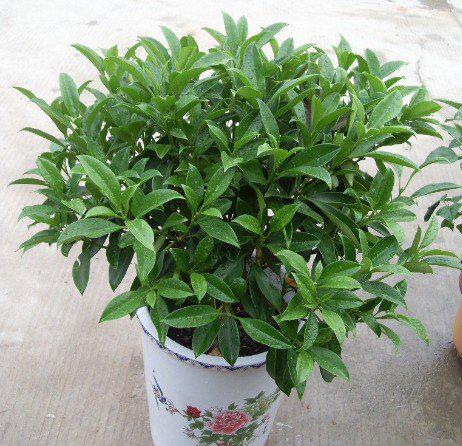
What to do when African jasmine leaves turn yellow
African jasmine is very easy to grow and has a high survival rate; placed at home or in the office, it can lift one's mood. However, if grown improperly, African jasmine can also develop some problems. This article explains what to do when African jasmine leaves turn yellow.
Generally, the main causes of African jasmine leaves turning yellow are the following:
1. If the old leaves turn yellow first while the new leaves are unaffected, then this is a typical symptom of K deficiency, as the element K can be relocated within the plant. Apply a top dressing of compound fertilizer or potassium nitrate, or monopotassium phosphate, twice, 10 days apart, and the symptoms will ease after half a month.
2. Potted plants require fairly ample scattered light, or should be placed near a window; they should not be kept too dark, otherwise the leaves will lose their green color and turn yellow or drop off.
3. If the lower leaves of a potted plant turn yellow and drop off, it is very likely due to waterlogging and root rot, and the pot should be repotted with fresh soil promptly.
4. African jasmine should stop being fertilized starting in October, and before Frost's Descent the pot should be moved indoors to a sunny spot. When first brought indoors, take care to open the windows often for ventilation, otherwise the leaves will turn yellow and drop off.
5. Throughout the overwintering period, the room temperature should be above 10°C; if it stays below 10°C for a long time, leaf drop will also occur.
6. Jasmine chlorosis shows two types of symptoms: one is that the areas between the veins of young leaves are yellow while the veins remain green, and in severe cases the whole leaf turns yellow-white with brown necrotic spots at the leaf tip and margins; the other is that the leaf is yellow as soon as it unfolds, often causing early leaf drop. This disease is non-infectious; the first type of symptom is caused by iron deficiency, and the second by a deficiency of nitrogen and other nutrients.
The causes of and solutions for African jasmine leaves turning yellow have been described above. Compare them right away to see what you have not done well, and improve it immediately!
What to do when African jasmine leaves turn yellow_Causes and treatment methods_African jasmine pruning methods
What to do when African jasmine leaves turn yellow
1. Causes of and solutions for African jasmine leaves turning yellow
If the old leaves of African jasmine turn yellow first while the new leaves are unaffected, it is a typical symptom of potassium deficiency, as the element potassium can be relocated within the plant. Apply a top dressing of compound fertilizer or potassium nitrate, or monopotassium phosphate, twice, 10 days apart, and the symptoms will ease after half a month. Potted African jasmine requires fairly ample scattered light, or should be placed near a window; it should not be kept too dark, otherwise the leaves will lose their green color and turn yellow or drop off. If the lower leaves of potted African jasmine turn yellow and drop off, it is very likely due to waterlogging and root rot, and the pot should be repotted with fresh soil promptly.
African jasmine should stop being fertilized starting in October, and before Frost's Descent it should be moved indoors to a sunny spot. When first brought indoors, take care to open the windows often for ventilation, otherwise the African jasmine will turn yellow and drop off during cultivation. Throughout the overwintering period, the room temperature should be above 10°C; if it stays below 10°C for a long time, African jasmine will also develop yellow leaves, so good ventilation and air humidity should be maintained.
2. How to prevent African jasmine leaves from turning yellow
When growing African jasmine, pay attention to its water needs: plenty of moisture, but the roots must not be waterlogged. In spring and autumn, water just enough to keep the potting soil moist. In the plum rain season, be careful to prevent waterlogging. In summer, spray water once in the morning and once in the afternoon to increase humidity and lower the temperature. In winter, keep the potting soil slightly moist, and around midday when the temperature is relatively higher, spray a moderate amount of water on the leaves, maintaining good indoor temperature and ventilation.
Normally, place African jasmine in a spot where it can get sun, and shade it when the sunlight is intense. When growing African jasmine in northern regions, to prevent leaf yellowing, add 0.2% ferrous sulfate when watering and fertilizing during the growing season. When planting in the ground, apply plenty of base fertilizer; in late autumn, dig a trench around the outer roots and bury cake fertilizer, 0.5 to 1 kg per plant. Also pay attention to the prevention and control of common pests and diseases of African jasmine.
II. Pruning methods for African jasmine
During cultivation, African jasmine needs to be pruned as the situation requires to keep it looking attractive. About half a month in advance, place the African jasmine under suitable environmental conditions (for example, a sunny spot in spring or a spot with scattered light in summer), and fertilize it appropriately to promote its growth. Half a month later, when the African jasmine is growing normally, cut back every branch; the cutting position should depend on the size of the plant, generally leaving a length of about 15 cm, though 30 cm may also be retained, and this should be done flexibly. Cut off diseased and dead branches and overly dense or thin branches, and also cut off leaves and branches that spoil its appearance; this can promote the sprouting of axillary buds and the growth of more new branches and more flower buds.
III. Post-pruning care for African jasmine
After pruning African jasmine, you can reduce the frequency of watering, since with fewer or no leaves, transpiration is extremely low and the water requirement is not great. However, from then on it is best to water with fertilized water each time, and as the new branches and leaves of the African jasmine grow, the fertilizer and water management can be increased. African jasmine should generally be repotted with fresh soil once a year. When repotting, remove some of the old soil and residual roots around the root system of the African jasmine, replace with new growing medium, and restore the soil's aggregate structure and nutrients, which is beneficial to the growth of African jasmine.
The above iswhat to do when African jasmine leaves turn yellowandAfrican jasmine pruning methods. Growing African jasmine is very simple; the key lies mainly in the later care, so everyone should tend it carefully.