-

Illustrated Tutorial on How to Plant and Grow Bowl Lotus
Bowl lotus, as the name suggests, is a lotus grown inside a bowl. According to the description in "Illustrated Book of Chinese Lotus Varieties," bowl lotus refers to lotuses that can bloom normally in flower pots with a diameter of no more than 26 cm, and must also meet the following three criteria: the average flower diameter does not exceed 12 cm, and the average height of the standing leaves does not exceed 33 cm
-
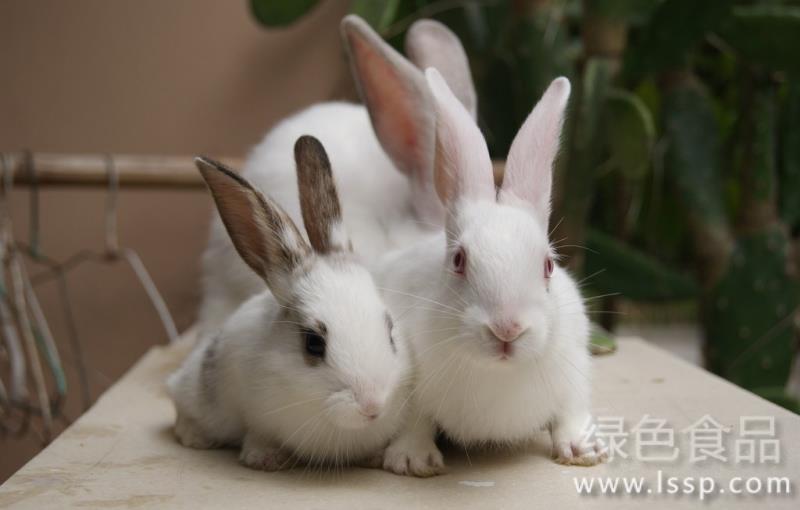
To improve the survival rate of baby rabbits, you need to grasp the "five key stages"
To improve the survival rate of baby rabbits, you need to grasp the "five key stages"
-

Control Methods for Mushroom Mycelium Failing to Grow into the Substrate
About 10 days after spawning, the mushroom mycelium should visibly grow into the substrate. If this is not the case, it is due to causes such as the compost being too wet or too thick, the interior of the substrate being too dry, or the substrate layer being compacted. The cause should be identified promptly to create favorable conditions for mycelial growth. Although a dry surface is not a problem, never spray water on the bed surface while cultivating the mycelium. If the interior of the substrate is too dry, supplemental nutrient water should be added to the substrate: for every 100 sq m, use 0.9 kg of soybeans, soak them until swollen and grind them into about 90 kg of juice, add 45 yeast tablets, 27 vitamin B1 tablets, and 0.45 kg of white sugar
-
How to prevent and control pests and diseases of edible fungi? A detailed explanation of integrated control techniques
Edible fungi belong to the macrofungi, and the environmental conditions required for their growth and development are also suitable for the occurrence, growth and reproduction of many pests and diseases. If the control of the ecological environment is not taken seriously, and necessary preventive measures are not taken in the early stage, contaminant microorganisms and various insect pests will occur in large numbers. In cultivation, following the integrated control policy of giving priority to agricultural control, reasonably combining biological and physical methods, and using chemical control as a remedial measure, and giving full play to the complementary advantages of various control methods, will be of very great significance for achieving high quality and high yield of various edible fungi. 1 Edible
-
Detailed Explanation of Key Points for Integrated Pest Management of Edible Fungi
I. Eliminating pests starts from the source. Before the growing season each year, thoroughly clean the mushroom yard and eliminate pest breeding grounds. The cleaning scope includes mushroom houses and courtyards. All spent mushroom bags, straw pile garbage, compost and all organic waste from the previous year should be centrally burned or transported away, and weeds and peat soil should be removed. In the evening, spray with 15 ml of 80% dichlorvos and 5 ml of 1.8% abamectin mixed with 40 kg of water. After an interval of 1 week, apply once more, and after another week, whitewash the mushroom house with bleaching powder and lime slurry, and spread dry lime powder throughout the courtyard
-
Integrated Control Methods for Soybean "Fire Dragon Seedling"
In Wudalianchi City, Heilongjiang Province, the soybean area is 950,000 mu, with a continuous cropping area of 930,000 mu, accounting for 97.8% of the soybean sown area. Through investigation, the area affected by soybean "Fire Dragon Seedling" is around 96.5%, with most yield reductions between 20 and 50%, and some plots reaching total crop failure. It can be said that due to the influence of the market economy, the continuous cropping area of soybean cannot be controlled, but through integrated control, the occurrence of soybean "Fire Dragon Seedling" can be reduced, enabling soybean to achieve high and stable yields. The integrated control techniques for soybean "Fire Dragon Seedling" are as follows:
-
What are the reasons for the low survival rate of sexual reproduction in Gastrodia elata?
Gastrodia elata is a precious Chinese medicinal herb in China, and its cultivation area has been expanding year by year. Due to the degeneration of varieties in asexual reproduction, yields are low and unstable, and quality declines, which has affected commodity exports. At present, most growers use sexual crossbreeding to propagate seed tubers to solve the problem of yield reduction caused by variety degeneration in Gastrodia elata. However, there are also problems such as lack of proficiency in the technology and uneven quality of breeding, which have restricted the rapid development of Gastrodia elata, leading to the abnormal phenomenon that the more it is developed, the fewer the products and the higher the market price. Those who fail gain very little from the huge investment they made, which has greatly dampened farmers' enthusiasm for development. In response to the above
-
Can wine lees be used as a growing substrate for oyster mushrooms?
High-yield method for cultivating oyster mushrooms and other edible fungi using fresh wine lees: 1. Adjust fresh beer lees to pH 8-9 with lime, add 3% corn mixed powder by wet weight and an appropriate amount of mixed hardwood sawdust, and adjust the substrate to about 65%. 2. Weigh dried white wine lees, add 15% corn mixed powder, 4% lime powder, and 130% water, mix well, pile up and ferment. 3. Use bag-type oxygen-permeable filling and inoculation for mycelial growth, and the bed-type casing-soil with film-covering fruiting method for two-stage full-conversion cultivation, or use conventional fruiting management, to achieve high-yield results. To make it easy for mushroom growers to grasp, here we focus on
-
Clever Use of Oyster Mushroom Spent Substrate to Grow High-Quality Shaggy Mane Mushrooms
The shaggy mane mushroom (Coprinus comatus) gets its name because its shape resembles a chicken leg; its flesh is tender, delicious and nutritious. Using spent oyster mushroom substrate and idle vegetable greenhouses, shaggy mane mushrooms can be produced. A 60 sq m mushroom shed can take in 1000 kg of dry substrate and produce 750-1000 kg of shaggy mane mushrooms, with a market price of more than 4000 yuan, giving considerable economic returns. The specific cultivation measures are as follows: 1. Prepare the growing substrate. Crush the spent oyster mushroom substrate, and mix it in the ratio of 50% mushroom bran, 37% cottonseed hulls, 6% lime, 7% corn flour, and 0.1% carbendazim (added separately).
-
Analysis of the Introduction Performance and Development Strategies of Southern Pears in Hezhou
According to the deciduous fruit development concept of "southern pears and northern peaches" proposed by the Ministry of Agriculture in 1996, Hezhou City, Guangxi, began introducing southern pears from Zhejiang University, Guilin, Guangxi, and other places in 2000. A total of 11 southern pear varieties were introduced, and the current cultivation area is 1066.67 hm2. It is expected that the pear output in 2006 will reach 25,000 t. Based on current introduction observations, the soil, climate, and other natural conditions in Hezhou City are very suitable for the growth of southern pears. Many varieties show advantages such as high and stable yield, good taste, rich flavor, and strong resistance. The products are widely welcomed by consumers in the market.
条件筛选