-
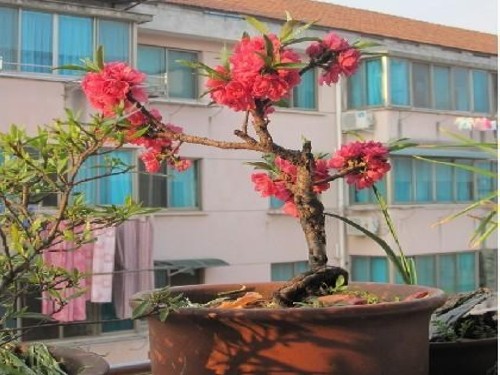
Detailed Explanation of the Key Points of Seed Sowing and Seedling Cultivation Techniques for Flowering Almond (Prunus triloba)
In early May in the north, when dead wood comes back to life, the spring breeze blows with spring rain, and there is still a shivering chill. Some small flowers are so frightened by this chill that they dare not show their heads, but the flowers of the flowering almond, having perhaps inherited the character of the plum blossom, insist on occupying every branch, nurturing flower buds, and after being moistened by the spring rain
-
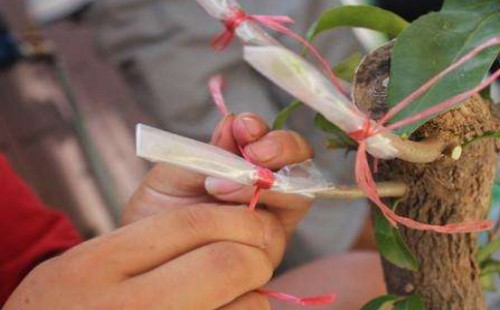
How to graft flowering almond (Prunus triloba)? Detailed explanation of grafting methods and precautions
Grafting is a common means of cultivating potted seedlings and is mostly used in the cultivation of nursery stock. The same is true for flowering almond. As a potted plant, it is also mostly propagated by grafting to breed seedlings. Grafting of flowering almond can often be divided into two methods: bud grafting and scion grafting. As long as the operation method is correct, both are relatively easy to graft successfully
-
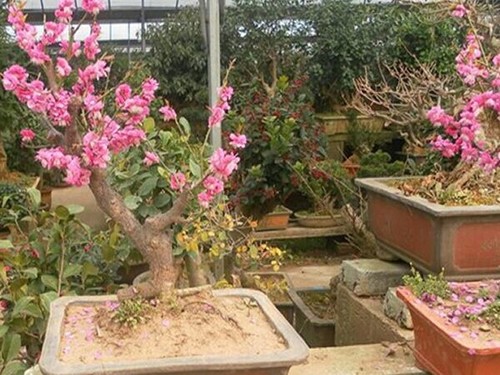
How to grow a flowering almond (Prunus triloba) bonsai? Detailed guide to cultivation methods and precautions
Widely used in Beijing gardens to reflect the bright spring scenery and the flourishing scene of clustered blossoms. It is suitable for planting on park lawns, roadsides, or in courtyard corners and beside ponds. If the flowering almond is planted in front of evergreen trees, or arranged among rocks, it can produce a good ornamental effect. Planted together with forsythia
-
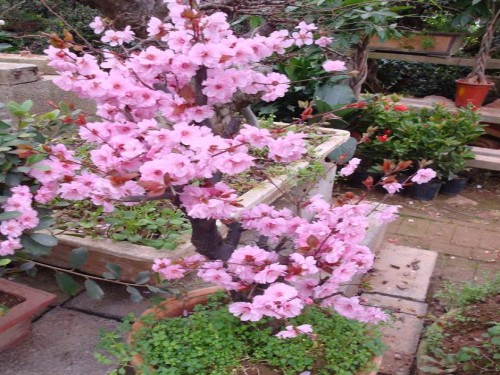
What are the care and management methods for flowering almond (Prunus triloba)?
Flowering almond gets its name because its leaves resemble those of the elm. Its leaves look like elm leaves and its flowers look like plum blossoms, hence the name "flowering almond." With dense branches and leaves and abundant, brightly colored flowers, it is an important flowering ornamental shrub species for landscaping in gardens, streets and roadsides in northern China. If you want flowering almond to have abundant flowers and lush leaves in early spring
-
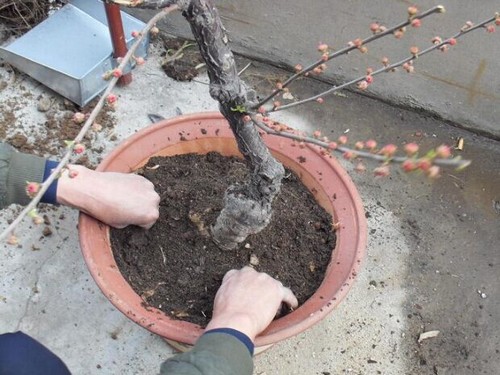
A Detailed Guide to Planting Methods and Care Tips for Flowering Almond (Prunus triloba)
One of the main flowering shrubs of the north, with lush foliage and abundant flowers, double petals and brilliant color. Planted in courtyards in front of buildings and along roadsides, it can also be grown as a potted plant and used as cut flowers. In cultivation and management, attention must be paid to pruning and fertilizing after flowering to ensure enough flowering branches for the coming year. 1. Site selection: Flowering almond is robust by nature, loves sunlight, tolerates drought and cold.
-
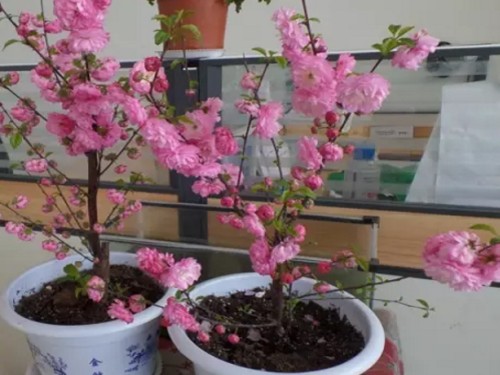
Detailed Explanation of Grafting Techniques and Operation Methods for Flowering Almond (Prunus triloba)
Flowering almond (Prunus triloba) has a cultivation history of several hundred years in China, and it is planted in most parks across the country. This species blooms early and is mainly grown for ornamental purposes. Common cultivated types include the double-flowered flowering almond (double flowers, pink; sepals usually 10) and 'Luanzhi' (10 petals and 10 sepals, pink flowers; leaf undersides hairless).
-
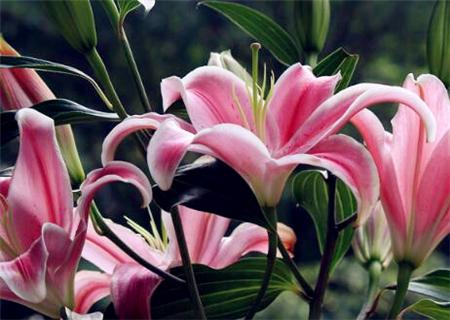
What is the best time to plant plum blossoms (Japanese apricot, Prunus mume)?
How do you grow Casablanca lilies? When is the best time to plant them? How many flowers do you get per year? The Casablanca lily, also known as the sky lily, is also a type of lily. The flower language of the Casablanca lily is a great love, so many people are very fond of Casablanca lilies. How do you grow Casablanca lilies?
-
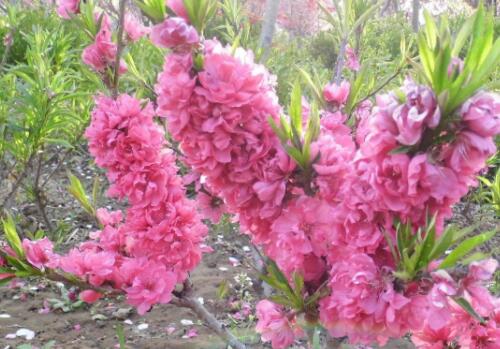
Prunus subgenus Amygdalus 'Dwarf Peach' nursery stock, potted prices, flowering and fruiting periods, and whether the fruit is edible
Dwarf Peach is a variety of the peach plant in the genus Prunus, subgenus Amygdalus, belonging to the semi-double and double-flowered ornamental peach varieties collectively known as Bitao. So how much does a Dwarf Peach nursery stock cost per plant? When does it flower and fruit? Can its fruit be eaten? What are the bonsai-making and management methods? Learned from a Jiangsu landscaping base
-
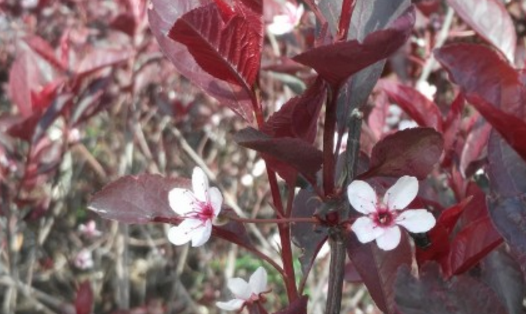
Flowering Period, Propagation Methods of Prunus x cistena (Purple-leaf Sand Cherry) in the Rosaceae Family, and How It Differs from Purple-leaf Plum
Prunus x cistena has good ornamental value, grows fast, propagates easily, tolerates pruning well, and has strong adaptability. So when does Prunus x cistena bloom? How do you propagate it? What is the difference between it and purple-leaf plum? According to available information, Prunus x cistena generally blooms in spring, with its flowering period in April and May.
-

Apricot Mei (Prunus mume var. bungo)
Apricot Mei (Prunus mume var. bungo), also known as sour mei and mei apricot, has a wide range of suitable growing areas and a long history of cultivation in China. Professor Yu Dejun, a fruit tree taxonomist in China, believed that Apricot Mei belongs to the genus Prunus and is a natural hybrid seedling descendant of apricot and plum. Over the long course of cultivation, many excellent cultivars have been selected and bred in China. These cultivars have strong cultivability, stress resistance and early high yield, with stable yields, excellent fruit quality, well-formed fruit shape, and a pleasant sweet-sour taste, as well as high nutritional and economic value
条件筛选