How to grow a flowering almond (Prunus triloba) bonsai? Detailed guide to cultivation methods and precautions
Widely used in Beijing gardens to reflect the bright spring scenery and the flourishing scene of clustered blossoms. It is suitable for planting on park lawns, roadsides, or in courtyard corners and beside ponds. If the flowering almond is planted in front of evergreen trees, or arranged among rocks, it can produce a good ornamental effect. Planted together with forsythia, the red and yellow set each other off when in full bloom, making spring feel all the more vibrant.
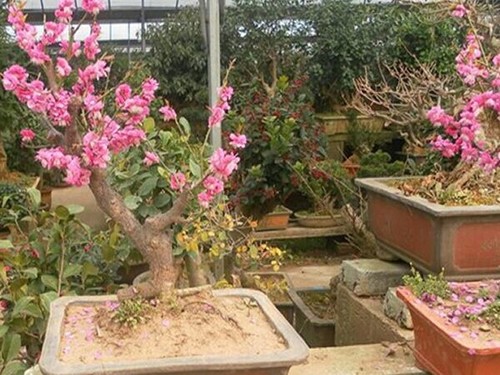
The flowering almond (Prunus triloba) is a flowering tree species planted fairly widely in northern China, with dense branches and leaves and profuse, brilliant flowers. When combined with other plants, the ornamental effect is quite good. Below, the editor will take everyone to learn about the cultivation methods of the flowering almond:
Cultivation methods of the flowering almond:
1. Soil: It has no strict requirements for soil, but it does not tolerate waterlogging. It prefers neutral to slightly alkaline, fertile, loose sandy loam.
2. Temperature: It likes a warm climate, but the high temperature and muggy environment of summer are not conducive to its growth; it has strict requirements for winter temperature. When the ambient temperature is below 10°C, growth stops, and it cannot safely overwinter under frost.
3. Sunlight: In autumn, winter and spring, it can be given plenty of sunlight. When keeping it indoors, place it in a place with bright light as much as possible, such as a well-lit living room, bedroom, study and other places.
4. Watering: It dislikes waterlogging. If planted in spring and the weather is dry, water 2-3 times. Normally no watering is needed, and at the same time pay attention to draining water in the rainy season.
5. Pruning: During the growth process, pay attention to pruning the branches. After the flowers fade, moderately shorten the flowering branches, leaving 3-5 buds on each vigorous branch. After the onset of the dog days, prune once more, and pinch off the growing tips so that nutrients are concentrated and flower buds are encouraged to sprout.
6. Pests and diseases: The main pests and diseases of the flowering almond include brown spot disease, white root rot, aphids, nettle caterpillars, red spider mites, leaf-rolling moths, etc. They generally occur in summer and autumn, and appropriate pesticides should be selected and sprayed promptly for control.
The flowering almond is planted fairly widely and is a very good ornamental flowering tree. If it is consistently combined with forsythia, pines and cypresses, the ornamental effect will be even better.
To plant the flowering almond well, so that it can bloom more and bloom well, the following points must be noted.
(1) Planting the flowering almond should be done in spring and autumn. When planting out, the hole should be filled with enough fully decomposed base fertilizer, and after planting, water thoroughly. Every spring when it is dry, water 2-3 times; normally no watering is needed, and at the same time pay attention to draining water in the rainy season. From May to June each year, topdressing can be applied 1-2 times to promote flower bud differentiation in the plant.
(2) During the growth process, pay attention to pruning the branches. After the flowers fade, the flowering branches can be moderately shortened, leaving 3-5 buds on each vigorous branch. After the onset of the dog days, prune once more, and pinch off the growing tips so that nutrients are concentrated and flower buds are encouraged to sprout. After pruning, a liquid fertilizer can be applied once. Also, weeds should be removed promptly to facilitate the healthy growth of the plant. For potted flowering almonds, pruning should also be done promptly to control excessive vegetative growth. After flowering in June, in addition to pruning the branches, the branches should also be tied and bent into shape to inhibit apical dominance.