What are the care and management methods for flowering almond (Prunus triloba)?
Flowering almond gets its name because its leaves resemble those of the elm. Its leaves look like elm leaves and its flowers look like plum blossoms, hence the name “flowering almond.” With dense branches and leaves and abundant, brightly colored flowers, it is an important flowering ornamental shrub species for landscaping in gardens, streets and roadsides in northern China. If you want flowering almond to have abundant flowers and lush leaves in early spring, you must do a good job of care in every period, so today I will introduce the four-season care methods for flowering almond.
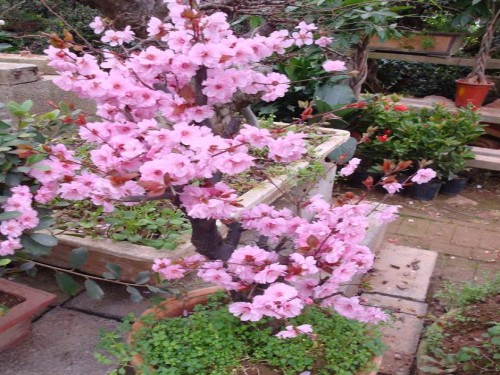
[Spring Care Methods]
Spring is the peak growing season for flowering almond, so it needs to be given plenty of sunlight. When grown indoors, place it in a spot with bright light as much as possible, such as a well-lit living room, bedroom or study.
After growing it indoors for a period (about one month), move it outdoors to a shaded spot for a period of care, alternating between the two.
In spring, also be sure to water thoroughly at the start of March to support the return of green growth, watering generously and deeply, and water once more in late April.
After the flowering period in spring, flowering almond has consumed a large amount of nutrients, so topdressing is needed.
[Summer Care Methods]
Flowering almond likes a warm climate, but the high temperature and stuffy environment of summer are not good for its growth, so the ambient temperature should be kept below 35°C, and the relative air humidity below 80%, preferably maintained at 50%—70%.
[Autumn Care Methods]
Autumn is also a peak growing season for flowering almond. In addition to changing the care environment as in spring, water and fertilizer management should also be carried out.
Water and fertilizer management should follow a cycle in the order of fertilizer—clear water—fertilizer—clear water, with an interval of about 1—4 days. On sunny days or during high temperatures the interval should be shorter; on rainy days or during low temperatures the interval should be longer, or watering should be skipped.
[Winter Care Methods]
The growth of flowering almond has strict temperature requirements in winter. When the ambient temperature is below 10°C, flowering almond stops growing, and it cannot overwinter safely under frost.
In winter, flowering almond enters dormancy, and the main task is to control fertilizer and water. Fertilizer and water management should follow a cycle in the order of fertilizer—clear water—clear water—fertilizer—clear water—clear water, with an interval of about 3—7 days. On sunny days or during high temperatures the interval should be shorter; on rainy days or during low temperatures the interval should be longer, or watering should be skipped.
[Key Growing Points]
1. Soil: It is not demanding about soil, but it does not tolerate waterlogging, and it prefers neutral to slightly alkaline, fertile, loose sandy loam.
2. Sunlight: In autumn, winter and spring, it can be given plenty of sunlight. When grown indoors, place it in a spot with bright light as much as possible, such as a well-lit living room, study or balcony.
3. Temperature: It likes a warm climate, but the high temperature and stuffy environment of summer are not good for its growth; it has strict temperature requirements in winter, stopping growth when the ambient temperature is below 10°C, and it cannot overwinter safely under frost.
4. Watering: It dislikes waterlogging. When planted in spring, if the weather is dry, water 2-3 times; normally no watering is needed, and at the same time pay attention to draining water in the rainy season.
5. Flowering almond likes fertilizer. When planting, a few shovelfuls of decomposed cow or horse manure can be applied as base fertilizer. From the second year, once normal management begins, apply fertilizer once each year after flowering in spring, during the summer flower bud differentiation period, and before winter.
6. Pruning: During growth, pay attention to pruning the branches. After the flowers fade, moderately shorten the flowering branches, leaving 3-5 buds on each vigorous branch. After the start of the dog days, prune once more, and pinch off the tips to concentrate nutrients and encourage flower buds to sprout.
7. Pests and diseases: The main pests and diseases of flowering almond include brown spot disease, white root rot, aphids, nettle caterpillars, red spiders and leaf-roller moths, generally occurring in summer and autumn, and appropriate pesticides should be selected and sprayed in time for control.
Experts suggest that for the care of flowering almond, it is important not only to do a good job of water and fertilizer management, but even more importantly to do a good job of pest and disease control. For trees that suddenly die, the cause must be found and targeted control measures taken. In daily care, observe more and diagnose and treat problems promptly when they are found.