How to graft flowering almond (Prunus triloba)? Detailed explanation of grafting methods and precautions
Grafting is a common means of cultivating potted seedlings and is mostly used in the cultivation of nursery stock. The same is true for flowering almond. As a potted plant, it is also mostly propagated by grafting to breed seedlings. Grafting of flowering almond can often be divided into two methods: bud grafting and scion grafting. As long as the operation method is correct, both are relatively easy to graft successfully. But by comparison, bud grafting is more widely used than scion grafting. So, how is flowering almond grafted?
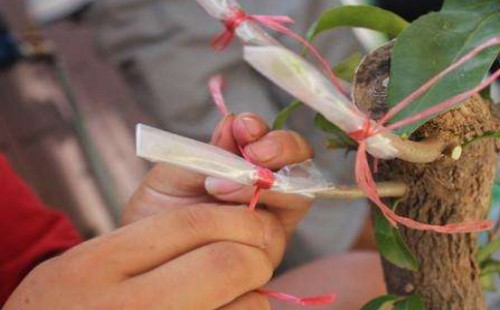
To graft flowering almond, first we must choose an appropriate timing. If bud grafting is used, it is generally carried out in late summer and early autumn, preferably in mid-to-late August; if scion grafting is used, it is generally carried out in spring, preferably during February to March. Because choosing a more suitable grafting time often leads to a higher survival rate of the grafted seedlings.
After determining the grafting time and the grafting method to be used, next we should determine the rootstock and scion according to the selected grafting method. If bud grafting is used, one-year-old flowering almond seedlings can be selected as the rootstock. Of course, peach (Prunus persica), wild peach (Prunus davidiana) seedlings, or even plants of the wild rose (Rosa multiflora) type can also be used.
As the scion for bud grafting, it is recommended to cut from mature plants with excellent varieties, good growth status, and no pest or disease infection. The selected and cut branches are required to grow robustly and have plump leaf buds. In this way, after bud grafting, survival is more likely, the variety of the grafted seedling is better, and it often also plays a positive role in later flowering and fruiting and in improving ornamental value.
If scion grafting is chosen for grafting, the rootstock used can be the same as for bud grafting. But there are certain differences in cutting the scion, first of all in timing. When cutting scions for scion grafting, it is usually done before flowering almond sprouts in early spring. It can also be cut in winter, but it has not yet reached the best time for scion grafting, so it needs to be stored in sand in time and taken out for use in spring when scion grafting is suitable.
The grafting process of flowering almond is similar to that of many other tree species. In many previous articles, the editor has already explained this, so it will not be described in detail here. But if you want the grafted seedlings to survive smoothly, the later care and management work must not be careless. So, how should flowering almond be cared for and managed after successful grafting?
When the grafted seedlings survive, they should be potted in time, and planting is usually carried out in spring and autumn. In spring, it is generally done before sprouting; in autumn, it is generally done after leaf fall. If transplanting a mature tree that has survived grafting, especially a grafted seedling from a collected mountain stump, it can be done in July to August of the previous year, but fibrous roots should be retained as much as possible and the root system should be cut off from two to three sides for digging and transplanting, which is more conducive to survival.
But the survival and growth effect of grafted seedlings often play a decisive role depending on whether the methods used during grafting are appropriate, so during the grafting process, we need to pay attention to the following aspects.
1. If you want to cultivate the grafted seedling into a small tree shape, the high-stem grafting technique is usually adopted, grafting high on the main trunk of the rootstock, thereby raising the position of the entire crown to a certain extent.
2. If bud grafting is carried out in mid-to-late August in autumn, do not let it sprout that year. In the following spring, cut off the rootstock more than 2-3 cm above the bud graft, which can promote the grafted bud to quickly form branches.
3. For scion grafting, cut grafting or cleft grafting can be used, generally in mid-to-late March in early spring, when the winter buds begin to grow plump. After inserting the branch, it should be promptly wrapped with soil or fitted with a substrate to cover the grafted part. If all goes well, it can survive grafting in 3 weeks.
4. After the grafted seedling survives smoothly, we need to promptly prune the tiller buds on the rootstock, and as the temperature gradually rises, promptly remove the wrapping material covering the grafted part, and then choose an opportunity to pot and transplant.