How to prevent fertilizer damage in rapeseed? Introduction to practical methods
1. Reform fertilization methods based on the principles of being practical, useful, and effective. Advocate the application of compost fermented with effective microorganisms and decomposed organic fertilizer, using layered application or full-layer deep application. According to the planned cropping sequence and total fertilization amount for the year, it can be applied all at once during deep plowing. Adopt formula fertilization technology, and properly manage the ratios of nitrogen, phosphorus, and potassium as well as trace...
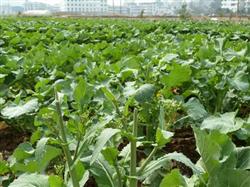
First, reform fertilization methods based on the principles of being practical, useful, and effective. Advocate the application of compost fermented with effective microorganisms and decomposed organic fertilizer, using layered application or full-layer deep application. According to the planned cropping sequence and total fertilization amount for the year, it can be applied all at once during deep plowing. Adopt formula fertilization technology, and properly manage the ratios of nitrogen, phosphorus, and potassium as well as trace elements. After application, determine whether to water based on the degree of soil dryness and moisture. Generally, the soil should be kept moist so that the fertilizer can fully decompose. Never sow or transplant immediately after dry application.
Second, scientifically apply chemical fertilizers. The annual fertilizer amount per mu of rapeseed field is 25 kg of ammonium bicarbonate, 15 kg of ammonium sulfate, and 10 kg of urea. When applying, the weather, soil, seedling condition, and the physical and chemical properties of the chemical fertilizer must be taken into account and managed according to local conditions, so that it can both fully exert fertilizer efficiency and save costs, while effectively preventing fertilizer damage. Where conditions permit, reduce the amount of chemical fertilizer as much as possible, and advocate the application of controlled-release fertilizers, coated fertilizers, silicate bacteria biological potassium fertilizer, and the like.
Third, advocate the mixed application of biological fertilizers and chemical fertilizers. In rapeseed fields where chemical fertilizers have been applied for a long time, soil microorganisms decrease, which can also hinder the decomposition of organic matter. Not only are nutrients easily lost, but their utilization rate is also reduced. Therefore, mixing biological fertilizers and chemical fertilizers can improve soil that has long been treated with chemical fertilizers. It not only compensates for the shortcoming of insufficient nitrogen content in biological fertilizers, but also prevents the loss of chemical fertilizers. Each mu of rapeseed field can be treated with 50-80 kg of biological fertilizer by hole application.
Fourth, apply foliar fertilizer. When applying Huimanfeng foliar fertilizer, the dosage per mu is 250-500 ml, and diluting it to a 400-600 times solution gives better results.