-

Goosegrass may be a headache, but we have overlooked its uses.
Summary: The weed that makes obsessive-compulsives give up, "Dun Dao Lu", actually has considerable uses. "Dun Dao Lu" is a weed we often see - goosegrass (Eleusine indica). I believe friends who have worked in the fields and pulled weeds do not like this goosegrass. I myself also...
-
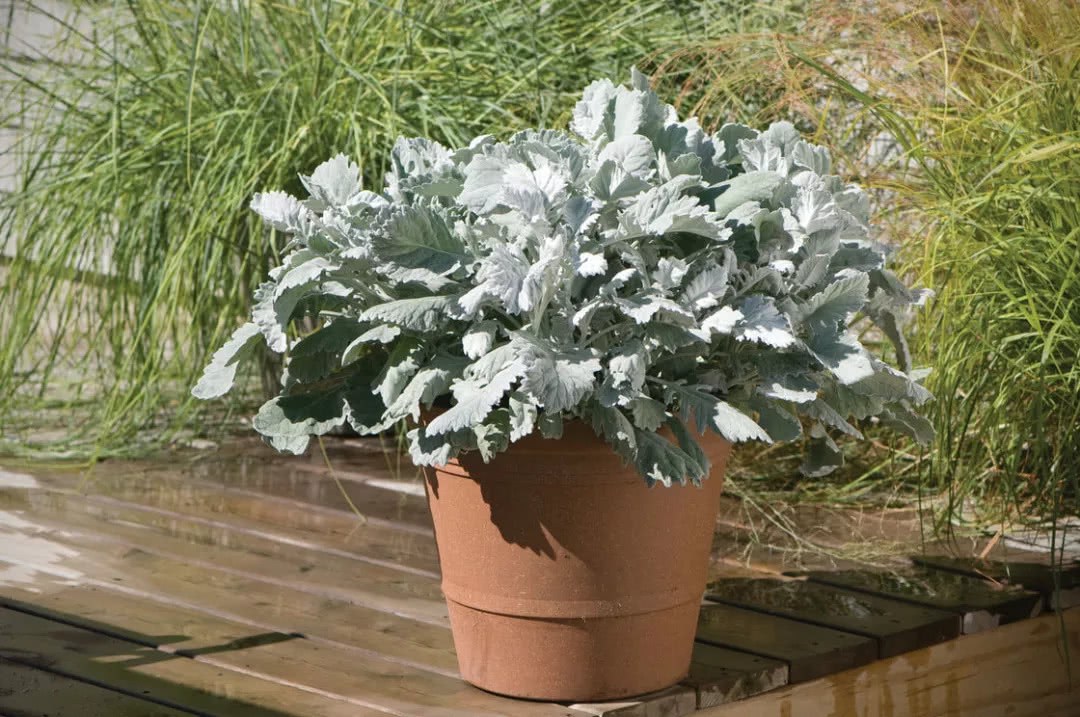
Dusty miller is perfect for cool autumn growing, with an appearance as if covered in a layer of frost.
If you want to plant some particularly lovely plants in autumn, dusty miller is a great choice. It likes plenty of light, is very drought-tolerant, and loves a cool environment. It grows well on balconies and terraces, and you can also plant it...
-

Succulents cover the walls and roof so abundantly they can only be used to feed chickens
Many plant lovers have been worrying lately. Summer is not even halfway over, and the succulents at home are already nothing but empty pots! Today, Huahua takes everyone to see those succulents that grow vigorously without any care at all. The comparison is simply heartbreaking! Wall-climbing Pachyveria 'Clavifolia' ...
-

Cut one branch of the elephant bush with a single snip, and an old flower farmer can grow it into a bonsai worth over a hundred yuan in 30 days.
The elephant bush (Portulacaria afra) is a common green potted plant in everyday life. Its scientific name is actually Portulacaria afra, and many flower lovers, upon seeing its scientific name, assume it is called purslane, yet it is completely different from the purslane found in daily life. In fact, the elephant bush...
-

Leftover Chinese yam thrown into a flower pot, unexpectedly grew into a potted plant
Chinese yam is a very familiar medicinal food ingredient. Eating some Chinese yam in autumn and winter nourishes yin and tonifies the kidneys, strengthens the stomach and benefits the spleen, and is very good for the body. Sometimes when you can't finish the Chinese yam and it sits for a long time and sprouts, the editor suggests it's best not to eat it, because...
-
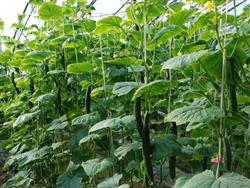
High returns from using the five-change planting method for overwintering cucumbers
Change dense planting of seedlings to rational sparse planting. In winter, temperatures are low and light is weak, so crop photosynthesis is relatively poor, and only rational sparse planting can achieve high yields. If plants are too dense, they will also grow tall and spindly as they compete for light, and the fruit-setting rate will decline. Poor ventilation also makes them prone to infection by multiple diseases, and dense leaves make spraying difficult. Once the disease spreads, it is very hard to cure completely. Flat beds...
-

Don't overwater your succulents: water them this way and they will grow strong
Watering is a very complex matter, and many factors affect it: for example, the size of the plant, the species, the local climate and environment, which season it is (spring, summer, autumn or winter), the soil mix, the material and size of the pot, and the air circulation. ...
-
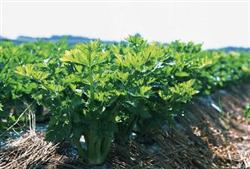
How to overwinter and protect spinach seedlings in the north? Key technical points explained in detail
Celery, also known as Western celery, foreign celery, or American celery, is planted in autumn in the Shuyang area. The average yield per mu is 3000-4000 kg, and high-yielding fields can reach 5000 kg per mu. Its high-yield autumn cultivation techniques are briefly described as follows: 1. Select good varieties for sowing. Choose varieties that bolt late, have strong stress resistance, are not prone to softening, and have thick, solid stalks...
-
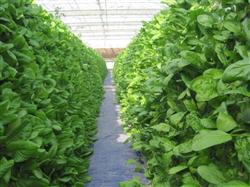
How to apply wintering fertilizer properly to spinach before overwintering
1. Sowing. Spinach is mainly broadcast-sown, though drilling is also possible. Under high-temperature conditions, germination is slow, so for early-autumn sowing it is best to soak the seeds to promote germination: soak the seeds for 12 hours, then treat them in a refrigerator at 4°C for 24 hours, and then keep them at 15-25°C to promote germination for several days; once most have germinated, they can be broadcast-sown. Sowing rate per mu...
-
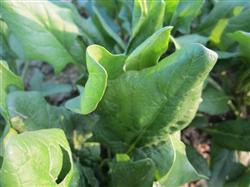
How to overwinter and preserve autumn spinach seedlings? A full analysis of the key technical points
Autumn spinach is an overwintering vegetable sown in autumn and harvested in spring. It begins overwintering at the end of November and turns green again in early March of the following year, a period lasting more than 100 days. Therefore, under long-term low-temperature and dry conditions, how to ensure safe overwintering is the key to achieving a bumper harvest. 1. Water the freezing water well. Watering the freezing water must achieve "one determination" and "two suitability...
条件筛选