Cut one branch of the elephant bush with a single snip, and an old flower farmer can grow it into a bonsai worth over a hundred yuan in 30 days.
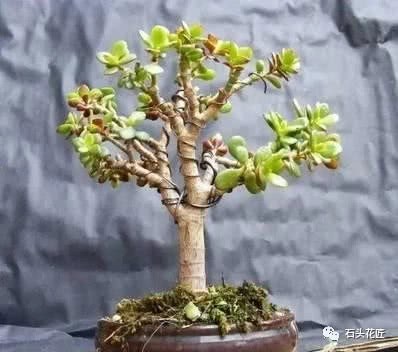
The elephant bush (Portulacaria afra) is a common green potted plant in everyday life. Its scientific name is actually Portulacaria afra, and many flower lovers, upon seeing its scientific name, assume it is called purslane, yet it is completely different from the purslane found in daily life. In fact, the elephant bush is a plant in the Portulacaceae family, and together with purslane it belongs to the same family and genus of plants, yet they are different.
Many households keep the elephant bush as a potted plant, not only because it is attractive but also because it is easy to grow. In spring, summer and autumn each year, the elephant bush can be propagated by cuttings; a single branch can grow into a pot of flowers. In fact, the elephant bush is excellent bonsai material, and flower lovers who know how to grow it will turn it into a small bonsai, which has higher ornamental value and also raises the value of the potted plant.
Today I will share with you how an old flower farmer grows the elephant bush using ring-barking and air-layering. During the vigorous growth period of the elephant bush, it can develop aerial roots in 30 days; after being cut off and planted in a flower pot to make a bonsai, it is worth over a hundred yuan!
In spring and autumn, perform ring-barking on an attractive elephant bush branch to promote root growth.
Generally, spring and autumn are the seasons when flowers grow rapidly, and the elephant bush is no exception. So to quickly obtain an old-trunk elephant bush bonsai, you need to perform ring-barking on an attractive branch. The ring-barking method is a very common way to promote branch rooting when growing bonsai. The principle is that after choosing the branch you want to air-layer, use a blade to cut through the bark around the branch in a ring about 1 cm wide. After the bark tissue is cut through, the transport of nutrients between the upper branch and the lower branch is severed, so the lower part cannot supply nutrients to the upper branch. The upper branch will then sprout roots at the cut position, absorbing nutrients on its own to meet its growth needs.
For ring-barking the elephant bush, the same method is used. After ring-barking the branch, spray a 0.2% carbendazim aqueous solution on the wound for sterilization and disinfection, to prevent rot later on.
Wrap soil around the ring-barked position to air-layer the branch.
On the treated branch, wrap plastic film or slip on a plastic bottle, add soil for growing flowers, then wrap it tightly to keep the soil inside moist. After about two weeks, you can see slender roots growing out at the ring-barked spot. After about a month, once the roots are observed to be denser and more abundant, you can cut off the rooted branch, plant it in a pot, then wire and shape it, and it becomes a very beautiful elephant bush bonsai.
Key points for caring for a small elephant bush bonsai.
Caring for bonsai is all about condensing a dragon into an inch, meaning that in later care you must continuously wire and prune to give the small bonsai more artistic conception and make it more attractive. Generally, the elephant bush can be pruned in spring and autumn each year; after wiring it into the shape you want, prune it by cutting off excess branches and leaves. Depending on the plant's condition, prune and wire it once every 1-2 years.
An elephant bush bonsai can be kept outdoors or indoors. But in either case, you must ensure there is sufficient indirect light so the plant can grow vigorously and form an old trunk more quickly. When it comes to watering, it should be controlled; just enough water to meet the plant's growth needs is fine. Do not water too frequently. Each spring you can apply nitrogen fertilizer to the elephant bush to promote growth.
Regarding how to obtain and grow an elephant bush bonsai, if you find it useful, please like it below, follow, and share it with more friends.
I am [Stone Flower Gardener], and I share a little flower-growing knowledge every day. Remember to follow me.