-
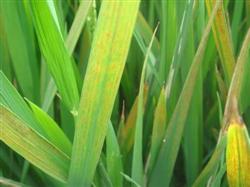
Key Points and Correct Operation Methods of Rice Seed Soaking Technology
Rice premature aging refers to the premature senescence of leaves during the heading to maturity stage of rice, with leaf color turning brown, dirty-white dead areas appearing at leaf tips, leaves thin and curved, root growth weakened, and even a few black roots occurring. There are many factors causing rice premature aging; besides pests and diseases, the main ones are the following...
-

The Forum on China-Africa Cooperation takes us back through the history of China-Africa cooperation
By DaDa da da da. What news has been drawing relatively high attention lately? Hee hee, of course it is the forum meeting that has attracted global attention. In the promotional video "Building Dreams Together, Sharing a Common Future" for the opening ceremony of the Beijing Summit of the Forum on China-Africa Cooperation, ...
-
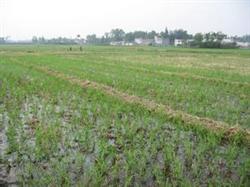
Key Operational Points for No-Till Rice Seedling Broadcasting Cultivation Technology
No-till rice seedling broadcasting refers to a new rice tillage and cultivation technique in which, after harvesting the previous crop, without any plowing or harrowing of the paddy field, herbicide is first applied to kill weed plants and shed-grain seedlings and to wither rice stubble, then the field is irrigated and fertilized for retting, and after the water layer naturally drains or shallow water is released, plastic-tray seedlings or paper-tube seedlings are broadcast-transplanted into the main field...
-
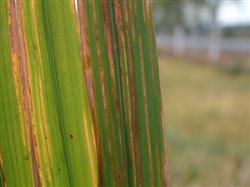
Key Technical Points and Operation Methods for Single-Application Fertilization of Rice
Distribution Rice bacterial leaf streak, commonly known as rice fine streak disease, is one of the important worldwide rice diseases. Its pathogen belongs to the genus Xanthomonas bacteria, and the bacteria mostly invade through leaf stomata; symptoms can appear at any growth stage of rice. The lesions are short and fine narrow streaks, with the stripes appearing between the leaf veins; when viewed against the light...
-
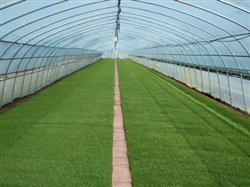
Operating and Maintenance Methods for Rice Seedling-Raising Greenhouse Seedbeds
The rice seedling-raising seedbed greenhouse is mainly composed of a greenhouse frame, light-transmitting covering materials (including plastic film, plastic panels, PC boards, etc.), several individual seedbeds and a spray irrigation system. This device features a compact structure, high land utilization rate and convenient operation. Operating methods 1. Before installation, the site must be leveled...
-
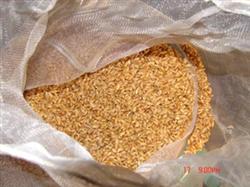
Correct Methods and Operating Steps for Disinfecting Rice Seeds
Rice seedling raising is about to begin, and seed disinfection is the key to raising seedlings. Here are 10 seed disinfection methods. 1. Soak rice seeds in a 500-fold dilution of 50% carbendazim, 50% thiophanate-methyl, or 50% thiram for 48 hours (200 g of the solution mixed evenly with 100 kg of water can soak 60-70 kg of rice seeds), then remove them, sprout them, and sow, ...
-
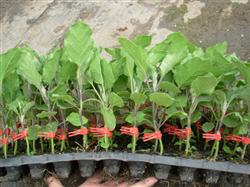
Key Techniques and Operation Methods for Grafting Eggplant onto Tomato
With the development of protected agriculture, eggplant can be grown year after year, so soil-borne diseases such as eggplant Verticillium wilt have become the main obstacle affecting eggplant production. We use tomato (Maofen 802) as the rootstock to graft eggplant, which not only effectively prevents eggplant Verticillium wilt, bacterial wilt and other diseases, but also produces tall and uniform plants, good fruit quality and high yield...
-
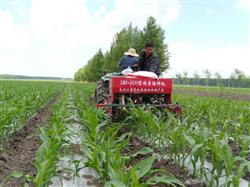
Key Technical Points and Operation Methods for Conservation Tillage of Spring Maize
Maize is a high-yield crop with a relatively large fertilizer requirement and is also very sensitive to medium and trace element fertilizers. Rational fertilization is essential to meet the nutrient needs of maize throughout its entire growth period. According to experiments, producing 100 kg of maize grain requires 2.5 kg of nitrogen, 1 kg of phosphorus, and 2.1 kg of potassium. If the yield is 500 kg of maize per mu, then 3... kg of urea is needed per mu.
-
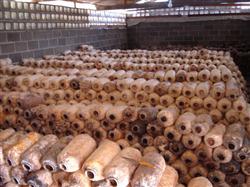
Detailed Explanation of the Technical Operating Procedures for King Oyster Mushroom Cultivation
The king oyster mushroom (Pleurotus eryngii) is a large fleshy agaric that grows in subtropical regions. Its mushroom flesh is thick, and its stipe tissue is fine, firm, snowy white and thick, with an excellent taste. It is a type of edible mushroom that sells well in domestic and international markets. Its cultivation techniques are briefly introduced as follows: 1. Culture material formulas 1. Cottonseed hulls 80%, bran 18%, gypsum 2%, an appropriate amount of lime; ...
-
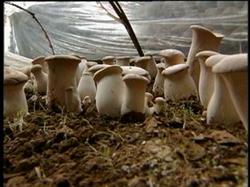
Key Operation Points Before Fruiting in King Oyster Mushroom Cultivation with Biogas Residue
Using biogas residue to cultivate king oyster mushroom (Pleurotus eryngii) offers advantages such as developing new resources and saving costs, generally reducing production costs by about 30%. The pre-fruiting operation techniques for cultivating king oyster mushroom with biogas residue are introduced as follows: 1. Biogas residue treatment: Spread the biogas residue drawn from farm household biogas digesters on flat ground, let it aerate, and sun-dry it until the moisture content...
条件筛选