Key Points and Correct Operation Methods of Rice Seed Soaking Technology
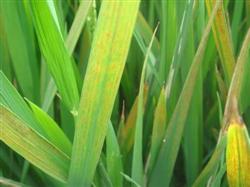
Rice premature aging refers to the premature senescence of leaves during the heading to maturity stage of rice, with leaf color turning brown, dirty-white dead areas appearing at leaf tips, leaves thin and curved, root growth weakened, and even a few black roots occurring. There are many factors causing rice premature aging; besides pests and diseases, the main ones are the following...
 The main diseases transmitted by rice seeds include bakanae disease, rice blast, rice false smut, bacterial leaf blight, and stripe virus disease transmitted by the small brown planthopper during the seedling stage. Currently it is time for rice seed soaking in Qilin District. When soaking rice seeds, all demonstration households must insist on soaking seeds with chemicals, the main purpose being to kill the pathogenic bacteria carried by rice seeds. The commonly used seed soaking chemicals in our district mainly include "Junchongqing" and "imidacloprid". Three key points should be mastered in their use.
First, chemical amount and water dilution amount. Use 1.5-2 packets of Junchongqing plus 10 grams of 10% imidacloprid. First mix the two chemicals, then add a small amount of water to make a paste, then add 8 kg of clean water and dilute evenly.
Second, rice seed amount and chemical solution amount: Soak 5-6 kg of sun-dried and selected rice seeds into the prepared 8 kg mixed solution of Junchongqing and imidacloprid, stir up and down several times. The seed soaking container needs to be covered and placed in a cool, dark place. If a larger quantity of rice seeds needs to be soaked in the same container, prepare the chemical solution according to the above ratio.
Third, seed soaking time and temperature: When the daily average temperature is 18-20°C, soak seeds for 60 hours; at 23-25°C, soak seeds for 48 hours. The length of soaking time can also be based on whether the seeds have absorbed enough water. The standard is that the husk is transparent, the white belly of the rice grain is visible, the rice grain is easily broken without sound after removing the glume, and when it can be crushed by hand, it indicates that the seeds have absorbed enough water. Generally about 2-3 days. After soaking, there is no need to rinse, and germination can be directly promoted.