What are the high-yield cultivation methods for lion's mane mushroom?
What methods can achieve high yields when cultivating lion's mane mushroom? Please provide guidance. To achieve high yields in cultivating lion's mane mushroom, attention should be paid to the following aspects: First, select good-quality spawn. The mother culture used for production should have excellent traits, shown by fast growth, uniform and neat growth, and covering the slant within two weeks at the optimal temperature. When stored in a refrigerator, primordia often form, and microscopic examination shows a small number of chlamydospores. If there are too many spores, the yield tends to be low. If the mycelium turns yellow, is thin and weak, or sparse, it indicates that the spawn has degenerated. Uneven or irregular growth, or antagonistic phenomena, indicates that the spawn is not pure, and none of these should be used. All stock spawn should be dense and white, uniform from top to bottom, with no breaks in the mycelium, and vigorous mycelium on the surface. If the substrate shrinks, separates from the container wall, and the color darkens, it indicates that the spawn has aged. If stripes or spots of various colors appear around the wall, it indicates contamination in the spawn, and it cannot be used. Second, the age of the spawn must be appropriate. Generally, mother cultures and stock spawn stored in a refrigerator should not exceed 3 months, and at room temperature (20°C) should not exceed 20 days. If the spawn age is too long, its vigor declines, resulting not only in slow growth and low yield, but also poor stress resistance and high susceptibility to contamination. In addition, excellent varieties suitable for local production should be selected.
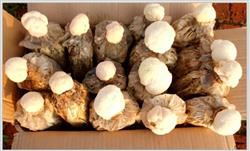
What methods can achieve high yields when cultivating lion's mane mushroom? Please provide guidance.
To achieve high yields in cultivating lion's mane mushroom, attention should be paid to the following aspects:
First, select good-quality spawn. The mother culture used for production should have excellent traits, shown by fast growth, uniform and neat growth, and covering the slant within two weeks at the optimal temperature. When stored in a refrigerator, primordia often form, and microscopic examination shows a small number of chlamydospores. If there are too many spores, the yield tends to be low. If the mycelium turns yellow, is thin and weak, or sparse, it indicates that the spawn has degenerated. Uneven or irregular growth, or antagonistic phenomena, indicates that the spawn is not pure, and none of these should be used. All stock spawn should be dense and white, uniform from top to bottom, with no breaks in the mycelium, and vigorous mycelium on the surface. If the substrate shrinks, separates from the container wall, and the color darkens, it indicates that the spawn has aged. If stripes or spots of various colors appear around the wall, it indicates contamination in the spawn, and it cannot be used. Second, the age of the spawn must be appropriate. Generally, mother cultures and stock spawn stored in a refrigerator should not exceed 3 months, and at room temperature (20°C) should not exceed 20 days. If the spawn age is too long, its vigor declines, resulting not only in slow growth and low yield, but also poor stress resistance and high susceptibility to contamination. In addition, excellent varieties suitable for local production should be selected.
Timely cultivation. The optimal temperature for lion's mane mycelium is about 24°C, and the suitable temperature for fruiting bodies is 18-20°C. This fungus is very sensitive to environmental conditions, especially during the fruiting body stage. When the temperature is above 25°C or below 12°C, normal fruiting bodies cannot form, showing no spines, yellowing, clustering, deformity, or reddening, and growth stops. In northern cultivation, inoculation in February or September is best, with fruiting in March-April or October-November being optimal. In southern spring and autumn cultivation, this can be advanced or delayed by 20-30 days respectively. Practice has shown that northern spring cultivation should not fruit later than mid-March, to avoid yields being reduced and quality lowered by temperatures above 25°C during the fruiting period. If the temperature is relatively low in autumn cultivation (below 30°C), inoculation can be carried out as early as possible so that fruiting ends before the temperature drops below 12°C.
Raw material formulation. Raw material formulation is the basis for obtaining stable and high yields. For stock spawn and cultivation spawn, the substrate can use locally available materials. A commonly used formula is: cottonseed hull 87%, wheat bran 10%, sucrose 1%, gypsum 1%, sawdust 1%. Research shows that within a certain range, increasing the amount of wheat bran added to the medium increases yield, but there is a limit. For cottonseed hull cultivation, the amount of wheat bran should not exceed 15%, otherwise it not only increases cost, but also causes the fruiting bodies to branch loosely, appearing cauliflower-like or coral-like, reducing quality. To improve yield and quality, as much water as possible can be added within the allowed range when mixing the substrate. A material-to-water ratio of 1:1.5-1.6 is better. In this way, the first flush mushrooms are large, the heads are heavy, white in color, good in taste, and good in commercial quality.
Small bag cultivation. Practice has shown that cultivating lion's mane mushroom in small bags (14 cm x 30 cm) with collar rings and inoculation at both ends results in early fruiting and high yield. Generally, the first flush is 2-5 days earlier, and the head diameter reaches 8-9 cm. When filling bags, the outside should be tight and the inside loose, to prevent water loss from the substrate from affecting normal fruiting. In addition, the substrate should be filled fully, leaving little space, to avoid overly long stipes that consume too much nutrition.
Thorough sterilization. Thorough sterilization is the key to ensuring the finished product rate of bag production. For high-pressure sterilization of small bags, they should be kept at a pressure of 14.7 x 10⁴ Pa for 1.5-1.8 hours, and large bags for 1.8-2.4 hours. For atmospheric pressure sterilization, keeping at 100°C for 4 hours, then holding for another 4 hours, is appropriate. If the temperature is insufficient, the sterilization time must be extended. High-pressure sterilization must also prevent the bags from swelling with gas and bursting, so when filling material and tying the opening, it should not be too tight. During sterilization, use the method of opening the valve to heat, raising the temperature over a gentle fire, exhausting slowly, and reducing pressure naturally to control swelling. To prevent holes in the bag surface, after sterilization soak the material bags while hot in thick lime water with a pH value of 13. This can significantly increase the finished product rate of the bags.
Ventilation and moisture retention during the fruiting period. The focus of lion's mane mushroom cultivation management is the fruiting period, and the key to fruiting period management is temperature control, ventilation, and moisture retention. In small bag cultivation, primordia begin to form after 19-24 days, and at this time they should be moved into the mushroom house and opened in time for ventilation, to prevent the primordia from shrinking and delaying fruiting. For cylinder cultivation, a 1-2 cm cross cut can be made with a small knife at the place where the mycelium knots, to increase oxygen and promote fruiting body differentiation. After opening, humidity should be increased, spraying atomized water so that the relative air humidity reaches 80%-90%. After fruiting begins, water must not be sprayed on young buds, otherwise water seeping into the bag will cause the young mushrooms to shrink and then deteriorate and rot. Spray less but frequently, and as the fruiting bodies grow faster, increase the amount of water. If the temperature is high and ventilation is poor, spray less or not at all. If ventilation is good and the temperature is suitable, spray more and frequently. The fruiting body is extremely sensitive to carbon dioxide. When the carbon dioxide concentration in the air exceeds 0.1%, it stimulates continuous differentiation of the stipe, forming cauliflower-like or coral-like fruiting bodies and reducing palatability. Therefore, ventilation must be strengthened, 2-3 times a day, 30 minutes each time. Window panels can also be kept open to ensure fresh air, but air must not blow directly onto the fruiting bodies, to prevent discoloration and shrinking.
Timely harvesting and water replenishment. Lion's mane mushroom generally takes about 10 days from budding to maturity. Because of different uses, harvesting standards vary. For fresh eating, canning, or salting, harvesting when the spines are 0.3-0.5 cm long is best. At this time, the fruiting body is solid and heavy, with strong palatability. If the spines grow longer than 1 cm, spores begin to be released, inevitably reducing nutrition, while the fruiting body softens and the taste declines. When harvesting, cut it off with a small knife, leaving a 1-2 cm stipe. To increase yield, after harvesting the first flush, stop watering for 3 days and ventilate for 1 day, so that the surface of the cut mushroom base shrinks. Then use bamboo chopsticks to make 2 holes 8-10 cm deep at the end of the bag. Depending on the size of the bag, replenish 50-100 ml of water into each hole. After 24 hours, drain the excess water. Cultivating at the optimal temperature for 7-10 days can produce the second flush.
Later-stage casing soil to prevent contamination. After the second flush, the bags lose water severely, the lion's mane mycelium weakens, vigor declines, and contamination is easy. Especially in a warm and humid environment, infection by Trichoderma viride is very easy. This fungus is an aerobic fungus that likes warmth and moisture, and once it occurs, it is extremely difficult to control. Therefore, casing soil cultivation can be carried out. The specific operation is: first spread soil 5-6 cm on the ground, then remove the outer bag, place the bags vertically in two rows, with 10-12 cm between rows and 2-3 cm between bags. After arranging them, add 3-4 cm of soil to each layer, fill the gaps with soil, spray wet, and then build the second layer. Usually 6-8 layers can be built. Smooth the two sides of the mushroom wall with mud, 1-2 cm thick. Seal the top of the wall with mud to form a groove, to facilitate water replenishment and moisture retention. This treatment can prevent mold and also provide water and nutrients for the growth of lion's mane fruiting bodies, and usually 2-3 more flushes can be produced. A bed-style casing soil method can also be used, which is more conducive to water replenishment.
Click to get more lion's mane mushroom cultivation techniques
Click to get more edible mushroom cultivation techniques