What are the methods for cultivating lion's mane mushroom?
What are the methods for cultivating lion's mane mushroom? Please explain. Lion's mane mushroom (Hericium erinaceus), as a large fungus, has long been known as a "mountain delicacy." It contains 16 kinds of amino acids as well as various vitamins and minerals, and has the advantages of a short growth cycle, simple cultivation methods, high economic returns and good market prospects, making it very suitable for cultivation by individual households....
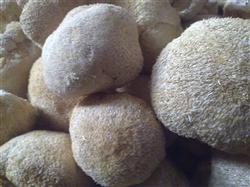
What are the methods for cultivating lion's mane mushroom? Please explain
Lion's mane mushroom (Hericium erinaceus), as a large fungus, has long been known as a "mountain delicacy." It contains 16 kinds of amino acids as well as various vitamins and minerals, and has the advantages of a short growth cycle, simple cultivation methods, high economic returns and good market prospects, making it very suitable for cultivation by individual households.
1. Reasonable selection of materials and scientific formulas
The raw materials for cultivating lion's mane mushroom are extremely wide-ranging, such as cottonseed hulls, sawdust, corncobs, bean stalks, wild grass, distillers' grains and so on. Adding appropriate amounts of auxiliary materials such as wheat bran and cornmeal and mixing them in proper proportions allows lion's mane mushroom to grow well. If a small amount of minerals such as phosphorus, potassium and magnesium is added to these culture materials, growth will be even better. Each place can choose an economical formula based on local material advantages to obtain high returns. Commonly used culture material formulas are: (1) 78% sawdust, 20% rice bran or wheat bran, and 1% each of white sugar and gypsum. (2) 98% cottonseed hulls, and 1% each of gypsum and white sugar. (3) 80% corncob or bean stalk powder, 18% wheat bran, and 1% each of gypsum and white sugar.
2. Selecting a suitable cultivation method
Domestic production mainly uses the sterilized substrate cultivation method, with the two common forms being bag cultivation and bottle cultivation.
1. Bag cultivation method Choose low-pressure polyethylene tube material measuring 15-17 cm x 26-33 cm x 0.04 mm. Evenly fill the bags with the mixed culture material, keeping the tightness appropriate and consistent from top to bottom. The bag opening can be fitted with a neck ring or tied tightly. After filling, sterilize immediately. For atmospheric pressure sterilization, the requirement is to rise quickly to 100 within 46 hours and keep it for about 10 hours. After letting it sit overnight, move the material bags into the inoculation room while hot, and begin inoculation once the bag temperature drops to 28°C-30°C.
2. Bottle cultivation method Cans, spawn bottles and liquor bottles can all be used, but liquor bottles are better. If using liquor bottles, the neck must be cut off by 5-7 cm. Brush the bottles clean, fill them with culture material, insert cotton plugs properly, and wrap a layer of kraft paper over the cotton plugs. Seal cans with polypropylene film. Sterilization and inoculation are the same as for bag cultivation, and then mycelial growth begins.
3. Cultivating and growing the mycelium
Set up cultivation racks, with each shelf 30-40 cm high. Disinfect the room beforehand by spraying with 3% Lysol, or fumigate with potassium permanganate and formaldehyde. Use 10 ml of formaldehyde and 6 g of potassium permanganate per cubic meter; after mixing, vapor is produced, so close the doors and windows. Place the inoculated bottles or bags on the racks, keep the room temperature at 20°C-26°C, and the relative air humidity at 70%. The mycelium can fully colonize in about 25-30 days. During mycelial cultivation, keep it shaded and well ventilated; darkness or weak light in the room is sufficient.
4. Fruiting management
(1) Opening When cultivating fruiting bodies, there must be openings for fruiting.
(2) Temperature control and humidity adjustment The temperature of the mushroom house should be kept between 12°C and 20°C, with around 18°C being most suitable, and the relative air humidity should be controlled at 85%-90%. Spray water into the room with a sprayer 3-4 times a day.
(3) Appropriate ventilation The growth of lion's mane mushroom fruiting bodies requires fresh air.
(4) Light Although lion's mane mushroom fruiting bodies can form under dark conditions, deformed mushrooms often appear. Moreover, strong light is also unfavorable for the formation of fruiting bodies.
Click to get more lion's mane mushroom cultivation techniques
Click to get more edible mushroom cultivation techniques