-
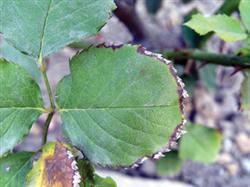
How to Identify and Control Black Spot on Roses? A Detailed Guide to Practical Methods
This disease occurs commonly and causes serious damage, resulting in heavy leaf drop in roses and enormous losses. The pathogen is a fungus of the genus Actinonema in the subphylum Deuteromycotina. 1. Symptom identification: At the initial stage of the disease, brown radial lesions appear on the leaf surface, which gradually expand into circular or nearly circular lesions with a diameter of 4-12 mm; in severe cases...
-
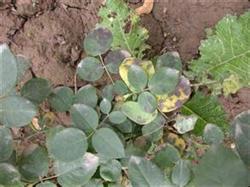
What are the common diseases of roses? A detailed guide to prevention and control methods
Symptoms: In the early stage of the disease, small purple-brown spots appear on the leaves, which later expand into nearly circular dark brown spots, often with a radial yellow halo at the edges. In severe cases, the spots merge, and the leaves wither and drop, especially in summer and autumn, causing massive leaf loss, leaving the lower part of the plant as bare stems. After young shoots are infected, dark brown streaks appear, slightly sunken, causing the young...
-
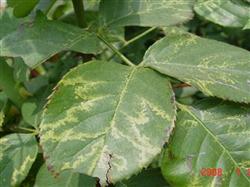
What to Do When Roses Get Rose Mosaic Virus? A Detailed Guide to Prevention and Control Methods
Rose mosaic virus is widely distributed and can cause a decline in the yield and quality of cut roses. Symptoms: Its symptoms vary depending on the rose variety. Rose mosaic virus is characterized by small chlorotic spots, sometimes showing polygonal patterns. The leaf surface around the lesions is often somewhat deformed. Some symptoms appear as rings, ...
-
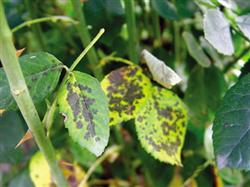
What are the control methods for mole crickets on Chinese roses?
Symptoms: This disease mainly affects the branches and stems of Chinese roses, causing cankerous lesions on the branches and stems. At first, they are small red spots, which then expand and darken, and may turn brown. In the later stage, the lesions become sunken and split longitudinally, black spots may appear on the diseased area, and in humid conditions black spore masses emerge. In severe cases, the lesions girdle the stem, and the branches below the diseased area shrink and die...
-
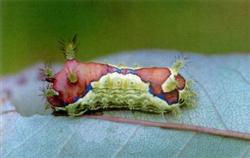
Occurrence Characteristics and Control Methods of the Yellow Slug Moth on Chinese Rose
Morphological characteristics: The adult is orange-yellow, with filiform antennae and brown diagonal lines that meet at a single point at the wingtip, forming an inverted V shape; the hindwings are grayish-yellow, the legs are brown, and the eggs are flat and oval, pale yellow. The larva is roughly rectangular, slightly larger at the front end, brightly colored, with a large purple patch on the back of the body and a dark brown head. The cocoon is oval,. 12m...
-
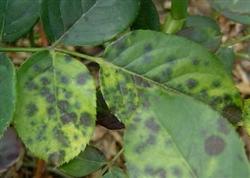
What are the methods for preventing and treating rose diseases
1. Symptoms. Black spot is most prevalent in the Beijing area during summer and autumn. Infected rose leaves develop dark brown spots 3-4 mm in diameter with a yellow halo around them, and the leaves drop off; when the disease is severe, only the stems and infected young shoots remain on the rose plant. 2. Early prevention (1) During the rose seedling stage, prevent the leaves from...
-
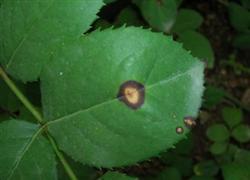
What are the control methods for rose black spot disease?
Black spot disease mostly occurs in the hot and humid rainy season. Purple-brown round lesions appear on the upper surface of the leaves, with slightly ciliate edges, and many small black dots grow in the center. These small black dots are the acervuli of the pathogen. After the small black dots crack open, spores are released, causing the disease to spread, and it can also spread with rainwater. Black spot disease relies on con...
-
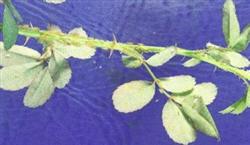
What are the control methods for the rose long-tube aphid?
The rose long-tube aphid belongs to the order Homoptera, family Aphididae. It damages roses, multiflora roses, 'Shijiemei' roses and others with nymphs and adult aphids; the affected young leaves and flower buds stop growing and are difficult to extend, and the honeydew excreted often sticks to the leaves, reducing their ornamental value. 1. Morphological characteristics: The wingless parthenogenetic female is relatively large, body elongated-oval, 4.2 mm long.
-
Symptoms, Identification, and Control Methods of Rose Rust
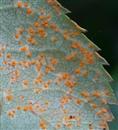
Rose rust occurs in climatically suitable regions around the world. It sometimes causes severe damage to greenhouse-cultivated roses. In addition to roses, the disease can also infect rugosa roses, wild roses, and other flowering plants. Pathogen: Rose rust has many pathogenic species; 10 species have been reported abroad and 3 species are known in China. Among them, Phragmidium montivagum (Pers.) Schlecht. is the main pathogen, belonging to the phylum Basidiomycota, genus Phragmidium.
-

Symptoms and Control Methods of Rose Little Leaf Disease
Symptoms Rose little leaf disease is a common physiological disease of roses in northern China. Little leaf disease occurs on young shoots and young leaves, and is more obvious when roses sprout in spring. Diseased branches sprout later, and after the leaves emerge, the leaves are narrow, small and slender, with leaf margins turning upward, hard and brittle texture, and a relatively pale yellow-green leaf color, with uneven color intensity...
条件筛选