What are the common diseases of roses? A detailed guide to prevention and control methods
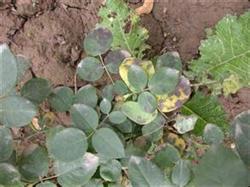
Symptoms: In the early stage of the disease, small purple-brown spots appear on the leaves, which later expand into nearly circular dark brown spots, often with a radial yellow halo at the edges. In severe cases, the spots merge, and the leaves wither and drop, especially in summer and autumn, causing massive leaf loss, leaving the lower part of the plant as bare stems. After young shoots are infected, dark brown streaks appear, slightly sunken, causing the young...
 In modern production, suitable greenhouse conditions, such as installing insect-proof nets and improving ventilation inside the greenhouse, can prevent more than 90% of pest and disease damage. The assignment of professional plant protection technicians and daily monitoring by all workers are the key to early detection and controlling pests and diseases at the initial stage.
1. Crown gall: Crown gall is a major disease for growers in countries without cold winters, and the disease is widespread in Asia, Africa, Australia and India. Crown gall is said to be introduced by rootstocks, but it may also already exist in the soil and may already be attached to the host when seedlings are planted.
Control measures: Chemical control and the use of resistant rootstocks can only provide control to a certain extent. The only way to prevent crown gall infection is to use soilless cultivation or to purchase rootstocks from areas with frost. Routine control involves disinfecting the seedbed soil before planting, planting resistant rootstocks or carrying out soilless cultivation.
2. Downy mildew: Downy mildew is a headache for every tropical rose grower, and it occurs frequently in low-temperature and humid weather and when there is a lack of air circulation around the plants. After black spots appear on the leaves, they turn yellow, and after a period of time the leaves drop. Downy mildew can cause great damage to roses in a short time and lead to severe yield reduction. The preventive method is to keep the leaves dry, especially at night when the temperature drops. Apart from improving air circulation, there are few treatment options. For roses, downy mildew that comes with low temperatures is not as common as powdery mildew that comes with high temperatures.
Control measures: There are no preventive chemicals available to prevent downy mildew. When plants are infected, spray three times, with an interval of 4 to 7 days each time. The product names are bitertanol (concentration of 150 ml/100 L water), bupirimate (concentration of 25 to 35 ml/100 L water), and cyprodinil (concentration of 100 ml/100 L water); these are all products with the same chemical composition. When downy mildew infection occurs again, spray three times with products of other chemical compositions. The product names are bupirimate (concentration of 200 to 300 ml/100 L water), dodemorph (concentration of 200 to 250 ml/100 L water), and benzene-based fungicides. During periods when nighttime relative humidity is very high (>90%), it is recommended to use sulfur once a week to prevent downy mildew. The periods most likely to be infected are the rainy season and the season when nighttime cooling is needed. Use a sulfur fumigator once a week, using about 300 to 500 g of sulfur per 1000 sq m.
3. Anthracnose: The pathogen is Elsinoe rosarum. The pathogen infects all aboveground parts of the rose plant. On leaves, the spots are nearly circular, about 6 mm in diameter. In the early stage, the spots are purple-brown with light brown edges. In the later stage, the center of the spot turns gray and often falls out. The spots are very uniformly black, with irregular radial edges. Usually, anthracnose does not have a great impact on rose growth.
4. Black spot: The pathogen is Diplocarpon rosae. Rose black spot is a worldwide disease and is very serious. The pathogen mainly harms leaves, young shoots and flower stalks. After leaves are infected, purple-black circular spots or irregular (radial) spots appear on the leaf surface. The edges of the spots are purple-brown or reddish brown, radial. Many small black bodies, which are acervuli, are borne on the spots.
The spots often join together in groups. The mesophyll around the diseased area turns yellow over a large area, and the spots become "small islands" with green edges. Diseased leaves drop easily. When the disease is severe, all the leaves on the lower part and even the middle part of the entire plant drop.
The asexual stage of the pathogen is the most common. Acervuli are borne under the host epidermis and break through the epidermis when mature. The acervuli are black and arranged in concentric rings. The conidiophores are short, and the conidia are oval or long ovoid, colorless, two-celled, with the two cells unequal in size. The black spot pathogen overwinters as mycelium or acervuli on diseased plants or fallen leaves. Conidia are spread by rain or sprinkler irrigation water splash, and insects can also transmit them. Under moist conditions, conidia on leaves can germinate and directly invade within 6 hours. The incubation period is 7 to 10 days. The disease is likely to occur in rainy, foggy and dewy weather. Newly transplanted small plants have few roots and are weak, making them highly susceptible to the disease. Resistance varies greatly among rose cultivars; generally, light-colored flowers, small-flowered cultivars and upright-growing cultivars are susceptible.
Control measures: Sweep up fallen leaves on the ground at any time, and thoroughly sweep up and burn fallen leaves after autumn. Use heavy pruning measures for overwintering plants. Strengthen cultivation management, especially fertilizer and water management for newly planted small plants, to improve plant disease resistance. Plant or breed disease-resistant cultivars. Strengthen chemical control in the early growth stage to prevent pathogen infection, such as spraying 50% amobam 1000x solution, 50% carbendazim 1000x solution, Bordeaux mixture (1:1:200), etc. Improve watering facilities and control insects to reduce pathogen spread.
5. Gray mold: The pathogen is Botrytis cinerea. After Botrytis infects buds, the buds turn brown and rot. When flowers are attacked while opening, individual petals turn brown and shriveled. The disease occurs easily on old flowers that have not been picked, especially under humid conditions and in the rainy season. When the disease is severe, flower opening is impeded. In winter, Botrytis is present on dead rose stems.
Control measures: Remove diseased flowers promptly, remove withered old flowers, and burn them in a centralized manner. Spray chemical agents in the early growth stage, such as 70% ferbam 1000x solution and 50% benomyl 1000x solution, which can provide effective control.
6. Powdery mildew: The pathogen is Sphaerotheca pannosa var. rosae. Rose powdery mildew is a commonly occurring disease. The powdery mildew pathogen can infect leaves, petioles, flower buds and young shoots. In the early stage, chlorotic yellow spots appear on diseased leaves and gradually expand, with rather indistinct edges. A layer of white powdery material grows on the diseased areas on the underside of the leaves. After young leaves are infected, the leaves tend to curl backward, shrivel and thicken, and sometimes turn purplish red. When petioles and young shoots are infected, the affected parts swell slightly and bend backward. When flower buds are infected, the surface is covered with a white powdery mold layer, and the flower shape becomes deformed. When plants are severely infected, the leaves yellow, shrivel and drop. After old leaves drop, new leaves continue to be damaged, causing the plant to weaken, flower abnormally or fail to flower, and lose ornamental value.
The powdery mildew pathogen overwinters as mycelium on diseased buds, diseased leaves or diseased branches, and some overwinter as cleistothecia. In the second year, the pathogen begins activity as the buds sprout, infects young tender parts, and produces new pathogen spores, which spread by wind and other means. The pathogen can continue to reinfect during the rose growing period.
For open-field rose cultivation, powdery mildew occurs more in spring (May to June) and autumn (September to October), which are the peak periods of disease occurrence. In northern regions, damage mainly occurs in spring, with little occurrence in autumn. For greenhouse rose cultivation, powdery mildew can occur year-round. When the room temperature is above 5°C, powdery mildew can occur and cause damage. The disease is more severe when the temperature is high, humidity is high, it is stuffy and ventilation is poor. There are obvious differences in disease resistance among rose cultivars. Usually, glabrous-leaved, climbing and many-flowered cultivars are more resistant, but most rose cultivars are susceptible.
Control measures: When planting roses in greenhouses, attention should be paid to ventilation and humidity control so as to control the conditions for disease development. Strengthen fertilizer and water management to improve disease resistance. For small-area or home rose cultivation, diseased buds and leaves should be carefully checked, promptly pruned out and destroyed. Chemical fungicides should be sprayed in diseased areas or on diseased plants for control. Before sprouting, spray Bordeaux mixture (1:2:100 to 200) and 3 to 4 degrees Baume lime sulfur mixture. During the growing period, spray 50% amobam 1000x solution, 70% thiophanate-methyl 800x solution, 50% carbendazim 800x solution, and 50% benomyl 1000x solution. Spraying 200x non-toxic high-lipid film has a good effect on preventing the occurrence of powdery mildew and treating early powdery mildew spots. After control with high-lipid film, there are no chemical marks on the leaf surface, which is beneficial for ornamental viewing and environmental protection. When propagating roses by cuttings, carefully select disease-free branches as cuttings and disinfect them with chemicals before cutting. When producing roses on a large scale, a seed-production planting area should be established to carefully prevent and control powdery mildew and continuously supply disease-free cuttings.
7. Rust: The pathogen is Phragmidium mucronatum. Rust fungi can harm leaves, petioles, stems, flower stalks and buds. Orange-red uredinia can be produced on leaves and stems, and later dark brown telia are produced. When it occurs severely, the underside of the leaves is covered with a layer of yellow powder, and the leaves scorch and drop early.
The pathogen overwinters as telia and mycelium on host tissues. The disease occurs from August to September each year. Conditions such as overly dense planting, low-lying terrain, and heavy, compacted and poor soil are favorable for the occurrence of rust.
Control measures: Remove diseased leaves and branches promptly when found and destroy them. Strengthen cultivation management; planting or placement should not be too dense, weeds should be removed frequently, and drainage ditches should be opened. Spray 3 to 4 degrees Baume lime sulfur mixture before sprouting in early spring. During the growing season, spray 300x sodium rust inhibitor solution, 15% triadimefon 800x solution, 50% thiram 800x solution, and 50% amobam 800x solution.
8. Mosaic disease: The pathogen is Rose mosaic virus.
The virus particles are spherical, about 25 nm in diameter. The thermal inactivation point of the virus is 54°C. The survival period in vitro (at room temperature) is 6 hours. The virus can naturally infect hops. Inoculation with sap from infected plants can infect 25 plant species in 7 families, such as periwinkle, watermelon, three-colored Convolvulus, cucumber, guar, Nicotiana glutinosa, and petunia. The virus can be transmitted by grafting and sap. Diagnosis can use host plants such as Nicotiana rustica (mild systemic chlorotic spots), guar (local necrotic spots), periwinkle (systemic chlorotic ringspot), and cowpea (systemic chlorotic ringspot).
After roses are infected with the virus, irregular pale yellow or orange-yellow patches appear on the leaves, sometimes appearing as systemic ringspots or oak-leaf patterns. Some cultivars show varying degrees of yellow vein banding and dwarfing.
Control measures: Carefully inspect diseased plants. Symptoms of infected plants are obvious in spring, so spring surveys should be strengthened. Diseased plants must not be used for propagation; they should be marked and preferably eliminated or destroyed. Heat treatment can be used to eliminate the virus from infected plants, because maintaining plants under constant hot air at 38°C for 4 weeks can completely eliminate the virus from the plants.