-
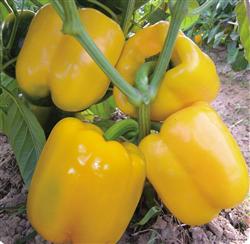
Detailed Explanation of Spring Planting Methods for Colored Bell Peppers
How to plant colored bell peppers in spring? What should be noted? Please give an introduction. For spring planting of colored bell peppers, you can refer to the following methods: Variety selection and seedling raising: For colored bell peppers, it is advisable to choose varieties with strong disease resistance, easy cultivation, and high yield, such as the company's Manqi and Kajinuo. Use hotbed sowing or build beds for sowing in winter-warm greenhouses...
-
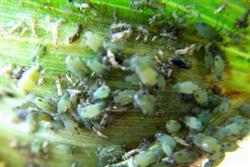
How to control sorghum aphids? These methods you need to know
How to control sorghum aphids? Please give me some guidance. The control methods for sorghum aphids can refer to the following: ① Detect early and control early: when aphids occur in spots and patches, eliminate them promptly to prevent spread. In the early stage, you can simply wipe off the aphids by hand; when severe, use pesticides for control. ② Chemical control methods: A. Dusting: at the seedling stage, use 2.5 kg of 1.5% dimethoate powder per mu; 2 to 3 kg of 1.5% 1605 powder. B. Spraying: use 50 to 70 L of a 1500-fold dilution of 40% dimethoate emulsifiable concentrate per mu; 500 mL of 25% methamidophos emulsifiable concentrate, add 500 to 750 L of water, with a per-mu dosage of 75 L (Note: this pesticide is a highly toxic pesticide, strictly follow the operating procedures, stop using it 28 days before harvest, do not mix it with alkaline pesticides, and wash the equipment clean after use); 0.01 to 0.02 kg of 50% pirimicarb wettable powder, diluted with 30 to 50 L of water (do not let it contact human skin, and do not mix it with strong acids or strong alkalis); 20 mL of 30% omethoate emulsifiable concentrate, diluted with 75 L of water, spray the plants during the occurrence period. C. Smearing on plants: use a 50- to 100-fold dilution of 40% omethoate emulsifiable concentrate, and smear it on the 3rd to 4th nodes at the base of the sorghum (about 17 cm). In the later stage, when the plants age, it is not suitable to use. D. Fumigation to kill aphids: use 0.2 to 0.3 kg of 5% 3911 granules per mu, mix with 2 kg of sand and soil, and apply the pesticide to one ridge every 12 ridges, which can fumigate and kill aphids.
-
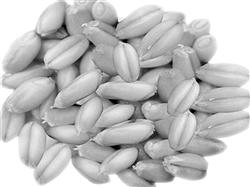
What are the methods for disease and pest control in wheat seeds?
How are disease and pest control carried out on wheat seeds? Please give guidance. For disease and pest control in wheat seeds, you can refer to the following methods: 1. Seed dressing with Shimai Dan: Shimai Dan is a seed coating agent produced by Syngenta Crop Protection AG of Switzerland, with active ingredients 2.4% difenoconazole and 2.4% fludioxonil, registered for the control of wheat loose smut. For every 10 ml of the agent, mix with 10 kg of seed. After diluting the liquid with water, thoroughly stir the slurry and seed at a ratio of 1:50-100 until the slurry is evenly distributed on the seed surface. Let it dry and then sow. This agent has systemic translocation properties; after dressing, the agent can be absorbed by wheat seeds and seedlings, has a long lasting effect, provides good disease control and seedling protection, and can promote robust wheat growth.
-
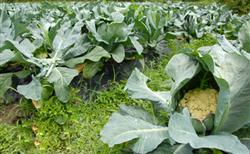
How to Fertilize Cauliflower Properly? A Detailed Guide to Scientific Fertilization Methods
How to fertilize cauliflower properly? Please give guidance. Cauliflower, also known as cauliflower (Brassica oleracea var. botrytis), has an edible portion that is a malformed flower head, and fertilization techniques differ depending on the variety. 1. Given that early-maturing varieties have a short growing season, the base fertilizer should be a quick-acting nitrogen fertilizer, applying about 8 kg of urea and about 8 kg of superphosphate per mu; for mid- and late-maturing varieties with a long growing season, the base fertilizer should be 1500 kg of barnyard manure, applied into the soil when tilling and preparing the land, followed by transplanting the seedlings. 2. Topdressing. In the early growth stage of cauliflower, frequently apply light applications of quick-acting chemical fertilizer as a 2% to 4% ammonium sulfate aqueous solution, about 700 kg per mu each time, or 10% to 30% human feces and urine, about 700 kg each time, applied around the roots. When the flower head begins to form, heavy topdressing should be applied to promote leaf and flower head growth. Apply about 800 kg of 40% human feces and urine per mu, or 10 kg of urea, about 20 kg of superphosphate, and about 8 kg of potassium sulfate, watered on.
-
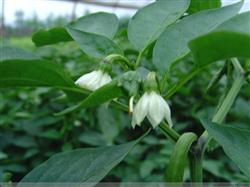
How to prevent sweet pepper flower drop? Detailed summer control methods
How to prevent sweet pepper flower drop in summer? Please explain the methods. Sweet pepper flower drop in summer is mainly caused by the following factors: 1. Temperature reasons. If the temperature is too high (above 35°C), incomplete flower organ development or dried-up stigmas can lead to poor pollination and fertilization, causing flower and fruit drop. In addition, high night temperatures in summer make plants prone to excessive vegetative growth,...
-
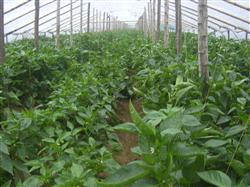
What are the methods for topdressing sweet peppers in summer?
How do you topdress sweet peppers in summer? Please introduce the methods. Compared with other vegetables, sweet peppers have an underdeveloped root system and weak regeneration ability after the roots are damaged. Especially now that the air temperature is high and the soil temperature is also high, which is already unfavorable for the normal growth of sweet peppers, topdressing management should be even more careful. Only reasonable topdressing can effectively promote...
-
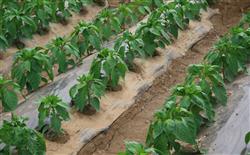
What are the cultivation methods for sweet peppers? A detailed explanation of the key growing techniques
What cultivation methods are there for sweet peppers? Please explain that sweet pepper cultivation is divided into the early spring crop and the winter crop, with the methods as follows: Early spring crop: 1. Raising strong seedlings: Large arch shed: raise seedlings in a hotbed in late December, transplant in early March; solar greenhouse: sow from late November to early December, transplant in mid-to-late February. Most vegetable growers now...
-
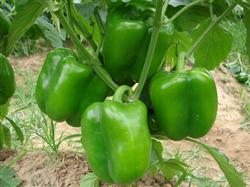
Detailed Explanation of Sweet Pepper Pruning Methods and Technical Points
How to prune sweet peppers properly? Please explain the reasons. For late-autumn cultivation of sweet peppers, if moderate pruning is carried out, old plants can be renewed and rejuvenated, and another peak fruiting period will occur in autumn, thereby increasing the per-mu yield of sweet peppers. The specific method is: after the peak fruiting period, around late July to early August, cut the second or third...
-
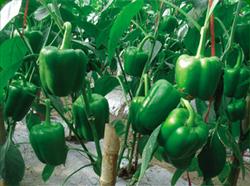
How to fertilize sweet peppers to increase yield? These fertilization methods you need to master
How should sweet peppers be fertilized to increase yield? Please give an introduction. Sweet peppers have a long growth period, an underdeveloped root system, few roots, and shallow soil penetration; they are neither drought-tolerant nor waterlogging-tolerant. Their fertilizer demand is greater than that of tomatoes and eggplants, and they have a strong tolerance for fertilizer. The fertilizer demand characteristics of sweet peppers are: the highest potassium uptake, followed by nitrogen, and the lowest phosphorus. Among vegetables, sweet peppers...
-
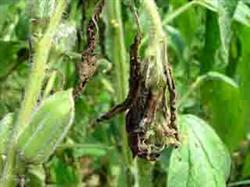
How to prevent and control bacterial wilt in white sesame? These methods you need to master
How to prevent and control bacterial wilt in white sesame? Please advise. Bacterial wilt in white sesame is very common and has a serious impact on its yield and quality. Its disease characteristics and control techniques are as follows: 1. Conditions for disease onset. Bacterial wilt in white sesame is mainly caused by excessive soil moisture in the field. The pathogen overwinters in the soil with diseased plant residues...
条件筛选