Detailed Explanation of Spring Planting Methods for Colored Bell Peppers
How to plant colored bell peppers in spring? What should be noted? Please give an introduction. For spring planting of colored bell peppers, you can refer to the following methods: Variety selection and seedling raising: For colored bell peppers, it is advisable to choose varieties with strong disease resistance, easy cultivation, and high yield, such as the company's Manqi and Kajinuo. Use hotbed sowing or build beds for sowing in winter-warm greenhouses...
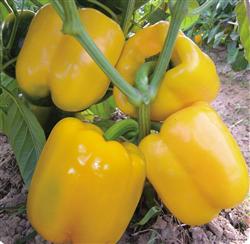
How to plant colored bell peppers in spring? What should be noted? Please give an introduction.
For spring planting of colored bell peppers, you can refer to the following methods:
Variety selection and seedling raising: For colored bell peppers, it is advisable to choose varieties with strong disease resistance, easy cultivation, and high yield, such as the company's Manqi and Kajinuo. Use hotbed sowing or build beds for sowing in winter-warm greenhouses. Before sowing, soak the seeds in 55°C warm water for 15 minutes to remove pathogens from the seeds. After soaking, place them at 25-28°C to germinate. When 60% of the seeds have sprouted, they can be sown. On the day before sowing, water the nutrient pots thoroughly. After the water seeps down, place one germinated seed in each nutrient pot, then cover with a layer of sifted fine moist soil about 1 cm thick. To prevent fungal diseases, add 5 g of carbendazim wettable powder to each square meter of covering soil. After sowing, keep the daytime temperature at 30-35°C and the nighttime temperature not lower than 20°C. After emergence, control the daytime temperature at 25-30°C and keep the nighttime temperature not lower than 15°C. This is conducive to strong seedlings and vigorous plants.
Field planting: For small arched sheds covered with straw mats, plant in early to mid-March. For small and medium arched sheds without straw mats, plant in mid to late March. At planting, the 10 cm soil temperature inside the shed should be stably maintained at 10-12°C. The seedling age should be 60-75 days, plant height about 20 cm, and leaf number 8-10. Before planting, deep plow the soil and apply basal fertilizer. The application rates per mu are: high-quality barnyard manure 5000-7000 kg, decomposed dried human manure or chicken manure 150-200 kg, superphosphate 80-120 kg, potassium sulfate 20 kg. Use high beds or small high beds, high ridges, wide-narrow rows, or single-row planting, with row spacing of 55-65 cm and plant spacing of 40-60 cm, planting 2000-2500 plants per mu.
Pruning method: Keep 2 main branches per plant and remove side branches. Side buds on the middle branches can be appropriately retained, pinched after 3-4 leaves, and keep 7-9 main branches per square meter.
Management: Do not ventilate after planting until the seedlings have recovered. Shed temperature control: daytime 25-30°C, nighttime 16-18°C. After the seedlings recover, ventilate appropriately. Shed temperature: daytime 23-28°C, nighttime not lower than 15°C. During this period, choose sunny and warm weather, uncover the shed film at noon, and cultivate 1-2 times. If the basal fertilizer is insufficient, apply one topdressing. When the first pepper flowers, watering should be controlled, and cultivation can be done 1-2 times. After the plants flower, to prevent flower and fruit drop and ensure normal fruit set, use 10-20 mg/L of 2,4-D to coat the fruit stalk or use 25-30 mg/L of Tomatotone to spray the flowers. After the first pepper sets fruit, apply a heavy topdressing once, applying 15 kg of ternary compound fertilizer per mu. After fertilizing, hoe once and water once. Shed temperature control: daytime 21-26°C, nighttime not lower than 15°C. As the weather warms, strengthen ventilation during the day. When the daytime temperature stabilizes above 20°C, the shed film can be uncovered and covered again in the evening. The first and second peppers should be harvested appropriately early to avoid burdening the plants.
After early May, when the temperature stabilizes above 15°C, the small shed frame can be removed. After harvesting the second peppers, apply topdressing again, applying 15 kg of urea per mu. Thereafter, apply topdressing once every 20 days and water once every 5-6 days. In summer, drain promptly after rain, and combine weeding with mulching the bed surface with grass to prevent excessively high soil temperature and preserve moisture.
Use 50% pirimicarb (Pirimor) wettable powder at 2500 times dilution to control aphids; use 50% phoxim emulsion at 2500 times dilution to control cotton bollworm and tobacco budworm; use 2500 times dilution of insect mite ke spray to control tea yellow mites; use 500 times dilution of dufulin to drench the roots to prevent Phytophthora blight; for viral diseases, focus on prevention. Once diseased plants are found, they must be pulled out immediately and buried deeply.
Click to get more bell pepper planting techniques
Click to get more vegetable planting techniques