-
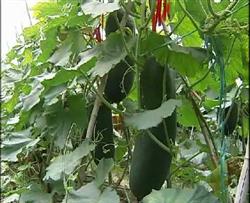
Guide to Topdressing Methods and Key Techniques for Winter Melon
How should topdressing be carried out for winter melon? Please give guidance. When topdressing winter melon, attention should be paid to the rational combination of nitrogen, phosphorus and potassium. If the plants are growing vigorously, topdressing can be reduced or omitted. If the leaf color is pale or yellowing, topdressing should be applied promptly. In the early growth stage of winter melon, topdressing should be reduced. Around the opening of female flowers, water and fertilizer should be controlled. After 1 to 2 fruits have set...
-
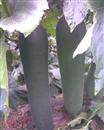
What are the methods to prevent black-skinned winter melon from cracking?
What methods can prevent black-skinned winter melon from cracking? Which methods are the most effective? To prevent black-skinned winter melon from cracking, you can refer to the following methods: (1) Choose crack-resistant varieties; (2) In rainy areas or rainy seasons, use deep furrows with high beds or ridge-based trellis cultivation; (3) Apply more organic fertilizer to increase the soil's permeability and water-holding capacity, so that the soil supplies water evenly, promoting vigorous plant growth, and prune promptly so that the fruit develops normally;
-
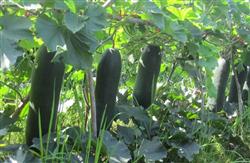
What are the cultivation methods for black-skinned winter melon?
How do you grow black-skinned winter melon well? Is there detailed technology to refer to? Black-skinned winter melon likes warmth and tolerates heat, with an optimum growing temperature of 22-28°C. Winter melon is not strict about light; if seedlings are kept at around 16°C with 11 hours of sunlight, they flower early and the female flower nodes are low. Winter melon has a well-developed root system and strong absorption capacity...
-
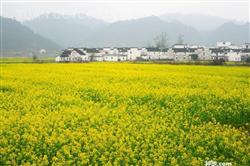
How to fertilize rapeseed during the pod stage in Jiangxi? A detailed guide to practical methods
How to fertilize rapeseed during the pod stage in Jiangxi? Please guide and explain. The pod stage of rapeseed refers to the period from the start of flowering to maturity, including the flowering stage and the pod development stage. During the flowering stage there is only a small amount of vegetative growth, with reproductive growth being dominant. Proper field management during the flowering and pod-setting stage of rapeseed is the final key to achieving high yields....
-
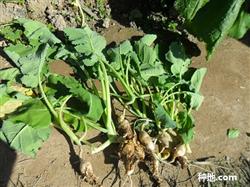
Control Methods and Technical Key Points for Clubroot of Rapeseed
How to control clubroot of rapeseed? Please explain. Clubroot of rapeseed occurs on the roots. The pathogen generally invades through root hairs or young roots, forming galls on the main root or lateral roots. It is commonly known as "big head disease." In the early stage, the surface is smooth and white; later it turns brown, rough and cracked. It is easily infected by other pathogens and rots...
-
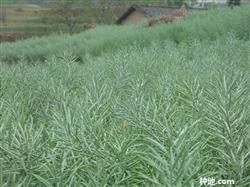
What are the key points of high-yield fertilization methods for rapeseed?
How should rapeseed be fertilized for high yield? Please introduce the following methods that can be referenced for fertilizing rapeseed: 1. Apply seedling fertilizer early. Seedling fertilizer should be applied appropriately early, and the application amount should account for 10%-15% of the total fertilization amount. Generally, apply 500 kg of decomposed human manure and urine per mu, plus 5-7 kg of urea or 10-15 kg of ammonium bicarbonate. When applying chemical fertilizer, it is best to dilute the fertilizer with clean water...
-
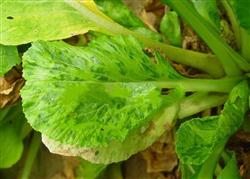
What are the control methods for rapeseed viral disease?
How to control rapeseed viral disease? Please advise. Rapeseed viral disease symptoms occur in all rapeseed production areas nationwide, with especially severe incidence in the winter rapeseed areas of North China, Southwest China, and Central China. The symptoms of this disease vary slightly depending on the type of rapeseed. Brassica rapa and Brassica juncea mainly develop chlorosis along both sides of the leaf veins, with leaves showing a yellow-green mosaic pattern, and the veins appearing translucent; in severe cases, the leaves shrink, curl, or become deformed, and diseased plants are markedly stunted, mostly dying before or at the bolting stage. Plants with mild infection and late onset may still bolt, but the flowering stems are curved or stunted, flowers and pods are densely packed, pods are shrunken and thin, and maturity is advanced. Brassica napus, by contrast, develops systemic necrotic spots, with symptoms appearing early and conspicuously on old leaves, then spreading to newly emerged leaves. At the initial stage of infection, needle-tip-sized transparent spots appear, which later expand into nearly round 2-4 mm yellow spots with dark brown necrotic centers, and the necrotic spots are surrounded by an oil-soaked appearance. On the stems and bolts, purplish-black spindle-shaped to elongated lesions appear, spreading from the middle-lower part toward the branches and fruit stalks; in the later stage, the stem lesions mostly split longitudinally or transversely, and the flowers and pods tend to wilt or die. The pods develop black necrotic spots and are mostly deformed.
-
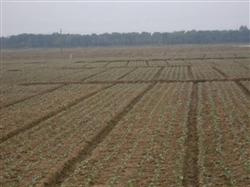
Cabbage Planting Methods and Management Points for Autumn and Winter
How to plant cabbage in autumn and winter? Please advise on planting techniques. For planting cabbage in autumn and winter, you can refer to the following methods: 1. Varieties: For autumn cabbage harvested within the year, generally choose flat-head types, such as Meimao No. 2, Chuncai, Lushen, Qiangli 60 and other varieties. For cabbage overwintered and delayed for harvest, generally choose...
-
How to fertilize cabbage? A complete guide to scientific fertilization methods
How to fertilize cabbage? Is there any sharing of cabbage fertilization techniques? Producing 1000 kg of cabbage requires 2.0 kg of pure nitrogen, 0.72 kg of phosphorus pentoxide, and 2.2 kg of potassium oxide; for a yield of 3000-5000 kg of cabbage per mu, 6-10 kg of pure nitrogen, 2.2-3.6 kg of phosphorus pentoxide, and 6.6-11 kg of potassium oxide are required. Before planting...
-

How to Grow Pearl Zucchini: Planting Methods and Key Technical Points
How do you grow Pearl Zucchini? Here is a detailed introduction. Pearl Zucchini is an ultra-early-maturing first-generation hybrid, and was an award-winning variety in the 1997 All-America Selections. Its fruit is round and spherical, with dark green, glossy skin and grayish-green speckles. It is a new zucchini variety with great development potential. 1 Characteristics and traits. This variety is...
条件筛选