-
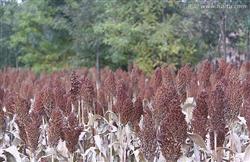
Diagnosis and Control Methods of Sorghum Smut
1. Sowing depth The sowing depth of sorghum is generally 3-5 cm. If sown too deep, the seedlings encounter great resistance when emerging, and the emergence time is prolonged. If sown too shallow, the surface soil loses much moisture, and the seeds are prone to drying out, which is equally unfavorable for emergence. Determining the sowing depth should also take into account conditions such as soil texture, moisture status, variety and temperature. Clay...
-
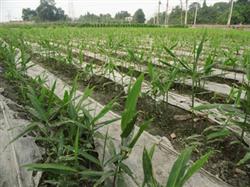
Ginger Summer Watering Methods and Technical Key Points
Ginger has different watering requirements at different growth stages. When sowing, the bottom water must be watered thoroughly, and usually the first watering is not started until about 70% of the seedlings have emerged. After this watering, the soil must be kept constantly moist to prevent the soil surface from crusting, which would affect seedling emergence. In the early seedling stage, light watering is preferable, and after watering, while the soil is still...
-
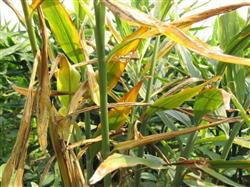
Causes of Rotting and Seedling Death in Ginger and Their Prevention and Control Methods
Growing ginger is a relatively good project for farmers to increase income and achieve prosperity, but in production, the phenomenon of rotting ginger and dead seedlings often occurs, and ginger farmers are unable to prescribe the right remedy. Experts believe that the causes of rotting ginger and dead seedlings are as follows. 1. Ginger blast disease is mostly caused by seeds and soil carrying bacteria, and prevention and control not keeping up. The prevention methods are as follows: 1...
-
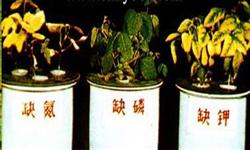
How to identify and remedy soybean nutrient deficiency? The methods explained clearly in one article
1. Nitrogen deficiency When soybeans are deficient in nitrogen, the leaves turn pale green, growth is slow, and the leaves gradually turn yellow. Nitrogen fertilizer should be applied in time as a top dressing, 5 kg to 7.5 kg of urea per mu, or a 1% to 2% urea aqueous solution can be used for foliar spraying, spraying once about every 7 days, for a total of 2 to 3 sprays. 2. Phosphorus deficiency In the early stage, the plant's leaf color...
-

Harm and Control Methods of the White-Spotted Flower Chafer on Sunflowers
Damage characteristics: The 1st-2nd instar larvae feed on the tubular flowers; after the 3rd instar they bore along the gaps between the sunflower seeds and feed on the seeds, eating part or all of the seed kernel, resulting in empty shells or bored seed heads. They bore many tunnels in the flower head and spin silk webs on the seeds of the head, binding together insect droppings and debris, forming a felt-like mass. The damaged flower heads mostly rot and become moldy, ...
-
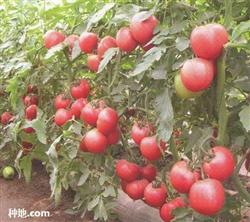
Open-field Tomato Cultivation Methods and Key Technical Points
How to grow tomatoes in the open field? Here are two reference methods for guiding open-field tomato cultivation: 1. Production site environment: choose a loam plot with high and dry terrain, convenient irrigation and drainage, a relatively low groundwater table, and deep, loose soil, and it should comply with GB/T 18407.1-2001 "Safety and Quality of Agricultural Products - Environmental Requirements for Pollution-free Vegetable Production Sites"...
-
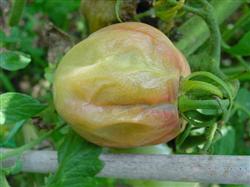
What are the control methods for autumn tomato fruit rot?
What methods can prevent autumn tomato fruit rot? Please explain. Fruit rot during the fruiting stage of autumn tomatoes is mainly caused by soft rot, brown rot, and anthracnose. Strengthening scientific management and preventing these three diseases are effective ways to control fruit rot. 1. Management on sunny days. In general, tomato fruit rot is caused by pathogen infection...
-
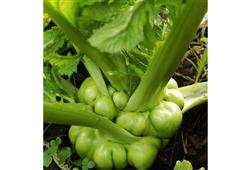
How to Grow Stem Mustard? Detailed Explanation of Planting Methods and Key Technical Points
How to Grow Stem Mustard? Please Introduce the Planting and Management Methods. Stem mustard, also known as caitou, caitou, baobaocai, yangjiaocai, lingjiaocai, etc., is a variety of the Brassica genus in the Brassicaceae family, grown for its swollen stem, which can be boiled, pickled, served cold, stir-fried, or salted. Among them, the variety with protrusions on the swollen stem is suitable for processing, and the processed product is called zhacai (pickled mustard tuber)....
-
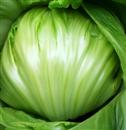
Detailed Explanation of Planting Methods and Techniques for Large Meat-Filled Heart Mustard
How to plant large meat-filled heart mustard? Please advise. Large meat-filled heart large mustard, also known as Chaozhou mustard, has a long history of cultivation. Its juice is abundant and its texture is crisp, with excellent quality. Besides being eaten fresh, it is also suitable for pickling into salted vegetables. It is an excellent vegetable variety for generating income by fully utilizing idle winter land after the late rice harvest. The cultivation techniques are as follows. 1. Sowing in winter...
-
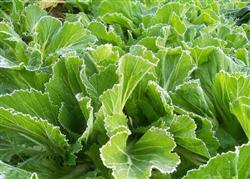
How to Grow Mustard Greens? A Detailed Guide to Planting Methods and Management Key Points
How do you grow mustard greens? Here is a detailed introduction to growing mustard greens, you can refer to the following methods: 1. Soil selection and land preparation. The previous crop for land used to cultivate root mustard should generally be cucurbit, legume, or solanaceous crops. It is best not to follow a cruciferous crop or land where mustard was grown in the same year. It can also be rotated with grain land and rice...
条件筛选