What are the cultivation methods for black-skinned winter melon?
How do you grow black-skinned winter melon well? Is there detailed technology to refer to? Black-skinned winter melon likes warmth and tolerates heat, with an optimum growing temperature of 22-28°C. Winter melon is not strict about light; if seedlings are kept at around 16°C with 11 hours of sunlight, they flower early and the female flower nodes are low. Winter melon has a well-developed root system and strong absorption capacity...
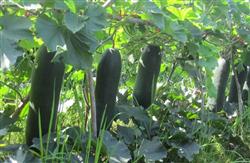
How do you grow black-skinned winter melon well? Is there detailed technology to refer to?
Black-skinned winter melon likes warmth and tolerates heat, with an optimum growing temperature of 22-28°C. Winter melon is not strict about light; if seedlings are kept at around 16°C with 11 hours of sunlight, they flower early and the female flower nodes are low. Winter melon has a well-developed root system, strong absorption capacity, and is relatively drought-tolerant. At present, the most widely grown winter melon variety is "Guangdong black-skinned large winter melon", which can be planted twice a year: spring planting is sown in January-February, and autumn planting is sown in early July. The full growth period is 120 days for spring planting and 90 days for autumn planting.
I. Sowing and seedling raising
For spring-planted black-skinned winter melon, sowing and seedling raising are used, followed by transplanting to the field. Sowing and seedling raising help protect seedlings from cold and keep them warm. For spring seedling raising, disinfect the seeds, hasten germination, and sow after the seeds show white sprouts. It is best to raise seedlings in nutrient cups, covered with agricultural film to keep warm and retain moisture. When raising seedlings under agricultural film, once the seedlings have put out 3-4 true leaves, the film can be removed to harden the seedlings, and transplanting is done on a clear, warm day.
For autumn planting, soak the seeds to hasten germination, then sow the sprouted seeds and establish the plants.
II. Land preparation and planting
The field for growing black-skinned winter melon requires convenient drainage and irrigation and fertile soil. Black-skinned winter melon should not be grown continuously; a previous crop of rice paddy is best. The land should be plowed, harrowed and sun-bleached white, with sufficient base fertilizer applied. The base fertilizer can be 2500-3000 kg per mu of decomposed farmyard manure or pig manure, cattle manure, and miscellaneous soil manure, fully mixed with the topsoil. The land should be prepared into fine, even soil. Build high, wide beds, with a bed width of 1.5-2 m (including the ditch) and a bed height of more than 0.5 m, to facilitate irrigation cultivation. When planting, apply a mixed composted fertilizer of composted pig and cattle manure, compound fertilizer, phosphate fertilizer, etc. in the small planting furrow or hole, 0.5-1 kg per hole, then cover with a layer of soil so that the seedling roots do not directly touch the fertilizer, to avoid burning the young roots. After fertilizing, planting can be carried out, with a single-row, single-plant layout, a plant spacing of 1.00-1.50 m, and 450 plants per mu.
III. Fertilizer and water management
1. Reasonable fertilization:
Black-skinned winter melon requires fairly ample fertilizer for growth. In addition to sufficient base fertilizer, timely and appropriate topdressing should be carried out according to the growth conditions of winter melon at different stages. Follow the principle of "light first, heavy later", from dilute to concentrated. The focus should be on topdressing from when the vines are trained onto the trellis until after fruit set, when the fruit weighs about 3 kg, combining nitrogen, phosphorus, and potassium, without over-applying nitrogen fertilizer.
2. Reasonable irrigation:
Black-skinned winter melon has strict water requirements. If seedlings encounter clear, warm weather, water once in the morning and once in the evening; for spring planting, if the weather is cold, water can be reduced. After the vines are trained onto the trellis, more water is needed. In addition to watering every day, on sunny days maintain about 10 cm of water in the bed ditch to help the roots absorb water, keeping it moist for a long time without drought. Control water 10 days before harvest to facilitate storage.
Click to get more winter melon cultivation techniques
Click to get more vegetable cultivation techniques