Red-Fleshed Red Fuji Apple Planting Methods and Technical Key Points
How are Red-Fleshed Red Fuji apples planted? What management methods are there for Red-Fleshed Red Fuji apples? We would also like netizens with planting technology experience to help introduce them. Red Fuji apples are deeply loved by people for being crisp, sweet and delicious, but Red-Fleshed Red Fuji apples are a late-maturing variety with a relatively late market time, and they only gradually mature and come to market after November...
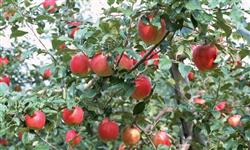 How are Red-Fleshed Red Fuji apples planted? What management methods are there for Red-Fleshed Red Fuji apples? We would also like netizens with planting technology experience to help introduce them
Red Fuji apples are deeply loved by people for being crisp, sweet and delicious, but Red-Fleshed Red Fuji apples are a late-maturing variety with a relatively late market time, and they only gradually mature and come to market after November, resulting in a longer management cycle. Therefore, Zhongdiwang has compiled the management key points for Red-Fleshed Red Fuji apples, listed in detail below for netizens' reference.
Key Point 1. Tree vigor of Red-Fleshed Red Fuji apples:
The tree vigor of Red Fuji apples is generally best when moderate, because the chlorophyll, soluble solids content and fruit coloring index of moderate trees are all higher than those of excessively vigorous trees and weak trees. When the thickness ratio of the scaffold branches to the fruiting branches is 25%, the fruit produced is large and well colored; if the thickness ratio of the two is greater than 30%, although the fruit is large, the coloring is poor. If the growth of both the scaffold branches and the fruiting branches is weak, not only is the fruit small, but the coloring is also abnormal. Therefore, maintaining moderate and robust tree vigor is crucial for producing fully red Red Fuji fruit.
Key Point 2. Ensure sufficient light for the fruit trees:
This is because Red Fuji apples are very sensitive to light. For the fruit on each branch, when it receives more than 70% of full sunlight, the fruit surface is fully red; when it receives 40%-70% of full sunlight, the fruit surface is partially red; when full sunlight is below 30%, the fruit surface does not color.
To ensure sufficient light conditions for the tree body, in pruning techniques, heavy winter pruning should be changed to heavy summer pruning. During winter pruning, moderately vigorous branches should be left unpruned and bent flat, with more thinning and no heading cuts, and the number of branches per mu should be kept between 80,000 and 100,000. For summer pruning, do a good job of bud removal in April and May, sprout removal in May and June, and pinching, twisting shoots and ring girdling from late May to early June. In tree shape, change the natural semi-round shape to a five-main-branch double-layer open-center shape. For orchards with more than 83 trees per mu, spindle shape should be used.
Key point: Regardless of the tree shape, the main branches should be few, the branching order low, and the angles large, mainly using drooping fruiting branch groups, so as to ensure ventilation and light penetration inside the canopy and brightly colored fruit.
Key Point 3. Regulate the proportion of mineral nutrients in leaves:
In July, when the nitrogen content in the leaves of Red Fuji apple trees is greater than 2.5%, the petioles are green and the fruit is difficult to color; when the nitrogen content is less than 1.5%, the petioles and veins are both purplish red and the fruit coloring is pale; when the leaf nitrogen content is around 2%, the petioles are purplish red, the leaves are dark green, and the fruit colors well.
From August onward until before fruit harvest, nitrogen fertilizer should no longer be applied as a top dressing. At this time, applying potassium fertilizer can promote coloring; the higher the soil potassium content, the better the fruit coloring. According to measurements, when the soil potassium content is 0.006%-0.012% and the leaf potassium content is 0.5%-0.8% (with full sunlight reaching 70%), Red Fuji apples can achieve full red color.
Key Point 4. Water management for fruit trees:
In the early stage of Red Fuji apple fruit development, maintain a certain amount of fertilizer and water; in the middle stage, also maintain a certain soil moisture; in the later stage, control water. Heavy rain or flood irrigation in the later stage is not conducive to increasing fruit sugar content and coloring. If the climate in the later stage is indeed dry, sprinkler irrigation can be used.
Key Point 5. Leaf removal, fruit turning and branch tying for fruit trees:
Twenty days before harvesting Red Fuji apples, removing the leaves around the fruit that shade it and adhere to the fruit surface can increase the coloring area by about 15%. Four to five days after leaf removal, gently support the fruit with the hand and turn the shaded side toward the sunny side so that the back and belly receive light, which can increase the coloring index by about 20%. In the later stage of fruit growth, supports should be set up and branches tied in time to prevent the fruiting branches from drooping, pressing and overlapping and touching the ground, which would affect fruit coloring.
Key Point 6. Coloring of the fruit:
Spraying a 500 mg/kg rare earth solution when Red Fuji apples are approaching coloring can advance Red Fuji coloring by 12-17 days, increase the coloring index by 24.2%, and increase the fully red fruit rate by more than 5%.
12 Pruning Methods for Apple Trees
Fertilization Methods for Apple Trees