What are the methods for improving the quality of Red Fuji apples?
How can the quality of Red Fuji apples be improved? We also ask netizens with experience growing Red Fuji apples to help explain. High-quality Red Fuji apples require a well-formed fruit shape, a noticeably tall and cylindrical profile, a smooth and clean fruit surface, bright and vivid color, moderate fruit size, moderate crispness and firmness, good fruit flavor, high soluble solids content, and at the same time low pesticide residue...
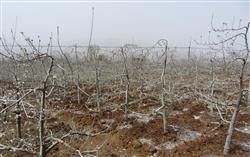 How can the quality of Red Fuji apples be improved? We also ask netizens with experience growing Red Fuji apples to help explain.
High-quality Red Fuji apples require a well-formed fruit shape, a noticeably tall and cylindrical profile, a smooth and clean fruit surface, bright and vivid color, moderate fruit size, moderate crispness and firmness, good fruit flavor, high soluble solids content, and at the same time low pesticide residue. Therefore, Zhongdi Network has compiled the methods for improving the quality of Red Fuji apples, listed in detail below for netizens' reference.
Step 1. Carry out rational fertilization:
In late April, dig around the tree dish, to a depth of about 15 cm near the trunk and about 25 cm at the outer edge, so as to avoid cutting too many roots, injure the shallow roots as little as possible, and combine this with deep turning between the rows to achieve the goal of thoroughly loosening the soil.
In autumn, apply base fertilizer; for every 1 kg of fruit produced, apply 1-1.5 kg of high-quality barnyard manure, composted manure, or livestock and poultry manure, and apply topdressing at the appropriate time. The suitable ratio of nitrogen, phosphorus, and potassium is 10:7:8. Generally, to produce 1000 kg of fruit, 8 kg of pure nitrogen fertilizer, 5.5 kg of available phosphorus fertilizer, and 6.4 kg of available potassium fertilizer are needed. Nitrogen fertilizer should be applied in the early stage, especially in spring and within 1 month after flowering, which is beneficial for fruit coloring and for increasing the fruit shape index. In early August, after the fruit begins to color, nitrogen fertilizer should be controlled and phosphorus and potassium fertilizers increased.
Step 2. Carry out scientific watering:
For Red Fuji apples, focus on watering well before flowering, after flowering, and before the soil freezes. The pre-flowering watering is generally carried out from mid-to-late March to early April together with topdressing. At this stage, watering should not be excessive, so as to avoid lowering the soil temperature and affecting root development.
The post-flowering watering begins 10 days after flowering and is crucial for reducing fruit drop, promoting fruit development, and flower bud differentiation. The freezing water is applied in early November before the soil freezes. In addition, if the soil is dry in the early part of the rainy season, watering 1-2 times is still needed.
Step 3. Prune the fruit trees:
According to past experience in growing Red Fuji apples, most large fruits are borne on lower-order fruiting branch groups, especially on short fruit branches transformed from vigorous shoots, so during pruning, lower-order fruiting branch groups should be cultivated. During pruning, an appropriate branch-to-fruit ratio should be maintained, generally 5-10:1. If the branch-to-fruit ratio is too large or too small, the fruits will not grow large.
During pruning in the tree's growth period, in order to solve the light problem for individual trees and the whole population, attention should be paid to pruning throughout the entire growth period, such as bud removal and sprout removal in April-May, shoot twisting and branch bending in June, and shoot thinning in September.
Step 4. Sufficient light:
The length of time and the intensity of light the fruit receives are both related to its quality, so during pruning, the positions of top light, side light, and inner light in the tree canopy should be adjusted as much as possible to increase the degree of fruit coloring and the soluble solids content. Generally, the orchard's population canopy coverage is required not to exceed 80%, the branch volume per mu after winter pruning for trees in full fruit period is about 100,000, and the tree canopy light transmittance should be no less than 40%.
How to grow Red Heart Red Fuji apples
What kind of temperature is suitable for growing apple trees?