How to Water Dragon Fruit Properly? A Detailed Guide to Planting and Watering Methods
How should dragon fruit be watered when growing it? What should be noted when watering dragon fruit? We also ask netizens with dragon fruit growing experience to share their advice. Dragon fruit has strong drought resistance and tolerance, but this does not mean dragon fruit does not need watering. Therefore, Zhongdiwang has compiled the watering methods and precautions for dragon fruit, listed in detail below...
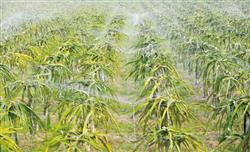 How should dragon fruit be watered when growing it? What should be noted when watering dragon fruit? We also ask netizens with dragon fruit growing experience to share their advice
Dragon fruit has strong drought resistance and tolerance, but this does not mean dragon fruit does not need watering. Therefore, Zhongdiwang has compiled the watering methods and precautions for dragon fruit, listed in detail below for netizens' reference.
I. The importance of water to plants:
Water is the lifeblood of plant growth and an indispensable component of all organ activities. In the life activities of fruit trees, water plays a role in maintaining cell turgor pressure, ensuring stomatal opening and carbon dioxide entry. All chemical changes within the body can only proceed under conditions where water is present. Nutrients in the soil can only be absorbed and utilized when dissolved in water. More importantly, water is an essential raw material for photosynthesis and the foundation for yield formation.
In addition, only under conditions where water is present can fruit tree transpiration be maintained, tree body temperature be regulated, and the transport of photosynthetic products and mineral nutrients be ensured. Therefore, in fruit tree cultivation, timely watering is an important measure to ensure early fruiting, high yield, and high quality.
II. Watering periods for dragon fruit:
Dragon fruit should be irrigated before the fruit tree is affected by water shortage, and absolutely not watered when the fruit tree already shows drought symptoms (such as wilting, fruit shriveling). Judging whether watering is needed mainly depends on soil moisture. Generally, 60%-80% of the soil's maximum water-holding capacity is most suitable for fruit tree growth and development. Dragon fruit has long grown in desert regions and has a relatively strong tolerance for water shortage. Abroad, measuring instruments are generally used to determine soil moisture to guide irrigation. Determining the irrigation period depends not only on soil moisture, but also on climatic conditions and the growth and development stage of the fruit tree itself.
III. The role of watering dragon fruit at each stage:
1. From before budding to the flowering stage. If there is sufficient water in the soil at this time, it can strengthen the growth of new shoots, increase leaf area, enhance photosynthesis, and enable normal flowering and fruit setting, laying the foundation for a high yield that year. In spring drought areas, this irrigation is particularly important.
2. New shoot growth and young fruit enlargement stage. This period is often called the critical water requirement period of fruit trees. At this time, the physiological functions of the fruit tree are most active. If water is insufficient, the leaves take water from the young fruit, causing the young fruit to shrivel and drop.
3. Rapid fruit enlargement stage. This watering can meet the fertilizer and water requirements for fruit enlargement. However, the amount of watering must be well controlled this time.
4. Before and after harvest and the dormant period. In arid autumn and winter areas, watering at this time can store sufficient water in the soil, help decompose fertilizer, and thereby promote the growth and development of the fruit tree the following spring. After the last batch of dragon fruit is harvested in autumn and winter, the plant enters the dormant period. If there is appropriate irrigation at this time, it can promote plant growth and encourage branches to become fruiting branches as soon as possible.
III. Dragon fruit watering methods and watering amounts:
1. Flood irrigation. In areas with abundant water sources and flat terrain, whole-orchard irrigation is often practiced. However, this method causes certain damage to soil structure, is labor-intensive and time-consuming, and is not economical, so it has gradually been used less.
2. Border irrigation. Build a tree basin with each plant as a unit, or make long borders along the tree rows, and lead water into the tree basins or borders during irrigation. This method saves water and is easy to manage, so it is widely used. But it likewise damages the soil structure of the tree border and causes the death of absorbing roots.
3. Hole irrigation. When water sources are lacking, dig 8-12 holes with a diameter of about 30 cm outside the outer edge of the canopy drip line, with a depth suitable to avoid damaging the roots, pour water into the holes, and fill them level after the water seeps in.
4. Furrow irrigation. Dig irrigation furrows at certain intervals between 2 rows of trees, with a furrow depth of 20-30 cm and a width of about 50 cm. Generally, 2 furrows are dug per row; in dwarf densely planted orchards, 1 furrow may also be used. Lead water into the furrows and let it gradually seep into the soil. This method both saves water and causes less damage to soil structure, and should be promoted.
5. Drip irrigation. Drip irrigation is an advanced mechanized and automated irrigation technology developed in recent years. It is a watering method that slowly applies water droplets or fine water streams to the plant root zone. It is now gradually being adopted in production. Drip irrigation has many advantages: for example, it only moistens the soil layer near the crop roots and the surface soil, greatly reducing water evaporation; this system can be fully automated, reducing labor to a minimum; and it can frequently supply water to the root zone soil, evenly maintaining soil moisture so that it is neither excessively wet nor excessively dry, while also keeping the root zone soil well aerated. If drip irrigation is combined with fertilization, it can continuously supply nutrients to the root system, which is most beneficial to the growth and development of fruit trees, achieving two results with one effort.
According to foreign reports, drip irrigation can increase fruit tree yield by 20%-50%. However, the drip irrigation system requires more piping materials and a relatively large investment. It needs a water tower with a certain pressure and a filtration system, as well as main and branch pipes to lead water into the orchard, and capillary tubes and emitters around the trees. In addition, pipes and emitters are easily clogged, strictly requiring good filtration equipment.
Regardless of which irrigation method is used, the amount of water applied at one time must not be too large or too small. It is suitable to wet through the soil layer where the main root system is distributed. Specifically determining the irrigation amount also requires considering soil texture, the growth and development stage of the fruit tree, fertilization conditions, and meteorological conditions. For theoretical irrigation amount calculation, determining it by soil moisture is the most commonly used. It is generally believed that the minimum irrigation amount is when soil moisture is 60% of the soil's maximum water-holding capacity, while the ideal amount is 80% of the maximum water-holding capacity. In addition, based on the long-term accumulated experience of fruit growers and technical personnel, when irrigating, if it is considered to have been thoroughly watered, that is actually the most suitable irrigation amount.
IV. Drainage of dragon fruit orchards:
The roots of dragon fruit are most afraid of oxygen deficiency and hate waterlogging. If there is too much soil moisture, air permeability weakens, hindering root respiration. In severe cases, it can suffocate the active parts to death, causing fruit drop, reducing fruit flavor, and even causing plant death. Therefore, in addition to doing well in water conservation and timely irrigation, drainage work such as flood prevention and waterlogging prevention should also be done well, and drainage ditches and flood discharge channels should be built well. In rainy seasons, preparations for flood prevention and drainage should be made. The number and size of drainage ditches in the orchard should be determined according to the local rainfall, the strength of the soil's water-holding capacity, and the level of the groundwater table. Under normal circumstances, the drainage ditches in a dragon fruit orchard are about 1 m deep.
What environment is suitable for growing dragon fruit
Dragon fruit planting technique video