Pest and Disease Control Methods and Technical Key Points for Dragon Fruit
Because dragon fruit is a wild plant and has not been domesticated for long, it has no specific pests or diseases. To date, no fatal insect pests have been found. As for diseases, it can become infected with pathogenic bacteria or viruses when its resistance weakens after transplanting or injury, but no local or widespread infectious diseases have been found. In terms of insect pests, during the branch growth period...
 Because dragon fruit is a wild plant and has not been domesticated for long, it has no specific pests or diseases. To date, no fatal insect pests have been found. As for diseases, it can become infected with pathogenic bacteria or viruses when its resistance weakens after transplanting or injury, but no local or widespread infectious diseases have been found. In terms of insect pests, during the branch growth period, the tender buds are gnawed by pests, but since the plant produces many tender buds in a very short time and they grow rapidly (they can grow more than 2 cm per day), the amount gnawed by pests is extremely limited and will not affect branch growth.
Therefore, Zhongdiwang now introduces several common pest and disease control methods for dragon fruit as follows, for reference by fellow growers.
I. Dragon fruit seedling and branch growth stage:
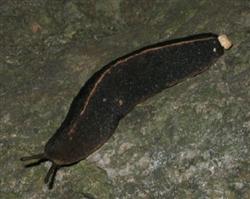
This stage is exactly when dragon fruit branches are growing, accumulating nutrients, and storing nutrients for flowering and fruiting. At this time, the branch skin is relatively thin, tender and juicy, and mollusks such as snails and slugs can easily cause damage by gnawing the tender branches, which is unfavorable to dragon fruit branch growth. Therefore, at this time, mollusks such as snails and slugs should be prevented from causing damage. The control method is to spread lime or wood ash around the base of the plant, or use poisoned bait to trap and kill them.
During the seedling growth period, caterpillars like to eat tender branches, especially tender buds. If the growing point is eaten at this time, the plant will stop growing. For control, seeds of pak choi can be broadcast on the ground to attract butterflies to lay eggs on the pak choi, so that the tender buds of dragon fruit are spared from damage.
If caterpillars occur severely, insecticides can be used to kill them. Generally, spraying begins when flower buds and new shoots have emerged about 3 cm. The pesticides include 90% trichlorfon or 80% dichlorvos plus 40% dimethoate, each at 1000 times dilution, 20% fenvalerate or 2.5% deltamethrin at 2000-3000 times dilution, and 50% phenthoate at 1000 times dilution. Spray once every 7-10 days, for 2-3 consecutive sprays.
II. Dragon fruit color-change stage:
When the dragon fruit peel turns red and the fruit ripens, fruit flies will lay eggs inside the skin of the ripening fruit. After hatching, the larvae feed on the flesh, causing fruit cracking and fruit rot. The surface of the damaged fruit looks intact, but on close inspection there are insect holes; when pressed by hand, juice flows out; when cut open, the flesh has already rotted, with many maggots.
The control method is to loosen and turn the garden soil in winter or early spring to reduce the overwintering pest population base; during the peak outbreak period, spray the tree canopy at night with pyrethroid pesticides at 2000 times dilution or 90% trichlorfon at 800 times dilution plus 3%-5% brown sugar, once every 7 days, for 3 consecutive sprays; bagasse fiber blocks (57 mm x 57 mm x 10 mm) soaked in a solution of 97% methyleugenol plus 3% naled (mixed at a ratio of 95:5) can also be hung on the trees, 50 blocks per sq m, hung twice a month, to trap and kill male adults. In the middle stage of fruit development, fruits can be bagged to prevent adults from laying eggs.
What environment is suitable for growing dragon fruit
Dragon fruit cultivation technique video