Pictures of Boron Deficiency Symptoms in Grapes and Control Methods
What does boron deficiency in grapes look like? What causes boron deficiency in grapes? How to prevent and control boron deficiency in grapes? We also ask netizens with grape-growing experience to help explain. Grapes are perennial vines, generally cultivated in greenhouses or on trellises, which means vineyard soil cannot be plowed for long periods, causing the soil...
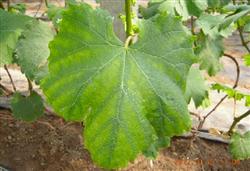 What does boron deficiency in grapes look like? What causes boron deficiency in grapes? How to prevent and control boron deficiency in grapes? We also ask netizens with grape-growing experience to help explain.
Grapes are perennial vines, generally cultivated in greenhouses or on trellises, which means vineyard soil cannot be plowed for long periods, causing elements in the soil to accumulate or leach away, resulting in deficiency symptoms. Today Zhongdi Web has compiled the harm, causes and control methods of boron deficiency in grapes, listed in detail below for netizens' reference.
Harm of boron deficiency in grapes:
When grapes are deficient in boron, the plants are stunted, secondary shoots grow weakly, internodes shorten, and the terminal buds tend to die. When grapes are deficient in boron, pale yellow small spots appear on the young leaves at the tips of new shoots, and the leaves become noticeably smaller, thicker, brittle, wrinkled and curved downward. When grapes are deficient in boron, chlorotic yellow patches appear on the leaf margins, then merge into one area, causing the tissue between the leaf veins to turn yellow, and finally brown and die. When grapes are deficient in boron, irregular pale yellow spots appear on the leaves near the inflorescences and gradually spread, and in severe cases the leaves fall off.
When grapes are deficient in boron, the inflorescences are small and have few flower buds; at flowering the corolla often does not fall off, or heavy flower and fruit drop occurs during the flowering period, and at the same time the number of seedless small berries in the grape clusters increases. In addition, when grapes are deficient in boron, the root system is shallow and roots die easily.
Causes of boron deficiency in grapes:
Boron is a trace element, mainly involved in cell division, growth, tissue differentiation, cell wall formation and some enzyme activities, carbohydrate transport and other functions.
Boron deficiency in grapes is mainly related to soil structure and soil organic matter content. Boron deficiency is severe in poor soils lacking organic matter, in dry soil areas, in alkaline soils with a pH as high as 7.5~835, and in sandy soils that dry out easily. At the same time, the grape root system is shallow and damaged by nematodes, resulting in poor root absorption capacity, which also makes boron deficiency likely to occur. Click to view "Methods for Determining Soil pH" and "The Harm of Nematodes"
Control methods for boron deficiency in grapes:
Method 1: Apply more high-quality organic fertilizer to the vineyard to improve soil structure and increase soil fertility.
Method 2: Water the grapes at the right time to increase the content of soluble boron in the soil and facilitate absorption by the grapes.
Method 3: When applying base fertilizer in the vineyard in autumn, apply 50 grams of borax or boric acid per mature grapevine to supplement the grape's boron deficiency.Click to view"The Role of Boron Fertilizer"
Method 4: One week before grape flowering and at full bloom, spray 2 consecutive times with a 0.1%~0.3% borax solution (boric acid can be used instead).
Symptoms of Calcium Deficiency in Grapes and Control Methods
Control Methods for Magnesium Deficiency in Grapes
Control Methods for Potassium Deficiency in Grapes