-
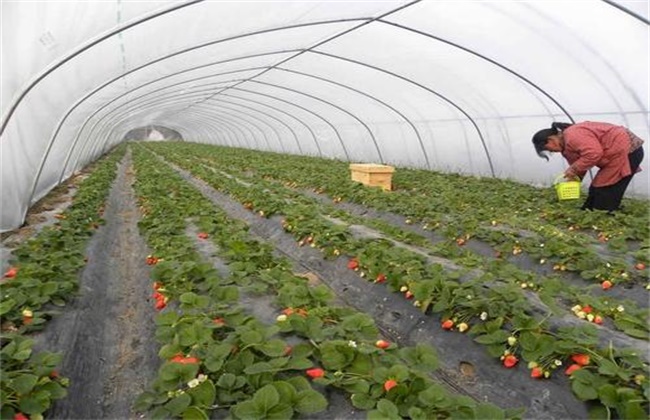
How to Supplement Light for Strawberries in Winter Greenhouses? A Detailed Guide to Practical Methods
How to Supplement Light for Strawberries in Winter Greenhouses
-
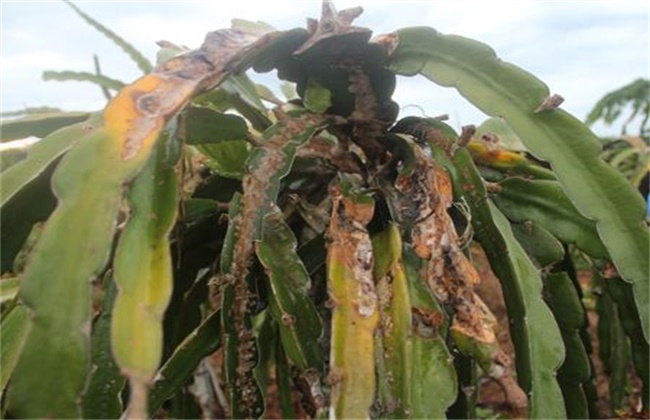
What are the control measures for stem blight in dragon fruit?
Control measures for stem blight in dragon fruit
-

Planting Techniques and Field Management Highlights for the Snow Jujube
The ripening period is extremely late. Under the climatic conditions of the Guanzhong region, it ripens in early to mid-November, that is, between the Start of Winter and Minor Snow. The fruit does not suffer freeze damage or splitting, making it truly a rare and precious fresh fruit for the autumn and winter seasons. 1. The fruit color is vivid and the quality is excellent. The average single-fruit weight is 30 g, and extra-large fruits weigh more than 60 g. Before ripening, the sunny side has a red blush, and the appearance is beautiful, red, and glossy, hence the reputation as the "apple jujube." 2. The storage period is extremely long. This variety is highly tolerant of storage and transport. Stored indoors under ordinary conditions until the Spring Festival, or in cold storage for more than 100 days, it still maintains bright color, crisp and sweet flesh,
-
The role of sunlight and rain in peach cultivation
In 1981, it was bred by the Institute of Horticulture, Jiangsu Academy of Agricultural Sciences through a cross of Zhaohui × Yuhualu. The original code was 81-8-83, and it was named in 1994. The fruit is round; the average single fruit weight is 110 grams, and the largest fruit weight is 174 grams; the skin is creamy yellow, with a rose-red blush on the fruit surface; the flesh is milky white, soft and juicy, with a rich sweet flavor and aroma; soluble solids 11.1%. Clingstone. In the Nanjing area, the fruit ripens around June 10, and the fruit development period is 70 days. This variety is early-bearing, high-yielding, widely adaptable,
-
Detailed Explanation of High-Light-Efficiency Tree Shape Renovation Techniques for Kernel Apricot
In regions where kernel apricots are cultivated, we found that due to the influence of traditional habits, most fruit growers either do not prune or prune unreasonably. Each tree has an average of 8 to 10 large branches, the tree shape is chaotic, the proportion of complete flowers is low, the fruiting zone moves outward, the canopy is closed and shaded, and the small fruit-bearing branches in the lower part die prematurely due to shading, resulting in late fruiting, low yield and poor quality of kernel apricots. Therefore, high-light-efficiency tree shape renovation must be carried out to improve quality and efficiency. High-light-efficiency tree structure for kernel apricots After several years of exploration and practice, we believe that the high-light-efficiency tree shape for apricot should be
-
Symptom Identification and Integrated Control Methods for Strawberry Bud Blight
Strawberry bud blight is a soilborne fungal disease with a worldwide distribution. It is strongly saprophytic in soil and is an important root disease of many crops. In addition to strawberry, it also affects more than 160 species of cultivated and wild plants, including cotton, soybean and vegetables. On strawberry, it mainly damages buds, new shoots, stipules and the bases of leaf petioles, causing seedling-stage damping-off...
-
Key Technical Points for Light Regulation in Greenhouse Grape Cultivation
In greenhouse grape cultivation, because the light intensity inside the shed is often less than 70% of that outdoors, it has a significant adverse effect on grape growth and fruiting, often causing serious flower and fruit drop, poor fruit coloration, low sugar content, poor flower bud differentiation and other phenomena, greatly reducing grape yield and quality. Therefore, enhancing...
-
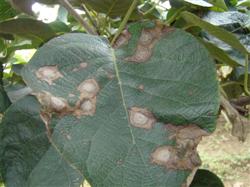
How to identify and control kiwifruit branch blight
Kiwifruit branch blight, also called water-loss branch blight, is a physiological disease caused by climatic factors. It refers to the sudden wilting and death of fruiting canes or vegetative canes when the fruit tree has not suffered artificial fertilizer damage or pesticide damage, nor pathological root rot, branch rot, canker, and other such conditions. 1. Disease symptoms...
-
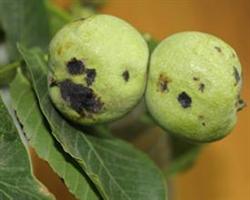
How to prevent and control walnut bacterial blight? These methods are very practical
The pathogen of walnut bacterial blight generally overwinters in twigs or buds, and in the following spring exudes bacterial fluid that spreads via wind and rain, mainly damaging young fruit, leaves and tender twigs. Management methods: 1. Overwintering management. After leaf fall, apply Husu Jiangjun to the trunk and branches to hinder the pathogen from multiplying on the tree body, providing insulation, disinfection and frost protection. At the same time, spray Husu...
-
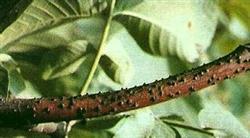
Integrated Control Methods and Technical Key Points for Walnut Branch Blight
Walnut branch blight is caused by fungal infection and mainly damages branches and trunks. It occurs in all regions, with a general diseased plant rate of 20-30%, and in severe cases the diseased plant rate reaches over 80%, causing massive branch dieback and directly affecting tree growth as well as walnut yield and quality. Therefore, timely control is necessary to curb the disease and promote tree...
条件筛选