-

Symptoms of Schisandra Leaf Blight and Its Prevention and Control Methods
Schisandra leaf blight is a common disease, widely distributed in Liaoning, Jilin, Heilongjiang and other provinces, and can cause serious consequences such as early defoliation, fruit drop, death of new shoots, weakened tree vigor, decreased fruit quality, and reduced yield. 1. Disease symptoms Leaf blight mainly damages leaves. According to the different initial sites on the leaves and the size of the lesions, it can be divided into two types. ① The disease first starts from the leaf tip or edge, then spreads to the leaf margins on both sides, and then extends toward the center, gradually forming large brown patches; as the disease further
-
Under full-light cultivation of Schisandra chinensis, Welsh onion or Schisandra chinensis seedlings can be intercropped
To make full use of the land between the rows of cultivated Schisandra chinensis, before the Schisandra chinensis plants reach fruit-bearing at 4 years of age, intercropping Welsh onion or Schisandra chinensis seedlings can yield certain economic benefits to offset the costs of cultivating Schisandra chinensis. I. Planning 1. When Schisandra chinensis is cultivated with a row spacing of 1.5 m and a plant spacing of 0.5 m, the available inter-row land area per mu (667 sq m) of Schisandra chinensis orchard is as follows: for each mu (667 sq m) of land, estimated by a long side of 33 m and a short side of 20 m (660 sq m), with a row spacing of 1.5 m, 22 rows can be laid out, each 20 m long; at the early stage of cultivation, the horizontal spread of the Schisandra chinensis root system is not large, so the width of the Schisandra chinensis seedling belt can be kept at 80 cm (40 cm on each side), the usable inter-row width is 70 cm, leaving a ditch width of 10 cm on each side, and one ridge 50 cm wide can be formed, on which 2 rows of Welsh onion are planted, with a row spacing of 10-15 cm and a plant spacing of 10 cm. Based on this calculation, each inter-row space can plant 10 sq m of Welsh onion, and each mu of Schisandra chinensis orchard can plant 22 rows of Welsh onion, requiring 9,680 Welsh onion sets; each Welsh onion set is 1.5-2 cm in diameter, about 80 per jin, so about 120 jin of Welsh onion sets are needed, and the plantable Welsh onion area is 220 sq m.
-
Detailed Explanation of Prevention and Control Methods and Key Technical Points for Panax notoginseng Blight
Blight, also known as "leaf-drooping rot," begins to occur from April to May, and becomes severe from July to August. After being affected, dark green irregular lesions appear on the leaves or petioles, and the lesion color then deepens. The affected parts become soft, and the leaves look as if they have been scalded with boiling water, appearing semi-transparent, and later dry up or droop and stick to the base of the stems. Prevention and control methods: First, after harvesting the fruit, cut off the aboveground parts, clean the field, and spray the bed surface with 1-2 degrees Baume lime sulfur mixture for disinfection. Second, before the disease occurs, spray 1:1:200 Bordeaux mixture or 50% carbendazim 1000x solution, once every 7 days, for
-
How to prevent and control leaf blight in Schisandra chinensis? Practical tips shared
Leaf blight in Schisandra chinensis mostly occurs from late May to mid-July, with the lesions appearing scorched yellow. It initially starts at the leaf tip and gradually expands and spreads; in severe cases, the entire leaf turns yellow and dies. The disease is severe under high temperature and high humidity with poor ventilation. Control methods: spray with 400-500 times zineb and 1500 times thiophanate-methyl; it is best to spray once a week before the disease occurs, for 2-3 consecutive sprays, or use Bordeaux mixture sprayed once a day.
-

Planting Methods and Management Technique Highlights for the Holboellia latifolia
Planting Methods for the Holboellia latifolia
-
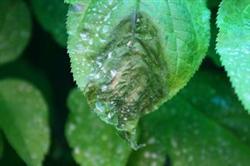
Detailed Explanation of the Occurrence and Control Methods of Ginseng Phytophthora Blight
This year the rainfall has been heavy, and the high temperature and high humidity are very suitable for the reproduction of the ginseng Phytophthora blight pathogen. The suitable temperature for the onset of ginseng Phytophthora blight is induced under soil temperatures of 10-30°C; soil temperatures of 20-26°C are most suitable for the disease to occur, while below 5°C and above 30°C the disease stops occurring. The main pathogen causing ginseng Phytophthora blight is the fungus of the genus Phytophthora in the subdivision Mastigomycotina...
-
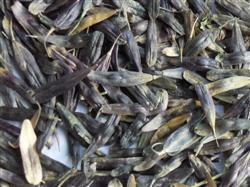
Symptoms and control methods of southern blight in mint
Isatis root seeds have a lifespan of 2 years. After more than 2 years, the seeds do not germinate; even if a small portion germinates, they soon die, which is called "failure to establish seedlings." Therefore, new seeds should be purchased whenever possible. Generally, newly produced Isatis root seeds (also called daqingzi) are blue-black in appearance, have good gloss and are shiny, with a relatively strong fresh fragrance,...
-
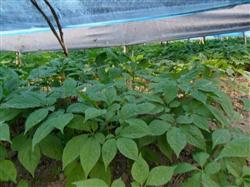
What kind of disease is ginseng bacterial leaf blight?
What is ginseng bacterial leaf blight? Please provide an introduction. Symptoms of ginseng bacterial leaf blight: it is generally more common in 1-year-old and 2-year-old ginseng in recent years. The leaves of ginseng fade from the leaf tip or edge, and water-soaked lesions spread toward the stem part of the leaf. After fading, the leaves are white or light yellow. Some faded leaves look like white paper and have tension, and do not break easily when pulled by hand. Finally...
-

How to prevent and control leaf blight in Salvia miltiorrhiza cultivation?
How to prevent and control leaf blight in Salvia miltiorrhiza? What harm does leaf blight cause? Please explain the harm of leaf blight in Salvia miltiorrhiza: Leaf blight in Salvia miltiorrhiza mainly harms the leaves of Salvia miltiorrhiza. The lower leaves of the plant are affected first, then it gradually spreads upward. In the early stage of the disease, small brown round spots appear on the leaf surface; afterward the spots continuously expand, with the center turning grayish brown....
-

What is Salvia miltiorrhiza southern blight? Growers of Salvia miltiorrhiza need to understand this disease
What is Salvia miltiorrhiza southern blight? What harm does Salvia miltiorrhiza southern blight cause? How to prevent and control it well? Please give guidance. The harm of Salvia miltiorrhiza southern blight: southern blight mainly damages the roots of Salvia miltiorrhiza. In the early stage of the disease, white silky sclerotia appear from the stem base to near the main root in the surface soil layer, the roots suffer from wet rot, and in the later stage the aboveground...
条件筛选