How to Supplement Light for Strawberries in Winter Greenhouses? A Detailed Guide to Practical Methods
Light is an important factor limiting the yield and profitability of greenhouse strawberries. When light is insufficient, it not only affects the normal growth and development of strawberries, but also directly affects the temperature, humidity and carbon dioxide concentration inside the greenhouse. Especially in winter, bad weather can affect light, so how should the greenhouse supplement light? Let's take a look together.
1. Light Characteristics of Greenhouses
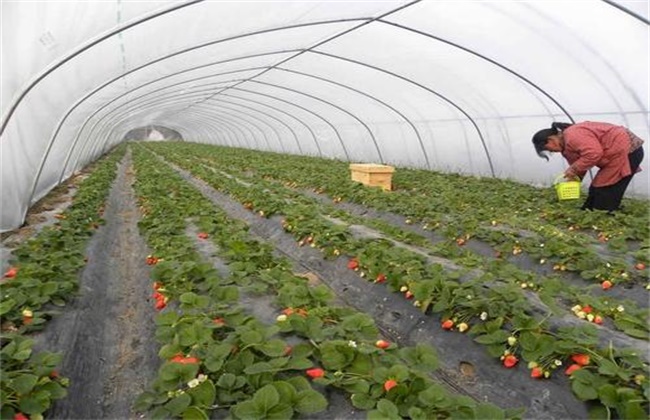
Because the greenhouse frame and covering materials block sunlight, the light intensity inside the greenhouse is only about 70% of that in the open field, and the age of the agricultural film also affects light intensity. If it is an old film polluted by dust and mud, its light transmittance is only 40%. Moreover, the light distribution inside the greenhouse is extremely uneven, generally strong at the top and weak at the bottom; the taller the frame, the weaker the light intensity near the ground. Due to the influence of weather, operations inside the greenhouse and other factors, the light duration in the greenhouse is noticeably shortened, which seriously affects flower bud differentiation and the opening of male and female flowers. For example, on rainy and hazy days, not only is the light intensity weak, but the light duration is also short.
2. Conventional Light Supplementation Methods
When choosing agricultural film, you can use high-quality drip-free film, which can increase the light transmittance of the greenhouse. At the same time, the film should be wiped and washed frequently to keep it clean and maintain good light transmittance, thereby increasing light intensity. Some cultivation techniques can also improve the light conditions inside the greenhouse. For example, planting strawberries in a north-south row orientation with a cultivation pattern in which the large row spacing and small row spacing are the same can also allow each row to receive better light conditions. You can also cover with plastic film or hang reflective screens; they can reflect light energy, strengthening the reflected light and scattered light near the ground by 50%-70%, and the plastic film also has a good heat preservation effect.
3. Artificial Light Supplementation
There are many rainy days in winter and spring, and combined with the influence of the facility's covering materials, dust and dew on the greenhouse film, the problems of insufficient light and imbalanced light quality composition in the greenhouse are very serious. At this time, artificial light supplementation is needed to help crops carry out various physiological activities with sufficient light. Artificial light supplementation uses artificial light sources to simulate the effective wavelengths of sunlight for plants, promoting plant photosynthesis and other physiological functions. At present, there are mainly four types of light sources used for strawberry light supplementation: first, LED light-emitting diodes; second, high-pressure sodium lamps; third, fluorescent lamps; fourth, daylight lamps. Among them, high-pressure sodium lamps can significantly improve strawberry fruit quality and promote earlier ripening and listing of the fruit, but the yield-increasing effect is average. LED light-emitting diodes can inhibit excessive vegetative growth, promote earlier listing, and have an obvious yield-increasing effect.
The above is an introduction to how to supplement light for strawberries in winter greenhouses. I hope it can help you. To learn more related knowledge, please keep following us.