-
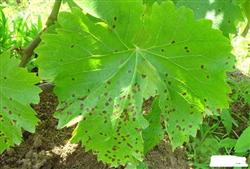
Detailed Introduction to the Symptoms of Grape Brown Spot Disease
Symptom identification: This is a fungal disease that mainly affects leaves. It is divided into large-spot lesions and small-spot lesions, caused by two different pathogens. Large brown spot disease initially forms circular or polygonal lesions around the leaf veins. The lesions are brown to dark brown with red-brown edges, and a yellow-green halo surrounds the lesions. They gradually expand to form brown...
-
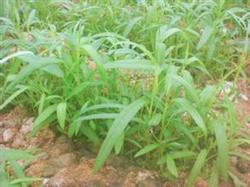
Introduction to Water Spinach Cultivation Techniques and Management Methods
It is once again the season when water spinach hits the market. Below is an introduction to the cultivation methods for water spinach: Water spinach, also known as water convolvulus, has a long harvest period and is a leafy vegetable that grows in summer. It can break the structure of northern summers being short on leafy vegetables and long on pod-bearing vegetables, and is not limited by high temperatures or heavy rain. Therefore, the north has begun to introduce and cultivate it, and has achieved success. First...
-
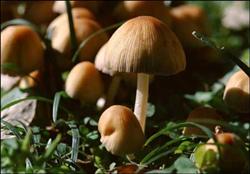
How to prevent red mushroom disease in straw mushrooms? Introduction to practical methods
"Red mushroom disease" may be brown rot, also known as blister disease, wet bubble disease, etc. It mainly affects button mushrooms, straw mushrooms, oyster mushrooms, etc. The disease is caused by a pathogen called Mycogone perniciosa. The main symptoms are: the conidia and chlamydospores of Mycogone perniciosa only infect the fruiting bodies, not the mycelium. When the fruiting body is lightly infected, ...
-
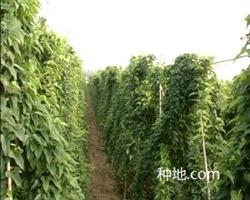
Yam Detailed Introduction: Basic Knowledge and Main Characteristics
What is yam? Can someone introduce yam to me? Morphological characteristics: The rhizome is thick, growing straight, and can reach up to 1 m in length. The leaves are alternate, becoming opposite above the middle, rarely in whorls of 3. Bulbils (aerial tubers) often grow in the leaf axils. The leaf blade shape is highly variable, from triangular-ovate to triangular-broadly ovate, often 3-lobed to deeply lobed. The flowers are female...
-
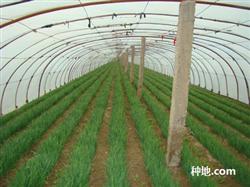
How to weed after planting Chinese chives? Introduction to common methods
How to harvest Chinese chives grown in a greenhouse? What should be noted? When Chinese chives grow to 5-6 leaves, growth is already relatively full, the leaves are wide and long, the pseudostem is both thick and round, and the nutrients transported to the underground part are also relatively abundant, so harvesting can be carried out at this time. Generally, it takes about 30 days from covering to the first cut. When cutting Chinese chives, choose a sunny day and early...
-
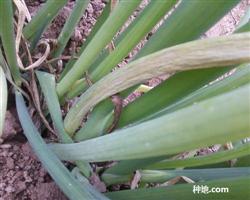
How to sow Welsh onions? Detailed introduction to the sowing method
What diseases affect Welsh onions? How are they treated? Please advise. Welsh onions have the following diseases: for downy mildew, use 90% fosetyl-aluminium wettable powder at 400-500 times dilution, 75% chlorothalonil wettable powder at 600 times dilution, or 64% oxadixyl-mancozeb wettable powder at 500 times dilution for control, spraying once every 7-10 days, for 2-3 consecutive sprays....
-
What are some good methods for controlling sugarcane pests? Introduction to practical control techniques
What are some good methods for controlling sugarcane pests? Please note that starting this year, China has completely banned the sale and use of five highly toxic pesticides: methamidophos, methyl parathion, parathion, monocrotophos and phosphamidon. Some formulations are introduced here that can effectively replace monocrotophos pesticide, for everyone's reference. 1. Using high-efficiency, low-toxicity, low-residue and...
-
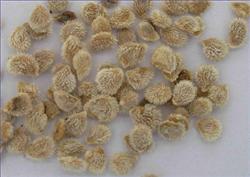
How to disinfect tomato seeds? Introduction to pre-sowing treatment methods
How do you disinfect tomato seeds? Please advise. If the surface and interior of tomato seeds carry pathogens such as tomato early blight and viral diseases, the infected seeds will transmit them to seedlings and mature plants, leading to the occurrence of diseases. Therefore, seed disinfection treatment should be carried out before raising seedlings. The commonly used disinfection measures when raising tomato seedlings are as follows:...
-
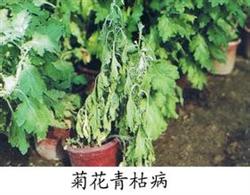
What to Do When Chrysanthemums Get Bacterial Wilt? Introduction to Prevention and Control Methods
1. Damage Symptoms: When the whole plant is infected, the above-ground leaves wilt; after lasting 3-5 days, the lower leaves turn yellow, the stem nodes near the ground appear brown, the fleshy part of the tuberous roots rots, and the epidermis and fleshy roots also turn brown, later becoming lead-white. When the diseased stem is cut crosswise, the vascular bundles turn brown, and when squeezed by hand or kept under moisture, a dirty-white bacterial ooze exudes; the diseased tuberous roots can also discharge bacterial ooze from cracks.
-
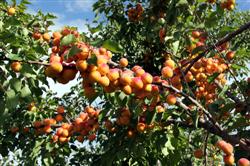
How to improve the fruit set rate of apricot trees? An introduction to practical methods
How to improve the fruit set rate of apricot trees? What methods can improve the fruit set rate? Please introduce: To improve the fruit set rate of apricot trees, the following methods can be used: pruning: lightly prune vigorous trees in winter, and appropriately thin or shorten branches or buds on weak trees to reduce nutrient consumption. For main branches, cut off 1/3 of the current year's growth to keep the main branches balanced. Shorten water sprouts, competing branches, and drooping branches; retain development branches and keep more small branches unpruned; for water sprouts in the canopy, cut 1/2~1/3 of the current year's new shoots so that strong shoots grow at the top and fruit branches form on the lower part; for thin and weak branches inside the canopy, cut from 4~5 buds outside the base; for aged and overlong fruit branches, renew large branches by retrenchment and shorten medium and small branches; after the extension shoots of main and lateral branches reach the standard, pinch off the top 3~4 nodes.
条件筛选