What to Do When Chrysanthemums Get Bacterial Wilt? Introduction to Prevention and Control Methods
1. Damage Symptoms: When the whole plant is infected, the above-ground leaves wilt; after lasting 3-5 days, the lower leaves turn yellow, the stem nodes near the ground appear brown, the fleshy part of the tuberous roots rots, and the epidermis and fleshy roots also turn brown, later becoming lead-white. When the diseased stem is cut crosswise, the vascular bundles turn brown, and when squeezed by hand or kept under moisture, a dirty-white bacterial ooze exudes; the diseased tuberous roots can also discharge bacterial ooze from cracks.
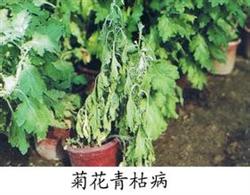
1. Damage Symptoms: When the whole plant is infected, the above-ground leaves wilt; after lasting 3-5 days, the lower leaves turn yellow, the stem nodes near the ground appear brown, the fleshy part of the tuberous roots rots, and the epidermis and fleshy roots also turn brown, later becoming lead-white. When the diseased stem is cut crosswise, the vascular bundles turn brown, and when squeezed by hand or kept under moisture, a dirty-white bacterial ooze exudes; the diseased tuberous roots can also discharge bacterial ooze from cracks. The course of this disease is short, taking only a few days from onset to death, which distinguishes it from the long-course Fusarium wilt.
2. Morphological Characteristics of the Pathogen: The pathogen is Ralstonia solanacearum. The bacterial cells are short rod-shaped, single-celled, with rounded ends, occurring singly or in pairs, measuring 0.9-2.0 x 0.5-0.8 (micrometers), with 1-3 polar flagella; on agar medium, colonies are round or irregular, slightly raised, dirty-white or dark to black-brown, smooth and glossy. Gram stain negative.
3. Disease Characteristics: The pathogen overwinters in diseased plant residues and in organic fertilizer mixed with diseased residues. The following spring, when suitable conditions arise, it often invades through wounds at the root crown, mainly destroying the conducting tissue, causing it to turn brown and rot, leading to death or wilting of the above-ground parts. This bacterium mainly spreads through infected plants, and can also spread through soil, irrigation water, and farm tools. In hot and rainy seasons, fields with poor drainage are prone to the disease; low-lying areas and continuous cropping plots have severe incidence.
4. Prevention and Control Methods:
(1) Select disease-resistant varieties.
(2) Provide careful maintenance; promptly pull out diseased plants when found, and disinfect the diseased planting holes with quicklime.
(3) Chemical control: At transplanting, soak the roots with the bacterial wilt antagonistic bacteria MA-7 and NOE-104; in the early stage of disease, spray or drench with 72% agricultural streptomycin sulfate soluble powder at 3000 times dilution, or 20% Longkejun suspension concentrate at 500 times dilution, 50% copper succinate-glutarate wettable powder at 500 times dilution, 30% Ludebao suspension concentrate at 400 times dilution, 53.8% Keshade 2000 dry suspension concentrate at 900-1000 times dilution, once every 7-10 days, for 2-3 consecutive applications.