-

How to propagate Eucommia ulmoides? A detailed introduction to the commonly used methods
Propagation methods of Eucommia ulmoides
-
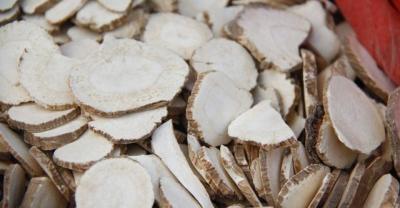
A Summary Introduction to the Top Ten Medicinal Herbs of Northeast China
The land of China is vast, endowed with outstanding people and abundant natural resources, rich in all kinds of heavenly treasures. On the black soil of the northeastern part of the motherland, these top ten Chinese medicinal herbs grow in abundance, ...
-
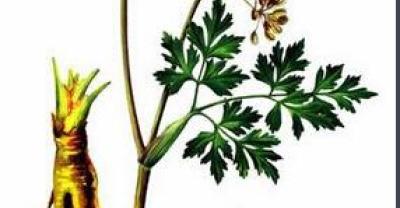
What is Ezhu? Basic introduction to the Chinese medicinal herb Ezhu
Research progress on Ezhu cultivation Abstract: Ezhu is one of the legal sources of the Chinese medicine Ezhu. Ezhu mainly contains volatile oils and curcuminoids, among which the volatile oil...
-

-
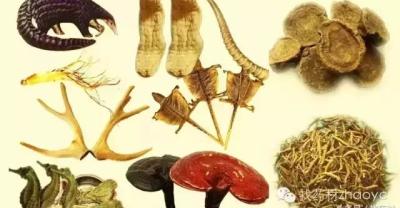
A detailed introduction to the identification methods for 7 medicinal herbs
We all know that traditional Chinese medicine can help treat diseases, but most people may not be very familiar with the selection and purchase of the medicinal herbs used in traditional Chinese medicine, so what are some better methods...
-

Morphological Characteristics of Polygonatum and Introduction to Suitable Growing Environments
[Morphological Characteristics] Perennial herb, plant height 30-120 cm. The whole plant is hairless. The rhizome is yellowish-white, slightly sweet in taste, thick and fleshy, growing horizontally, formed by several chicken-head-shaped sections connected into a shape thick at the head and tapering at the tail; the end bearing the stem is relatively thick, and after the stem withers it leaves a round stem scar like a chicken's eye; the nodes are distinct, with a few roots growing at the nodes. The stem is single, slightly curved, cylindrical. Leaves are usually in whorls of 4-5, sessile; the leaf blade is linear-lanceolate, with a curled tip, grayish bloom on the underside, parallel main veins, and the central vein thick and raised on the underside.
-
What does Polygonatum look like? A detailed introduction to the morphological characteristics of Polygonatum
Polygonatum is a perennial herb. The rhizome is horizontal, fleshy, and pale yellow, sometimes with a protruding tip resembling a chicken's head. The stem is erect, 50-90 cm tall. The leaves are whorled, 4-6 per whorl, linear-lanceolate, 8-15 cm long and 04-1.6 cm wide, with curled tips. The flowers are axillary, usually in 2-4 small flowers, drooping, with the peduncle 1-2 cm long; the perianth is tubular, white to pale yellow, 0.9-1.2 cm long, with 6 shallow lobes at the tip, 6 stamens, the filaments relatively short, 0.5-1 mm long, and the style length
-
What plant is Pinellia cordata? A brief introduction to the characteristics of Pinellia cordata
[Scientific name] Pinellia cordata [Alias] Dishuizhu [Family and genus] Araceae, Pinellia genus. Native to Jiangsu, Zhejiang, Jiangxi, Fujian, Guangdong, Guizhou and other provinces in China. It prefers shady, humid, loose and fertile soil. It has spherical tubers and usually only 1 leaf; the leaf is heart-shaped to sagittate, green or pale purple beneath. The scape is 6-8 cm long, and the spathe is 2.5-3.5 cm long, tubular in the lower part and hooded in the upper part; the spadix bears female flowers in the lower part, appressed to the spathe, and male flowers in the upper part, with the two
-
Introduction to the Botanical Characteristics and Cultivation Techniques of Asarum heterotropoides var. mandshuricum
A species of the genus Asarum in the family Aristolochiaceae, scientific name Asarum heterotropoides Fr. Schmidt var. mandshuricum (Maxim.) Kitagawa. Perennial herbaceous plant. Named for its fine roots and pungent taste. Distributed in China, Korea, and the former Soviet Union. In China, it is mainly produced in Liaoning, Jilin, and Heilongjiang provinces. Plant height 10-25 cm. Rhizome horizontal, densely covered with slender fibrous roots. Stem short, with 2-3 scales at the base. At the end of the stem, 2-3
-
Introduction to the New Angelica sinensis Line 90-01
I. Variety Introduction: "Breeding and Research of the New Gansu Angelica sinensis Line 90-01," after 15 years, the new Gansu Angelica sinensis line 90-01 was successfully bred using the mass selection method. The yield rates of premium and first-grade products of this line are 24.1% and 29.3% respectively, which are 2.5 and 4.2 percentage points higher than the control respectively; its resistance to root disease is relatively strong, with an average root disease incidence rate of 6% and a disease index of 2.4%, which are 0.7 and 0.4 percentage points lower than the control respectively; its premature bolting rate is relatively low,
条件筛选