How to prevent red mushroom disease in straw mushrooms? Introduction to practical methods
"Red mushroom disease" may be brown rot, also known as blister disease, wet bubble disease, etc. It mainly affects button mushrooms, straw mushrooms, oyster mushrooms, etc. The disease is caused by a pathogen called Mycogone perniciosa. The main symptoms are: the conidia and chlamydospores of Mycogone perniciosa only infect the fruiting bodies, not the mycelium. When the fruiting body is lightly infected, ...
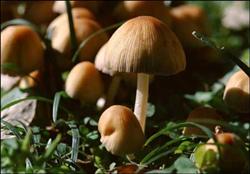
"Red mushroom disease" may be brown rot, also known as blister disease, wet bubble disease, etc. It mainly affects button mushrooms, straw mushrooms, oyster mushrooms, etc. The disease is caused by a pathogen called Mycogone perniciosa. The main symptoms are: the conidia and chlamydospores of Mycogone perniciosa only infect the fruiting bodies, not the mycelium. When the fruiting body is lightly infected, the stipe swells into a blister-like deformity, hence the name wet bubble disease. However, the symptoms differ depending on the stage of fruiting body development. If the fruiting body is infected before differentiation, it forms an irregular mass of tissue resembling a scleroderma puffball, covered with a layer of white fuzzy mycelium that gradually turns dark brown, often exuding dark black droplets from the diseased tissue. If infection occurs after the cap and stipe have differentiated, the stipe turns brown, and infection on the gills produces a white mycelial growth. Transmission route: Mycogone perniciosa is an ordinary soil fungus, and the soil and waste around the mushroom house are its sources of infection. Therefore, the Mycogone perniciosa pathogen is mainly carried to the mushroom beds and mushroom blocks through casing soil, air, workers, tools, insects, mice, and so on.
Control measures: If the casing soil is contaminated by Mycogone perniciosa, it can be treated with pasteurization (60°C) for one hour, or the casing soil can be disinfected with 4% formaldehyde. You can also spray the casing soil with a 1:500 carbendazim solution or thiophanate solution to sterilize it. When the disease first appears, watering should be stopped immediately, the ventilation of the mushroom house should be increased, and a 1%-2% formaldehyde solution or a 1:500 carbendazim solution should be sprayed on the growing racks, walls, and floor to sterilize them. When the disease is severe, the original casing soil needs to be removed and replaced with new soil. Also destroy the diseased mushrooms and disinfect all tools in a 4% formaldehyde solution.