Yam Detailed Introduction: Basic Knowledge and Main Characteristics
What is yam? Can someone introduce yam to me? Morphological characteristics: The rhizome is thick, growing straight, and can reach up to 1 m in length. The leaves are alternate, becoming opposite above the middle, rarely in whorls of 3. Bulbils (aerial tubers) often grow in the leaf axils. The leaf blade shape is highly variable, from triangular-ovate to triangular-broadly ovate, often 3-lobed to deeply lobed. The flowers are female...
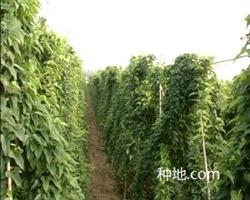
What is yam? Can someone introduce yam to me?
Morphological Characteristics
The rhizome is thick, growing straight, and can reach up to 1 m in length. The leaves are alternate, becoming opposite above the middle, rarely in whorls of 3. Bulbils (aerial tubers) often grow in the leaf axils. The leaf blade shape is highly variable, from triangular-ovate to triangular-broadly ovate, often 3-lobed to deeply lobed. The flowers are dioecious, very small, greenish-white, and all borne in spikes; the male inflorescence is erect, while the female inflorescence droops. The capsule has 3 wings. Perennial twining herb; with block-like or rhizomatous underground stems; leaves alternate, rarely opposite, simple or palmately compound, entire or divided; flowers dioecious, rarely monoecious, arranged in spikes, racemes, or panicles; tepals 6, in 2 whorls, fused at the base; stamens 6, sometimes 3 developed and 3 reduced; female flowers similar to male flowers, but stamens reduced or absent; ovary inferior, 8-locular, styles 3, separate; capsule or berry; seeds winged.
Growth Habits
It likes light and has poor cold tolerance. It is suitable for growing in well-drained, loose, fertile loam. It dislikes waterlogging. The underground yam stem is cylindrical, and may also become deformed due to different growing soils; it is fleshy and thick.
The first type of yam: the stem is cylindrical, and the leaves are triangular-ovate to triangular-broadly ovate, with a hastate-cordate base. The male inflorescence is spicate, not drooping, and the long axis is mostly zigzag; the male flowers are nearly sessile, the bracts are triangular-ovate, shorter than the perianth, the tepals are 6, ovate, and the stamens are 6, developed; the female inflorescence is similar to the male inflorescence, and the ovary stigma is 3-lobed. The capsule has 3 wings, and the fruit wings are almost equal in length and width, with a short stalk; each locule has 2 seeds, borne centrally; the seeds are ovate, surrounded by thin chestnut-shell-colored wings, the wings about 6 mm wide, unequal in width around the seed. Flowering period June to August, fruiting period August to October.
The second type of yam: propagated asexually, the stem is cylindrical, the leaves are heart-shaped, with no flowers, and "yam beans" are borne in the leaf axils. After the stems and leaves wither in autumn and winter, the "yam beans" fall to the ground and sprout in early spring the following year.
Click to view more yam growing techniques
Click to view more vegetable growing techniques