-
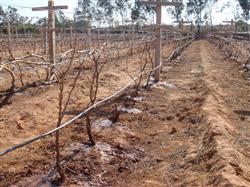
Detailed Explanation of Key Points of Drip Irrigation Technology for Greenhouse Grapes
Drip irrigation is the most ideal watering technology for greenhouse grapes, offering advantages such as water saving, yield increase, temperature reduction, labor saving, and high efficiency. 1. Simple drip irrigation construction: Build a reservoir with a capacity of 3-5 cubic meters and a height of 1-3 m at the front of the greenhouse, install a gate valve and water meter at the reservoir outlet, and use 38 mm plastic pipe as the lateral pipe inside the greenhouse...
-
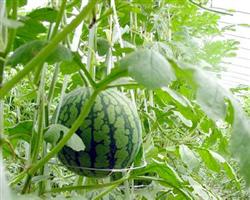
Detailed Explanation of Hanging Vine Cultivation Techniques for Watermelon in Solar Greenhouses
Cultivation seasons: Early spring cultivation. Sow and raise seedlings in mid-to-late February, seedling age 35-40 days, use heated seedling raising, transplant into the greenhouse in early-to-mid April, go to market in early June. Autumn delayed cultivation. Sow in late July, seedling age about 20 days. Cover the greenhouse film in early September, add heat-preserving straw curtains in late September, go to market around October. Winter-spring cultivation...
-
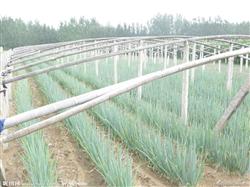
Clever Use of Welsh Onions in Greenhouses to Sterilize and Prevent Vegetable Diseases
Welsh onion (Allium fistulosum) is a biennial vegetable of the Liliaceae family, cold-tolerant and highly adaptable. Its leaves release propyl sulfide with a pungent odor, and its root system secretes bactericidal substances; together they can effectively suppress the spread of various pathogens in the air and soil, prevent infection, or kill pathogens, significantly reducing the disease rate of vegetable plants...
-
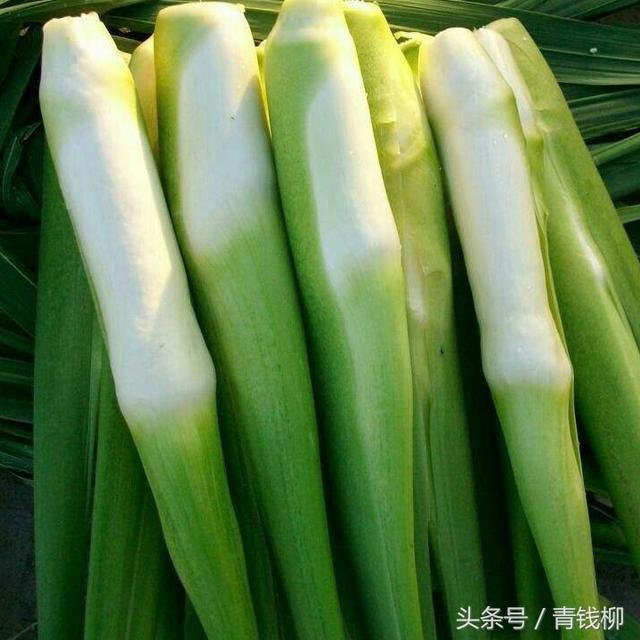
Detailed Explanation of Key Technical Points for Organic Vegetable Greenhouse Cultivation
Greenhouse Organic Vegetable Cultivation Techniques 1 Analysis of Influencing Factors in Greenhouse Vegetable Cultivation 1.1 Influence of Harmful Gases Greenhouse vegetables differ most fundamentally from ordinary vegetables in that they incorporate artificial management. Greenhouse vegetables remain in a sealed...
-
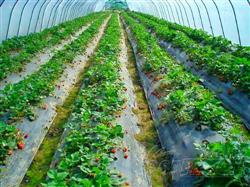
Detailed Explanation of Pollution-Free Cultivation Techniques for Strawberries in Plastic Greenhouses
(1) Variety selection: Choose varieties with early flower bud differentiation, shallow dormancy, and good cold resistance in low-temperature seasons, such as Chunxiang, Fengxiang, Lihong, Mingbao, Jingbao, Nyoho, and Hokowase. (2) Cultivating strong seedlings: 1. Carefully select mother plants. In March-April of the current year, select plants from the strawberry production greenhouse with vigorous growth, good inflorescence fruiting, few deformed fruits, well-developed root systems, and no pests or diseases as mother plants. Plant them in a dedicated seedling nursery to cultivate and propagate runner seedlings. Apply 2000-3000 kg of organic fertilizer and 10 kg of compound fertilizer per mu in the nursery. Make beds 2 m wide, with a planting row spacing of 1 m and a plant spacing of 0.3-0.4 m. After they establish, apply nitrogen fertilizer as early as possible, keep the soil moist, and remove all inflorescences that appear to promote runner growth.
-
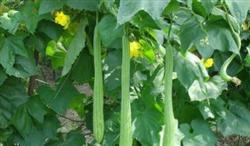
Dense-Planting Cultivation Techniques for Luffa (Sponge Gourd) in Winter-Warm Greenhouses during the Winter-Spring Season
Using winter-warm greenhouses for high-density off-season cultivation of luffa can greatly increase yields, with a per-mu yield of over 5000 kg and a per-mu income of 30,000-40,000 yuan. Variety selection: choose early-maturing varieties with strong cold tolerance, disease resistance and adaptability, such as Jiangshu No.1, Zaoza No.1, Cuilu Early Luffa, Yulu Early Luffa, and Wuye. Xiang...
-
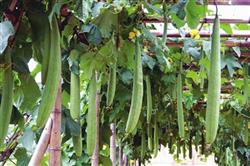
Several Cultivation Methods for Achieving High Yields of Greenhouse Luffa
1. Variety selection. For greenhouse luffa, it is advisable to choose varieties with vigorous plant growth, cold tolerance and strong adaptability, such as the cylindrical luffa. 2. Land preparation and fertilization. Before sowing, in combination with plowing, apply more than 5000 kg of high-quality farmyard manure per mu; after leveling and harrowing evenly, open furrows along the planting rows, and apply another 50 kg of superphosphate and 25 kg of potassium sulfate per mu, ...
-
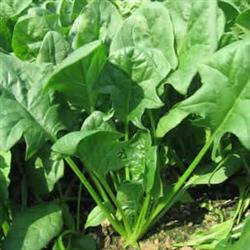
Key Techniques for Three-Dimensional Intercropping of Greenhouse Green Peppers, Loofah, and Cilantro
Summer spinach, also known as fu spinach, is difficult to cultivate and can only be grown on a small scale because it tends to bolt prematurely, and it also has the shortest leaf growth period of any crop in the year, resulting in unsatisfactory quality and yield, with pests and diseases hard to control. 1. Variety selection: It is advisable to choose varieties with strong drought resistance, heat tolerance, rapid growth, and low sensitivity to day length...
-
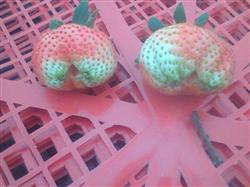
What are the methods for preventing and controlling deformed strawberries in greenhouses?
Using greenhouse cultivation is a good way to increase strawberry yields and income. However, because greenhouse cultivation is highly technical, especially during winter and early spring, when temperatures are low, light is weak, and the climate is changeable, improper management often leads to many abnormal fruits that are too thin, too fat, curved, flat in shape, or uneven on the surface...
-
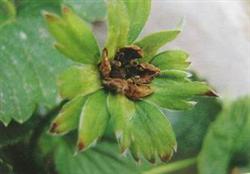
How to remedy potassium and magnesium deficiency in greenhouse strawberries
I. Potassium deficiency: The symptoms of potassium deficiency in strawberries often appear first on the newly matured upper leaves. Black, brown and dried edges often appear on the leaves and then become scorched, and it also spreads toward the center between the veins of most leaves, with old leaves being severely affected. Light intensifies leaf scorch, so potassium deficiency is often confused with "sunscald"...
条件筛选