-
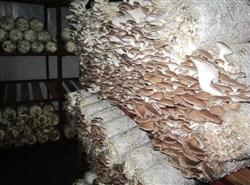
How to cultivate oyster mushrooms (Pleurotus pulmonarius) in the off-season during the high-temperature period?
How to grow off-season oyster mushrooms (Pleurotus pulmonarius) in high temperatures? Please explain the methods. Cultivating oyster mushrooms in the high-temperature season requires the following: 1. Certain cultivation facilities are needed. You need to purchase matching refrigeration equipment and build corresponding cold storage rooms. Large professional growers should buy mobile air conditioners, while small growers with 10,000-20,000 bags can use modified air conditioners. ...
-
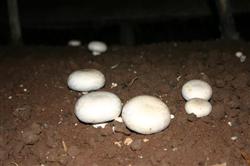
Eight Key Points for the Prevention and Control of Diseases and Pests in Button Mushrooms
With the rapid development of mushroom production, finding ways to improve economic returns and reduce costs is the direction that growers and related technical personnel are striving toward. North China has large amounts of corn straw, and using it instead of rice straw to cultivate mushrooms can greatly reduce costs. The relevant techniques are introduced as follows: 1. Mushroom compost formula...
-

How to control mites in oyster mushroom cultivation during the hot season?
I. Main pest mites 1. Tyrophagus putrescentiae (mold mite) Distribution and damage: This mite is a cosmopolitan species. In edible mushroom production, mold mites often occur in environments contaminated by weed molds; through their activity they spread the weed molds, causing healthy fruiting bodies to be damaged and rot. Mold mites can also feed directly on the mycelium of oyster mushrooms, causing reduced yields or even total crop loss. Morphological characteristics: Adult male mites are 240-320 micrometers long, adult females 350-650 micrometers long; the body is colorless, the chelicerae and legs are pale yellow to reddish-brown, and the posterior end is bluntly rounded. The legs are relatively thick, divided into 6 segments.
-
Fast-Track High-Yield Cultivation Techniques for Oyster Mushrooms in the Hot Season
High temperatures are extremely detrimental to the normal growth and high yield of oyster mushrooms. If conventional cultivation methods are still used, not only will the cost of oyster mushrooms be high, but the yield will also be low. However, if fast-track high-yield cultivation techniques are adopted, high yield and high efficiency can be achieved. Summarizing our years of experience, fast-track high-yield cultivation of oyster mushrooms in the hot season mainly involves the following key points: Selecting suitable spawn There are many varieties of oyster mushrooms. Pure high-temperature-type varieties have poorer quality, so it is advisable to choose wide-temperature-type varieties that are relatively tolerant of high temperatures, such as Suping, Aikang 558, Xide 33, Yaguang No. 1, as well as Gaoping No. 1, Sanxia 13
-
Key Technical Points for Cultivating Oyster Mushrooms in the High-Temperature Season
For many years, many mushroom growers have tried to avoid cultivating oyster mushrooms in the high-temperature season, for reasons that are none other than high contamination rates, severe pests and diseases, and drastic market fluctuations. In response to these problems, a set of key points for cultivating oyster mushrooms in the high-temperature season is introduced here. Varieties must be selected accurately: choose varieties of the medium-to-high temperature type with strong stress resistance, pure white and dense mycelium, strong wall-climbing ability, and few aerial hyphae, and resolutely avoid medium-to-low temperature and low-temperature type varieties. The cultivation site must be chosen well: cultivation can be done beside courtyards, under tree shade, or in wild woods, but care must be taken to choose a place with good ventilation,
-
Detailed Guide to Identifying and Controlling the Main Diseases and Pests of Oyster Mushrooms
The most serious damage is contamination by foreign molds. Common contaminating molds include Trichoderma, green mold, yellow mold, Rhizopus, and others. The main control methods are: choose materials free of mold, compost and ferment the substrate and sterilize it, strictly disinfect the cultivation site, and promptly remove any contaminated material. Provide proper ventilation to prevent excessively high temperatures and humidity. Oyster mushroom cultivation also frequently shows physiological disorders: ① Partial death of small mushrooms: when there are too many small mushrooms, some will die, mainly from "starvation" due to insufficient nutrients; spraying water too early or excessively high humidity can also cause small mushrooms to die.
-
Key Technical Points in the Research and Development of Seasoned Mushroom Snacks
Seasoned mushroom snack series are among the newest leisure plant-based products. In particular, plant-based seasonings like mushroom snacks have become the reason many consumers favor this new food source of plant products, and the market has remained bullish. Drawing on years of experience in researching compound seasoned foods, we now specially offer the research and development techniques for related seasoned mushroom series products, such as seasoned shaggy mane mushroom (Coprinus comatus), seasoned enoki mushroom (Flammulina velutipes), seasoned tea tree mushroom (Agrocybe aegerita), seasoned shiitake mushroom (Lentinula edodes), seasoned matsutake (Tricholoma matsutake), and seasoned bolete (Boletus spp.), for everyone's reference and inspiration. 1. Processing workflow for seasoned mushrooms: mushrooms to trimming to preservation to
-
Key Technical Points for the Prevention and Control of the "Three Pests and One Disease" of Mushrooms
The "three pests and one disease" of mushrooms are: mites, springtails, mushroom gnats and harmful Mycogone perniciosa. The damage characteristics and control methods of these pests and diseases are described below. I. Damage symptoms of mites During the spawn-running process, if mycelial decline is observed, such as a decrease in fluffy mycelium and an increase in stranded mycelium, and pinkish shiny spots are seen on the mycelial surface, then mite heads have appeared on the mushroom bed. When 3~5 mites are present within the area viewed under a magnifying glass, the control threshold has been reached. After casing soil is applied, mites will move along with the mycelium growing toward the soil surface and move with the soil surface,
-
How to use carbendazim for disease prevention in edible fungi, and the prevention and control of edible fungus diseases
How to use carbendazim for disease prevention in edible fungi
-
Four key points to note in the prevention and control of edible mushroom pests and diseases
Four points to note in the prevention and control of edible mushroom pests and diseases
条件筛选