-
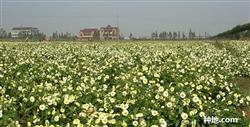
What are the methods for controlling chrysanthemum diseases?
How should chrysanthemums be managed in August? Please advise. The chrysanthemum, also known as jiuhua and huanghua, is a perennial herbaceous plant of the genus Chrysanthemum in the family Asteraceae. It is a traditional flower loved by the people of our country, one of the world's four major cut flowers, and also a commonly used traditional Chinese medicine, with the flowers used medicinally to improve eyesight and remove toxins, and to dispel wind and clear heat. It is cultivated throughout the country....
-

Causes of Leaf Drop in Golden Privet During the Growing Season and Solutions
Golden privet (Ligustrum × vicaryi) is an excellent colorful shrub. In practical cultivation in some places, during the growing season its leaves, especially new leaves, successively develop spots, which then progress to drying up, leaf drop, and the branches gradually die back from top to bottom, with a small portion dying. According to surveys, the deaths mostly occur in the middle of the planting plots, while the plants around the edges grow well. The causes are mainly the following two aspects. 1. Caused by disease. The cause of this condition is golden privet leaf spot disease. Leaf spot disease is caused by pathogenic fungi. In the early stage of the disease, brown
-
What to Do About Leaf Drop in Golden Privet During the Growing Season? Causes and Control Measures
In 1999, golden privet (Ligustrum × vicaryi) began to be trial-planted in the Hengshui area of Hebei, and the planted area then increased rapidly. However, starting in 2002, a small number of local golden privets began to drop leaves during the growing season, showing patchy bare spots, and the problem kept spreading. By mid-June 2003, spots appeared successively on the leaves of golden privet over a large area; the spots appeared on old leaves later than on young leaves, then progressed to drying up, leaf drop, and the branches gradually dried up from top to bottom, with a small number dying. The dead patchy areas were mostly in the middle of the planting site.
-
Black locust is easy to establish when planted in autumn, and autumn is exactly the right season for planting
In the past dozen years or so, spring drought has been severe in Lincheng County, with temperatures rising quickly and soil temperatures rising slowly. Especially after newly planted black locust seedlings are watered, the soil temperature remains low for a long time, causing the aboveground parts to sprout and grow while the root system recovers slowly, which reduces the survival rate of black locust. In autumn, by contrast, temperatures gradually drop, transpiration is lower, soil moisture content is relatively stable, and black locust seedlings have accumulated relatively rich nutrients. Tree roots have no natural dormant period, and when the soil temperature is still high, the roots of black locust planted in autumn can still resume growth. As long as the winter frozen soil layer is not thick,
-
Detailed Guide to Identifying and Controlling the Main Diseases of Lilies
Lilies belong to the genus Lilium in the family Liliaceae and are perennial herbaceous plants, also known as wild lilies and medicinal lilies. In recent years, lily cultivation has been seriously threatened by diseases, mainly lily leaf blight, phytophthora blight, bulb basal rot, and viral diseases. These diseases often occur together, worsening the damage. The usual incidence rate is 10%-15%, and in severe cases it can reach 20%-30%. 1. Several main diseases of lilies (1) Lily leaf blight, also known as lily gray mold, is a commonly occurring disease. It mainly damages leaves, but can also infect stems,
-
A Detailed Guide to Controlling the 3 Major Diseases of Carnations
Leaf spot, Fusarium wilt and viral diseases are the main diseases that occur on carnations. The control methods are as follows: Leaf spot mainly infects the leaves, and the disease usually starts on the lower leaves. On severely affected plants the diseased parts are distorted, and the diseased leaves wither, droop and hang down over the stem, but do not fall off. Old leaves are affected more often and more severely, while new leaves are affected less, and the disease occurs more in open-field cultivation than in greenhouses. Control methods: start spraying regularly from the early stage of the disease; spray a fungicide immediately after disbudding and cutting flowers for protection. A 75% chlorothalonil wettable powder solution diluted 800 to 1000 times can be used for spraying
-
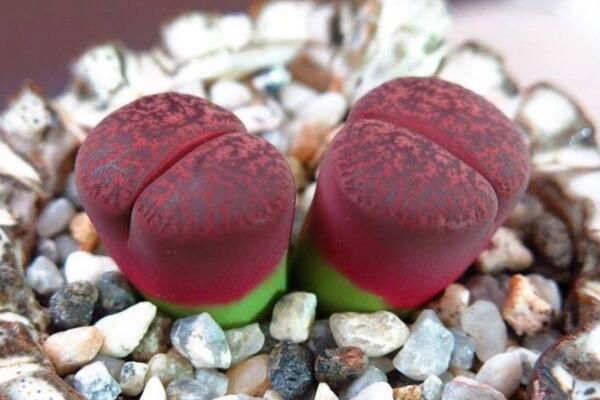
How to trim the roots of a living stone plant (Lithops)? Just cut off the old, weak, diseased and damaged roots.
How to trim the roots of a living stone plant (Lithops): cut off the old, weak, diseased and damaged roots.
条件筛选