How to cultivate oyster mushrooms (Pleurotus pulmonarius) in the off-season during the high-temperature period?
How to grow off-season oyster mushrooms (Pleurotus pulmonarius) in high temperatures? Please explain the methods. Cultivating oyster mushrooms in the high-temperature season requires the following: 1. Certain cultivation facilities are needed. You need to purchase matching refrigeration equipment and build corresponding cold storage rooms. Large professional growers should buy mobile air conditioners, while small growers with 10,000-20,000 bags can use modified air conditioners. ...
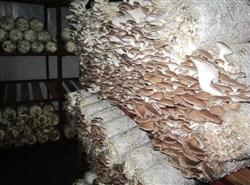 How to grow off-season oyster mushrooms (Pleurotus pulmonarius) in high temperatures? Please explain the methods.
Cultivating oyster mushrooms (Pleurotus pulmonarius) in the high-temperature season requires the following:
1. Certain cultivation facilities are needed
You need to purchase matching refrigeration equipment and build corresponding cold storage rooms. Large professional growers should buy mobile air conditioners, while small growers with 10,000-20,000 bags can use modified air conditioners.
2. Master certain cultivation techniques
1. Choose a reasonable time for making the bags The fruiting time for high-temperature off-season cultivation of oyster mushrooms (Pleurotus pulmonarius) is generally late June to early July. Therefore, the bag-making time can be scheduled from mid-March to late April. Bag-making time should be prevented from being too early or too late. If too early, abnormal fruiting is likely to occur and cause nutrient loss; if too late, entering May when temperatures rise quickly and natural humidity is high, contaminating bacteria can easily pollute the spawn bags.
2. Reasonably formulate the culture substrate for oyster mushrooms (Pleurotus pulmonarius) In the high-temperature season, the culture substrate easily acidifies and hinders mycelial growth. Therefore, in addition to increasing the amount of gypsum to 1.5%, the amount of high lime can be increased to 1.5%-2%, while the water content should be controlled at around 60%.
3. Cold stimulation of spawn bags for oyster mushrooms (Pleurotus pulmonarius)When the mycelium has fully colonized the bags, after 7-10 days, cold stimulation can be carried out to induce fruiting. For the first flush, place the mature colonized spawn bags into transfer crates and put them directly into the cold storage room (or other refrigeration facility) for cold treatment. After cold treatment is finished, during the process of removing them from storage, cut the bag openings while putting them on shelves or stacking them. Starting from the cold treatment for the second flush, for each subsequent flush, when the spawn bags are put into storage for cold treatment, the transfer crates are arranged in the cold storage room while water is sprayed on the bag openings, thoroughly soaking the spawn bags in a flowing-water manner. Cold treatment requirements: cool down from the start of cold treatment to below 8°C down to 4°C; the duration must be maintained for more than 8 days.
4. Fruiting management of oyster mushrooms (Pleurotus pulmonarius)In the high-temperature season, oyster mushrooms (Pleurotus pulmonarius) grow extremely rapidly. From leaving the stimulation storage room to the end of harvest generally takes only 7 days. Therefore, controlling humidity and ventilation during fruiting management is even more important.
(1) Humidity controlOyster mushrooms (Pleurotus pulmonarius) take only 2-3 days from primordium differentiation into small mushrooms to maturity, growing rapidly with dense fruiting, so water consumption is concentrated and relatively large. Sufficient water should be supplied at different growth stages to ensure the humidity inside the small shed reaches 85%-90%. After the spawn bags are removed from storage and placed in the shed, underground cold water can be used to spray directly on the substrate surface (this period is about 24-36 hours, i.e., before primordium differentiation). During this period, spray water 1-2 times per day, just keeping the substrate surface from losing water; after the primordia differentiate into small mushrooms, water for humidification should be at room temperature, and water droplets should be atomized as much as possible. During this period, spray water 2-4 times per day, depending on the evaporation of water from the cap surface. If the caps dry easily, increase the number of sprays or the amount of water. If the mushrooms turn whitish and the caps curl at the edges and crack, it indicates insufficient humidity; do not spray directly with underground cold water, otherwise it easily causes mushroom death.
(2) Air regulation Cultivation of oyster mushrooms (Pleurotus pulmonarius) also has special requirements for the air in its growing environment, because the commercial mushrooms require a stipe length of 5-70n, which requires increasing the carbon dioxide concentration inside the small shed to achieve. The production measure is to use vegetable greenhouse plastic film to cover the small shed to achieve the required growing environment, which is also why it is divided into several small sheds. Cover the small shed with greenhouse plastic film like hanging a mosquito net, and regulate the air at different growth stages by lifting and lowering the film. Before the primordia differentiate into small mushroom buds, ventilate appropriately in combination with spraying water. After small mushrooms form, at the end of each spraying, do not immediately close the shed door; let it ventilate for about 0.5 hours. When the stipe grows to 3-40 cm, open the shed doors at both ends to allow natural ventilation, so the mushrooms grow from slender to thick and sturdy, improving their commercial characteristics and yield; after fruiting, pay attention to ventilation. Especially as the mushrooms grow rapidly, while spraying large amounts of water to humidify, if ventilation is not appropriately strengthened, various diseases are easily caused and result in mushroom death. Ventilation should also be flexibly controlled according to the growth of the mushrooms, and absolutely avoid external wind blowing directly into the small shed.
5. Harvesting,Fresh mushrooms should be harvested in a timely manner when the stipe grows to 4-70 cm and the cap diameter is 3-4 cm and still inrolled without opening. Oyster mushrooms (Pleurotus pulmonarius) grow extremely rapidly, and the harvest time for commercial mushrooms is relatively concentrated. Generally, it takes only a few hours for young mushrooms to grow into commercial mushrooms. If not picked in time, they will exceed the commercial standard and lose value. Therefore, pickers must be fully prepared and organized. The harvested fresh mushrooms should be promptly sorted, packed and sealed, and put into the fresh-keeping storage for cold storage. Those that cannot be sorted or packed in time should first be put into the fresh-keeping storage for cold storage, so as to avoid natural opening of the caps and reduce the value of the commercial mushrooms.
6. Mycelium recovery,This period is generally 7-10 days. After harvesting is finished, lift the film on all sides, stop spraying water, allow natural ventilation, and combine with scratching the substrate to remove dead mushrooms and mushroom bases, letting the substrate surface dry slightly so the mycelium on the substrate surface recovers growth. Promptly clean up dead mushrooms and mushroom bases on the ground to avoid breeding contaminating bacteria and pests. One day before putting into cold storage, spray underground cold water multiple times on the substrate surface of the spawn bags on the shelves, so the bag substrate absorbs as much water as possible.
Click to get more oyster mushroom (Pleurotus pulmonarius) cultivation techniques
Click to get more edible mushroom cultivation techniques