-
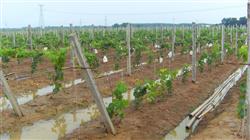
Grape Growing Techniques: How to Manage Well in Summer?
How to manage grapes well in summer? Please give guidance. For how to manage grapes in summer, you can refer to the following methods: I. Vine management. 1. Shoot removal. For grape seedlings grown from cuttings, the new shoots reach 40-50 cm in mid-July. Some seedlings have several new shoots or one new shoot with several secondary shoots, so shoots must be removed in time, leaving...
-
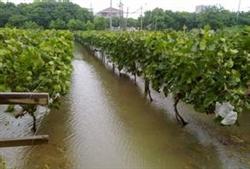
Why do grapes need flood prevention in summer? A detailed explanation of grape cultivation techniques
Why do grapes need flood prevention in summer? Please explain the reasons and how to prevent flooding. After grapes are submerged, yellowing leaves, leaf drop, fruit drop, and fruit cracking appear in the early stage; prolonged soaking of the root system in water causes leaf curling, winter bud sprouting, root asphyxiation leading to root rot, and the whole plant wilting and dying. I. Preventive measures...
-
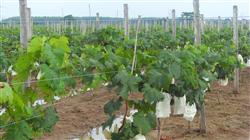
What diseases affect grapes in summer? Detailed planting techniques
What diseases affect grapes in summer? Please introduce them and explain the control methods. In summer, grape growing requires special attention to disease control, especially the control of black pox, white rot, anthracnose, and downy mildew. Focus on prevention, and spray promptly. For medicines with a residual effectiveness period of 17-21 days, generally spray once every 15 days...
-
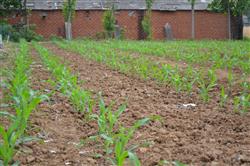
What problems should be prevented during the cultivation of summer corn?
What should be prevented when planting summer corn? Please note that the main things to prevent when planting summer corn are the following: First, prevent fertilizer deficiency. The high-yield characteristics of summer corn plants at the ear stage are thick stalks, short internodes, wide and thick leaves, strong and upright leaves, dark green leaf color, and a well-developed root system. If the leaves show a tendency to turn yellow at the ear stage, prevent late-stage fertilizer deficiency and premature aging....
-
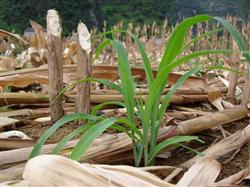
Detailed Explanation of Pest and Disease Control Methods in Summer Corn Cultivation
How do you control pests and diseases when growing summer corn? Please explain the methods. For summer corn cultivation, the following methods can be used for pest and disease control: 1. Seed treatment. For every 100 kg of seed, use 100-150 ml of Manshijin + 100-200 g of Liangsui (or Likerxiu) + 170 ml of Shuaimiao for seed coating. This can control seedling blight, root rot, stem base rot and other corn seedling-stage diseases, underground pests and head smut.
-
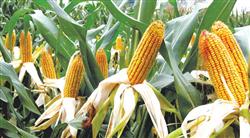
Detailed Explanation of Key Points for High-Yield Summer Corn Cultivation Techniques
How can summer corn be planted to achieve high yield? Please explain the methods. To achieve high yield when planting summer corn, you can refer to the following methods: 1. Carefully select seeds: Before sowing, spread the corn seeds evenly and turn them in the sun for 2 days, then remove small grains, blighted grains, broken grains, and moldy grains. This is the foundation for cultivating strong seedlings. 2. Single-seed dibbling: Single-seed dibbling can...
-
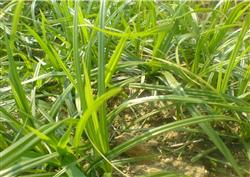
How to control weeds, pests and diseases during summer corn cultivation?
How to control weeds, pests and diseases when planting summer corn? Please explain: after sowing summer corn and before emergence, it is susceptible to damage from underground pests such as cutworms; at the seedling stage it faces damage from small brown planthoppers, Athetis lepigone, wireworms, thrips, aphids, etc.; at the grain-filling stage, major diseases such as stalk rot (green wilt), ear rot, leaf spot diseases and southern rust occur locally, and major pests such as corn borers and aphids cause severe damage; there may also be harmful organisms that cause corn lodging and stalk breakage, affecting corn yield and mechanized operations.
-
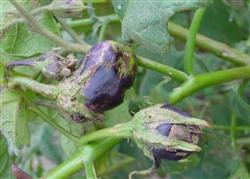
Control Methods for Stone Eggplant in Summer and Autumn Eggplant
How to prevent stone eggplant in summer and autumn eggplant? Please provide an introduction to the causes and control methods. Stone eggplant in summer and autumn eggplant is mainly caused by the following factors: too early flower treatment or too high a concentration of the flower treatment solution. When temperatures are low in winter, the concentration of the flower treatment solution is relatively high, and when temperatures are high in summer, the concentration of the flower treatment solution is relatively low. According to the concentration used in winter...
-
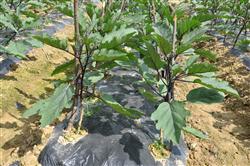
How should eggplants be managed during summer planting for the best results?
How should eggplants be managed well when planted in summer? Please explain. Summer eggplants, because their growing period falls in a season of high temperatures, frequent rain, and frequent pests, diseases, and weeds, have low and unstable yields. To achieve an ideal yield, the following field management measures should be carried out well: 1. Apply the "three" fertilizers properly: after the seedlings survive transplanting, apply a good seedling-promoting fertilizer, applying 1000 kg of 20% human excrement and urine per mu or applying 10-15 kg of compound fertilizer in holes; when the first eggplant fruit swells, apply a good first-fruit fertilizer, applying 1500 kg of human excrement and urine or applying 15 kg of compound fertilizer in holes; apply a good fruit-fattening fertilizer, applying 2000 kg of human excrement and urine or 20 kg of compound fertilizer when eggplants enter the fruiting stage.
-
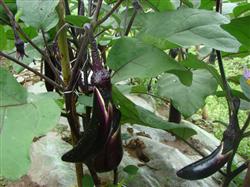
How to Apply Top Dressing to Over-Summer Eggplants? Practical Fertilization Tips Shared
How to apply top dressing to over-summer eggplants? Here is an introduction to the methods you can refer to for top dressing over-summer eggplants: 1. Proper amount. Eggplants have the highest demand for nitrogen fertilizer, but in the high-temperature season, they should be fed small amounts more frequently. Each application of urea per 667 sq m should generally be kept within 30 kg. Because in the high-temperature season, urea transforms relatively quickly after being applied to the soil...
条件筛选