Detailed Explanation of Key Points for High-Yield Summer Corn Cultivation Techniques
How can summer corn be planted to achieve high yield? Please explain the methods. To achieve high yield when planting summer corn, you can refer to the following methods: 1. Carefully select seeds: Before sowing, spread the corn seeds evenly and turn them in the sun for 2 days, then remove small grains, blighted grains, broken grains, and moldy grains. This is the foundation for cultivating strong seedlings. 2. Single-seed dibbling: Single-seed dibbling can...
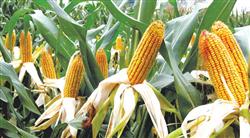
How can summer corn be planted to achieve high yield? Please explain the methods.
To achieve high yield when planting summer corn, you can refer to the following methods:
1. Carefully select seeds: Before sowing, spread the corn seeds evenly and turn them in the sun for 2 days, then remove small grains, blighted grains, broken grains, and moldy grains. This is the foundation for cultivating strong seedlings.
2. Single-seed dibbling: Single-seed dibbling can avoid excess seedlings competing for nutrients and root damage during thinning, which helps cultivate strong seedlings. If direct seeding, a seeding rate of 2 kg per 667 sq m is appropriate. After emergence, thin and set the seedlings early.
3. Seedling spacing method: Leave enough seedlings at 4000 plants per 667 sq m. (1) Row spacing 50 cm, plant spacing 30 cm; (2) Row spacing 60 cm, plant spacing 25 cm; (3) Row spacing 60 cm, plant spacing 20 cm.
4. Skillfully apply seed fertilizer: Mix and apply 2 kg urea and 2 kg diammonium phosphate per 667 sq m. When dibbling, use 1 gram per hole. If direct seeding, one person drops the seed and one person drops the fertilizer.
5. Apply seedling-strengthening fertilizer early: After seedling setting (5-leaf stage), combine with intertillage to destroy stubble, loosen the soil to control growth, and apply seedling-strengthening fertilizer as a top dressing, applying 50 kg ammonium bicarbonate per 667 sq m.
6. Heavily apply stalk-strengthening fertilizer: The period from jointing to booting of corn is when it needs the most fertilizer. During this period, nitrogen fertilizer should be applied heavily, with 20-25 kg urea per 0.07 hectare. Fertilizer should be applied deeply in furrows, at a depth of 10 cm and 12-15 cm away from the plants. From tasseling to flowering, grain fertilizer should be supplemented, generally 7.5-12.5 kg urea per 0.07 hectare.
7. Watering: From jointing to tasseling, corn enters a stage of vigorous growth. Especially about 10 days before tasseling, this is the critical period for water demand. At this time, the relative soil moisture content should be 70-80%. From tasseling to flowering, corn is very sensitive to water and this is the peak water demand period, so the relative soil moisture content should reach about 80%. From grain formation to dough stage is an important stage that determines corn yield, and sufficient water is still needed. During this period, the relative soil moisture content should be 70-75%. In all the above periods, if the soil moisture content is below the lower limit of the suitable moisture content, watering should be done.
8. Pest and disease control: In the middle and late stages of corn growth, when the average number of aphids reaches more than 500 per 10 corn plants, spray 40% omethoate emulsifiable concentrate at 1000-1500 times dilution for control. The Asian corn borer is the main pest during the ear stage. For each 0.07 hectare, 250 g of 3% phoxim granules can be mixed with 5-6 kg fine sand and scattered on the corn whorl or leaf axils, tassel bracts, and ears. To control northern corn leaf blight and southern corn leaf blight, spray 50% carbendazim or 50% thiram at 500 times dilution, once every 5 days, for 2-3 consecutive sprays.
9. Artificial detasseling and artificial supplementary pollination: When the corn tassel has just emerged from the top leaf and has not yet shed pollen, remove the tassel every other row or every other plant, so that nutrients are concentrated in supplying the ear. This can also reduce disease, improve light transmittance, regulate the field microclimate, and promote early maturity of corn. To ensure complete pollination, in the late pollen-shedding stage of the tassel, inspect plant by plant and carry out artificial supplementary pollination for fresh silks that have not been pollinated.
10. Harvest appropriately late: As long as it does not affect sowing of the next crop, harvest appropriately late. To achieve the goal of increasing yield through late harvest, fertilizer and water management in the middle and late stages of corn must keep up, ensuring the corn remains green and alive until maturity. Harvest when the corn husks turn white, become loose, the kernel milk line disappears, and the contents are completely hardened.
Click to get more corn cultivation techniques
Click to get more food crop cultivation techniques