What problems should be prevented during the cultivation of summer corn?
What should be prevented when planting summer corn? Please note that the main things to prevent when planting summer corn are the following: First, prevent fertilizer deficiency. The high-yield characteristics of summer corn plants at the ear stage are thick stalks, short internodes, wide and thick leaves, strong and upright leaves, dark green leaf color, and a well-developed root system. If the leaves show a tendency to turn yellow at the ear stage, prevent late-stage fertilizer deficiency and premature aging....
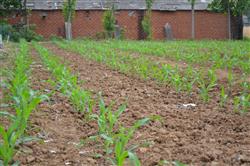
What should be prevented when planting summer corn? Please note
The main things to prevent when planting summer corn are the following:
First, prevent fertilizer deficiency. The high-yield characteristics of summer corn plants at the ear stage are thick stalks, short internodes, wide and thick leaves, strong and upright leaves, dark green leaf color, and a well-developed root system. If the leaves show a tendency to turn yellow at the ear stage, prevent late-stage fertilizer deficiency and premature aging. In terms of management, apply stalk-promoting fertilizer and grain fertilizer, applying 5-10 kg of urea per mu by hole application or furrow application, and cover the soil immediately after fertilization to prevent fertilizer volatilization loss. During the flowering and grain-filling stage, spray the leaves with 0.3%-0.5% potassium dihydrogen phosphate or 5% superphosphate extract, applying 50-60 kg of the prepared fertilizer solution per mu evenly, with a significant yield-increasing effect.
Second, prevent drought. The tasseling and flowering stage of corn is the period of greatest water demand in its life cycle, requiring soil moisture-holding capacity to reach about 70%-80%, and field relative humidity of about 65%-90%. If water is insufficient, high temperature and drought will affect the development and vitality of corn pollen and silks, affect pollination and fertilization, and in severe cases cause a decrease in the seed-setting rate of corn and reduced yield. Under high temperature or extreme drought, the viability of pollen is easily lost; high temperature and drought can easily dry out the silks and cause them to lose viability. Pollen germination on the stigma becomes difficult, or after germination, because the silks cannot supply sufficient water, the speed at which the pollen tube reaches the ovary slows down, and after pollination only a small amount of fertilization occurs, ultimately resulting in a low seed-setting rate and the formation of missing grains. Therefore, when corn is flowering, if drought occurs, it should be irrigated promptly to combat drought, supplementing water and regulating field humidity through irrigation. Irrigation should preferably be carried out in the evening, preferably by furrow irrigation, and flooding irrigation must be avoided.
Third, prevent pests and diseases. In the middle and late stages of summer corn growth, the main pests include corn borer and armyworm. For corn borer at the end of the whorl stage, when the rate of infested plants reaches 10%, 0.5 kg of 0.5% methamidophos granules can be mixed with 50 kg of fine soil and broadcast into the large funnel opening; at the ear stage, after corn flowering and silking, when the rate of infested plants reaches 20%, apply 0.2 kg of 90% trichlorfon per mu mixed with 100 kg of water and spray the ears for control. When there are 50-100 armyworms per 100 plants in the late growth stage of the corn field, 2.5% trichlorfon powder can be used, applying 2-2.5 kg per mu.
Click to get more corn cultivation techniques
Click to get more food crop cultivation techniques